Unlisted Companies Turn to SPACs for Backdoor Listings
44 Deals and $9 Billion Raised Since Early This Year
Average Share Prices Down 73% in 2024
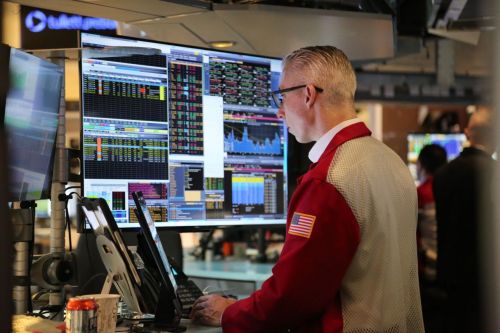
Special Purpose Acquisition Companies (SPACs), which serve as a channel for "backdoor listings," are once again gaining popularity among unlisted companies in the United States. This trend is being observed as the traditional fundraising avenue of initial public offerings (IPOs) has slowed following the launch of the second Donald Trump administration, prompting companies to turn their attention to SPACs.
The Financial Times (FT) reported on the 18th (local time), citing financial data provider Dealogic, that since the beginning of the year, approximately $9 billion (about 12.6 trillion won) has been raised in the market through 44 SPAC listings. This figure is comparable to the total for all of 2024, which saw 57 SPAC listings raising $9.6 billion.
SPACs offer a means for unlisted companies to go public quickly without going through the traditional listing process. Investment in SPACs was active during the COVID-19 pandemic in 2021, but then contracted sharply due to a combination of interest rate hikes, stock market declines, and stricter regulations on SPAC mergers during the Joe Biden administration.
According to PricewaterhouseCoopers (PwC), the U.S. IPO market started the year with high expectations but began to slow down from the middle of the first quarter. However, on a quarterly basis, there has been a clear recovery compared to 2022?2024. PwC noted, "A market environment marked by increased uncertainty has been created due to persistent concerns about inflation, the rapidly evolving artificial intelligence (AI) market, and changes in government policies such as tariffs and immigration." The firm added, "Many companies preparing for IPOs are now waiting for more stable market conditions."
There are also criticisms that, despite their recent surge in popularity, SPACs have shown poor market performance. In fact, the share prices of the 17 companies that went public via SPACs this year have fallen by an average of about 73%. For example, the share price of the online stock trading platform Webull, which entered the Nasdaq market through a SPAC merger in April, reached $62.90 at the close on April 14 but had dropped to $12.41 as of the previous day, representing a fivefold decrease.
In the market, there is growing anticipation that the SPAC sector will remain vibrant due to the Trump administration's more relaxed approach to stock market regulation compared to the Biden administration. FT commented, "During the tenure of former Securities and Exchange Commission (SEC) Chairman Gary Gensler, the SPAC merger process was tightened to match the standards of traditional IPOs, but under the new SEC Chairman Paul Atkins, regulatory easing is expected."
© The Asia Business Daily(www.asiae.co.kr). All rights reserved.
![Clutching a Stolen Dior Bag, Saying "I Hate Being Poor but Real"... The Grotesque Con of a "Human Knockoff" [Slate]](https://cwcontent.asiae.co.kr/asiaresize/183/2026021902243444107_1771435474.jpg)
















