Professor Jungbin Park's Team Unveils Web-Based Personalized Gene Editing Error Prevention Technology
Enhanced Analysis Accuracy by Incorporating Individual Genome Variants in Addition to Standard Genome Information
Gene-editing scissors technology, which can cut out diseased genes, has become a symbol of medical innovation.
However, even this precise tool can cause problems if it makes the wrong cut. This is because not everyone’s DNA is the same. A treatment that is effective for one person may cause unexpected side effects in another.
In this context, a “guidebook tailored to my own genes” for gene-editing scissors has been developed by a Korean research team.
On May 19, a research team led by Professor Jungbin Park from the Department of Biomedical Convergence Engineering at Pusan National University, in collaboration with Professor Hyeran Kim’s team at Kangwon National University, announced the development of “Variant-aware Cas-OFFinder,” a tool for predicting off-target effects of gene-editing scissors tailored to individual genomes.
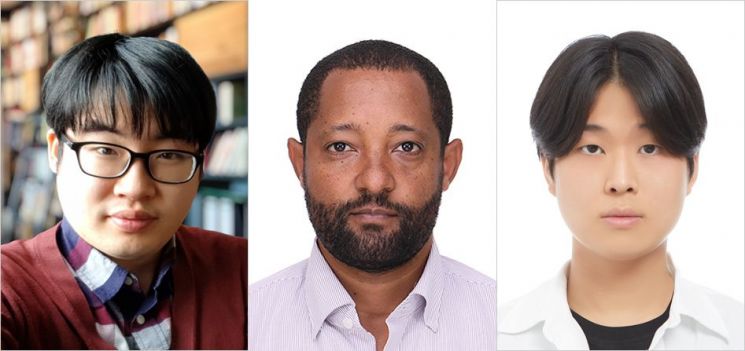 Research team, Professor Jungbin Park, PhD candidate Abiyot Melkamu Mekonnen, Researcher Gang Sung. Courtesy of Pusan National University
This is a web-based tool that can predict the precise action sites and risk points of gene-editing scissors by incorporating personal genome information.
The key feature of the tool is that it predicts side effects based on “my DNA,” not just standard DNA, by reflecting “personal genome variants.” Existing technologies predicted the action of gene-editing scissors based on a standard genome. The problem is that genetic information differs subtly from person to person. Because of these differences, gene-editing scissors can cause off-target side effects by cutting unintended regions.
The research team utilized VCF (Variant Call Format) files, which contain each individual’s genetic differences, in their analysis. Just as a navigation system reflects real-time traffic information, this tool creates a “map” unique to each person’s DNA, indicating where gene-editing scissors should be used with caution.
Professor Jungbin Park stated, “This tool serves as a customized navigation system for gene-editing scissors,” and added, “It will accelerate the era of precision medicine, enabling safe gene therapy.”
The tool’s real-world performance was also impressive on a global scale. The research team tested the tool not only on humans but also on pepper varieties. As a result, they confirmed that different individuals or varieties have distinct off-target risk sites. In other words, they identified unique cutting points that existing tools could not detect.
The tool supports 40 types of gene-editing scissors and can analyze as many as 557 different species. This means it can be widely used not only in medical technology but also in crop improvement and gene research in general.
The tool is available as a free web service and can be used by anyone without logging in.
This research stands out for its practicality in ushering in the era of precision genetics. Joint first authors, PhD candidate Abiyot Melkamu Mekonnen and Researcher Gang Sung (KAIST master’s program), who led the development of the tool, commented, “If this technology can truly help correct individual genes, it would be the greatest reward for us as researchers.”
This achievement was supported by the Rural Development Administration, the National Research Foundation of Korea, and the Ministry of Education, and was published in the May 8 issue of “Nucleic Acids Research,” one of the world’s leading journals in the field of life sciences.
© The Asia Business Daily(www.asiae.co.kr). All rights reserved.

















