KMA Proposes Seven Policy Agendas
to Presidential Candidates
The Korean Medical Association (KMA) has proposed to the candidates of the 21st presidential election that the participation of the medical community be expanded, emphasizing the need for "innovation in medical governance (the policy-making process)."
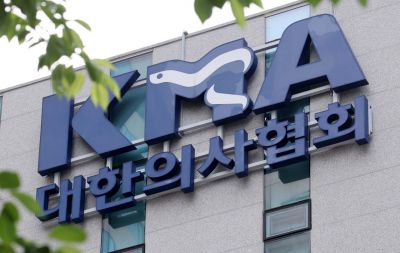
On the 16th, the KMA released a statement regarding health and medical pledges for the 21st presidential election, presenting seven agendas: ▲ innovation in medical governance ▲ establishment of a system for the stable provision of essential medical services ▲ resolution of regional healthcare disparities ▲ revitalization of healthcare and care centered on primary care ▲ prevention of medical disputes and restoration of trust in the medical field ▲ cultivation of global medical talent ▲ development of future medical technologies and innovation in the medical industry.
The first priority emphasized by the KMA is innovation in medical governance. The association argued that the organization should be restructured to focus on healthcare professionals, such as by establishing a new Ministry of Health, in order to ensure expertise and independence in the process of formulating health and medical policies. The medical community has long claimed that the opinions of experts have not been sufficiently reflected in the policy-making process.
To achieve this, the KMA suggested that measures such as "mandatory formulation of healthcare development plans with expert participation," "restructuring of policy review governance, including the Health and Medical Policy Review Committee," and "expansion of the evaluation process for the effectiveness of health and medical policies" would be necessary.
The association also called for the re-establishment of governance for improving the national health insurance and the medical delivery system. They stressed the need to improve the composition and role of the Health Insurance Policy Deliberation Committee (HIPDC) to ensure rational policy decisions, and to enhance the efficiency of the medical system by establishing a rational medical delivery system.
In particular, the KMA argued that the decision-making function of the HIPDC should be abolished, leaving only advisory and deliberative roles. Instead, they suggested that agenda items requiring decisions should be handled by a separate committee composed only of relevant providers and subscribers to ensure expertise. For improvements in the medical delivery system, they explained that it is necessary to reorganize the fee structure and establish a rational classification system for severe cases, thereby redefining the functions of each type of medical institution.
To address the current medical issues, such as shortages in essential medical services, the KMA stated that it is necessary to establish a system for the stable provision of essential medical services, resolve regional healthcare disparities, revitalize healthcare and care centered on primary care, and prevent medical disputes while restoring trust in the medical field.
For the stable provision of essential medical services, the association proposed strengthening support for regional medical schools and training hospitals, promoting multiple practices by essential medical specialists, and establishing a nationwide essential medical safety net to ensure golden time for all citizens. Specifically, they suggested expanding government funding for resident training costs and designating regional medical schools and training hospitals as key institutions for education and training in essential medical fields.
To strengthen support for access to medical care in areas vulnerable to essential medical services, the KMA mentioned the introduction of a customized fee and incentive system for such areas, expanding comprehensive support for medical personnel working in these regions, strengthening integrated support and cooperation between private and public medical institutions, promoting pilot projects for fee structures and linking them with national health insurance, and improving local medical infrastructure and living environments. They also stated that the mandatory service period for public health doctors responsible for regional healthcare should be shortened.
To establish a healthcare and care system, the KMA also stated that it is necessary to build an "integrated network among local healthcare and care systems" and a "collaborative system among physicians at local primary care institutions," utilizing local medical associations or primary care facilities.
Meanwhile, the KMA continued to propose future visions for the medical community, such as the cultivation of global medical talent and the development of future medical technologies and innovation in the medical industry. The "Global Medical Talent Innovation Cluster (tentative name)" proposed by the KMA would consist of a "Global Medical Education Institute" to strengthen the international competitiveness of medical education, and a "Basic-Convergence Medical Research Institute" to secure experts in basic medicine and digital health. The plan is to strengthen the linkage between basic medical education and research to secure basic medical scientists and digital health experts.
© The Asia Business Daily(www.asiae.co.kr). All rights reserved.
![Clutching a Stolen Dior Bag, Saying "I Hate Being Poor but Real"... The Grotesque Con of a "Human Knockoff" [Slate]](https://cwcontent.asiae.co.kr/asiaresize/183/2026021902243444107_1771435474.jpg)
















