An inspection of institutions using 30 or more radiation-generating devices subject to notification requirements revealed that 14 of them had been operating with some of their safety devices damaged.
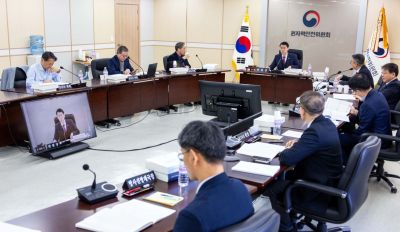
The Nuclear Safety Committee announced on May 16 the results of a "special inspection of institutions using radiation-generating devices subject to notification," which was conducted as a follow-up measure to the radiation exposure incident at Samsung Electronics Giheung plant. This special inspection was carried out from November of last year to March of this year and targeted 46 institutions that possess 30 or more radiation-generating devices subject to notification requirements.
The Nuclear Safety Committee and the Korea Institute of Nuclear Safety (KINS) instructed each institution to conduct a self-inspection regarding the appointment status of radiation safety managers, the operation of interlocks (safety devices) on radiation-generating devices, and the identification status of warning lights. These findings were then verified through on-site inspections. In the radiation exposure incident at Samsung Electronics in May of last year, it was confirmed that the interlock had been deliberately manipulated. The interlock is a device that either restricts direct emission of radiation or physically limits access by radiation workers.
On-site inspections revealed that, in 14 institutions, some of the shielding (lead curtains) installed on automated equipment lines for radiation-generating devices were found to be damaged. These devices are used for inspecting foreign substances in products such as food items on conveyor belts. It was confirmed that, in some cases, the length of the curtain was reduced or otherwise altered, contrary to the notification, when products did not pass through smoothly.
The Nuclear Safety Committee required these institutions to restrict unnecessary worker access until the damaged items are restored and normalized. The committee also announced that administrative measures, such as fines, will be imposed in accordance with violations of the Nuclear Safety Act.
The inspection confirmed that all institutions had properly appointed radiation safety managers, and that overall supervision and management had been appropriately implemented. However, the committee noted that, in two institutions, radiation-generating devices were used in locations different from those notified. The committee stated that corrective actions were taken to ensure the notification details now match the actual usage locations.
The Nuclear Safety Committee stated, "Through this special inspection, we have confirmed that the management of devices subject to notification is insufficient at some institutions. We plan to supplement the handling standards for such devices." The committee also announced that, even after this special inspection, annual on-site inspections of notified institutions will be conducted to monitor the management status of these devices.
Additionally, the committee conducted a special inspection of 258 institutions, including universities and research institutes subject to the Laboratory Safety Act, that use radiation-generating devices subject to notification, as well as three institutions operating large-scale accelerators.
As a result, the committee stated that corrective actions were taken to require 23 institutions, where discrepancies such as unreported changes in radiation safety managers were found, to file amended notifications.
© The Asia Business Daily(www.asiae.co.kr). All rights reserved.

















