Last Month's PPI Drops by 0.5% from Previous Month
Driven by Decline in Service Prices
Last month, the U.S. Producer Price Index (PPI), which measures wholesale prices, recorded its largest decline in five years. This was attributed to a decrease in service prices. Despite margin pressures from tariff policies, it is analyzed that companies are absorbing some of the increased costs themselves.
According to the U.S. Department of Labor on May 15 (local time), the PPI for April 2025 fell by 0.5% compared to the previous month. The market had expected an increase of 0.2%, but instead, the index declined. This figure is also well below the March reading, which was 0%.
The core PPI, which excludes the volatile prices of food and energy and reflects the underlying trend of inflation, also dropped by 0.4% from the previous month, reversing from a 0.4% increase in the prior month. This marks the largest monthly decline in ten years since 2015. The result also fell short of the market forecast, which anticipated a 0.3% increase.
The final demand service prices fell by 0.7% from the previous month, making a significant contribution to the overall decline in the PPI. Final demand goods prices remained unchanged compared to the previous month.
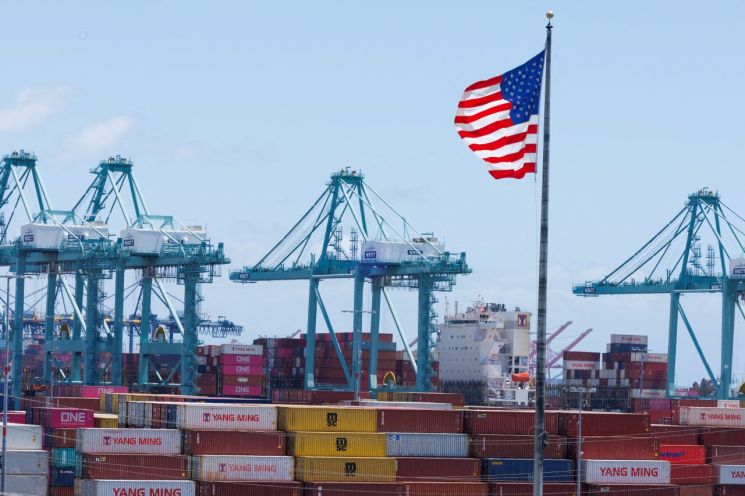
This PPI data was released at a time when President Donald Trump’s aggressive tariff hikes have been increasing cost burdens for companies. The unexpected drop in last month’s PPI is interpreted as a sign that U.S. manufacturers and service companies are reducing their margins and absorbing some of the tariff-related costs. Above all, as tariffs dampen consumer sentiment, it appears that companies have not yet fully passed on the increased import prices to wholesale prices. According to the U.S. Department of Commerce, retail sales in April 2025 rose by only 0.1% from the previous month, significantly lower than the 1.7% increase in March, indicating a rapid weakening of consumer sentiment.
However, there are concerns that if the tariff policy continues for an extended period and companies exhaust the inventories they have stockpiled in anticipation of tariffs, they will inevitably have to pass on the increased costs to both wholesale and retail prices.
The PPI, known as a measure of wholesale prices, affects the Consumer Price Index (CPI), which measures retail prices, with a time lag and is regarded as a leading indicator of inflation.
© The Asia Business Daily(www.asiae.co.kr). All rights reserved.

















