Green Light Duration Extended for Elderly Pedestrians
Legal Framework for Penalizing 'Sultagi' and Drug Use While Driving
Stricter Safety Standards for Personal Mobility Devices and Motorcycles
Disassembly Inspections Introduced for Old Cargo Trucks
Integration of Advanced Technologies Such as AI and IoT
Expansion of Safety Awareness Campaigns
The pedestrian crossing time at crosswalks on roads frequently used by elderly people, such as near traditional markets or hospitals, will be increased by up to 30% compared to the current duration. In some areas, a system will be introduced that automatically extends the green light in accordance with walking speed. Additionally, the government plans to make pedal misapplication prevention devices mandatory to prevent sudden acceleration accidents. This year, these devices will be piloted in some taxis driven by elderly drivers, and the plan to include them in new vehicle safety assessments will proceed as scheduled.
The Ministry of Land, Infrastructure and Transport, the National Police Agency, and other relevant ministries announced these measures to reduce road traffic fatalities on May 15. Last year, the number of road traffic fatalities was 2,521, a decrease of more than 80% compared to the early 1990s (13,429 in 1991), continuing a steady downward trend. However, as the rate of decline has recently slowed and fatal accidents involving elderly pedestrians remain high, the focus is now on reducing these incidents.
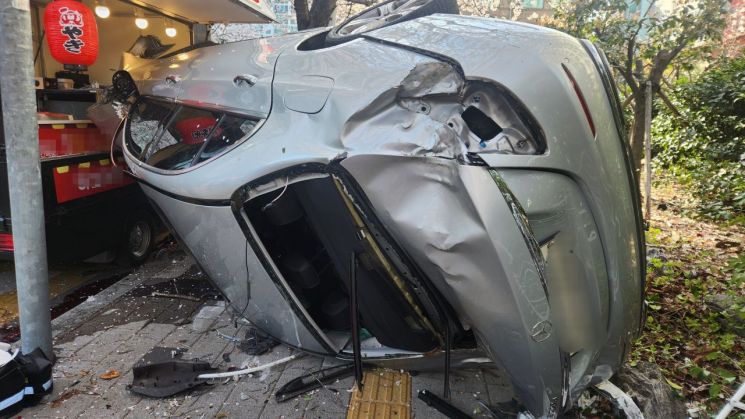 On the afternoon of the 8th of last month, a Mercedes-Benz vehicle in Gwangandong, Suyeong District, Busan, struck two pedestrians and a food truck, resulting in four casualties. Photo by Yonhap News Agency, Busan Fire and Disaster Headquarters
Green Light Duration Relaxed to 0.7m per Second at Crosswalks
Legal Basis Established for Punishing 'Sultagi' and Drug Use While Driving
The current pedestrian signal time at crosswalks is based on a walking speed of 1.0 meters per second, but this will be relaxed to 0.7 meters per second at 1,000 locations this year, up from 147 locations last year. The signal extension system will also be expanded from 187 locations last year to 221 locations this year. In addition, starting in August, roads around towns and villages will be designated as resident protection zones. Once designated, it will become easier to install safety facilities such as anti-slip pavement, fences to prevent jaywalking, and speed enforcement cameras. Previously, these measures were based on guidelines from the Ministry of Land, Infrastructure and Transport, but now there will be a legal basis under the Road Act.
Regulations prohibiting and punishing the act of using alcohol or drugs to interfere with breathalyzer tests?so-called 'Sultagi'?will also take effect as early as next month. Violators will face the same level of punishment as those who refuse breathalyzer tests, with enhanced penalties for repeat offenses. A legal basis for drug use testing and the offense of refusing such tests will be established, and the penalties will be raised to the same level as drunk driving. A conditional driver's license system will be introduced for high-risk drivers with impaired physical or cognitive abilities. To support this, a self-assessment system for driving ability using virtual reality (VR) equipment will be implemented in the second half of this year.
To prevent sudden acceleration accidents, pedal misapplication prevention devices will be installed on a trial basis in 1,100 vehicles (300 taxis and 800 vehicles driven by elderly drivers). This year, for the first time, the government will also reflect this measure in new vehicle safety assessments. Furthermore, the possibility of making this device mandatory will be reviewed in consultation with experts and automobile manufacturers.

The pedal misapplication prevention device was adopted as an international standard by the UN ECE WP.29, a working party that discusses international automobile safety standards, in November last year. Each country can apply the standard individually, taking into account its own circumstances. However, since the United States does not follow this standard, additional consultations are expected to be necessary if mandatory installation is confirmed in the future. As South Korea and the United States have a free trade agreement, the Korean government recognizes U.S. safety standards if they are applied domestically. An official from the Ministry of Land, Infrastructure and Transport explained, "There are procedures for discussion prior to making such measures mandatory, so if this is pursued, advance notification or consultation will take place."
To encourage vehicles to slow down in high-risk areas, the government will switch from point-based to section-based speed enforcement in designated sections starting in the second half of this year. High-risk areas will be prioritized where the average vehicle speed at accident sites exceeds the posted speed limit.
To address the high frequency of accidents during right turns, the number of crosswalks set 3 meters away from intersections will be increased by 100 this year. The number of traffic islands, which was reduced by 40 last year, will be cut by another 60 this year. The government will also continue to install speed bumps and rumble strips to reduce vehicle speed. To decrease accidents involving vehicles encroaching on sidewalks, the safety performance of protective fences will be strengthened, and the installation standards for bollards that block vehicle entry will be further reinforced.
Stricter Safety Standards for PMs and Motorcycles
Disassembly Inspections for Old Cargo Trucks
Safety regulations for transportation modes other than automobiles will also be newly established or strengthened. The so-called PM Act (tentative name), which defines personal mobility (PM), introduces a registration system for rental businesses, mandates license verification, and regulates parking management, is targeted for enactment within this year. Motorcycle safety inspections will begin immediately after a guidance period ending in late July. Delivery platform operators will be required by law to verify that riders have subscribed to paid transportation insurance, with the goal of implementing this from the second half of the year. Dedicated education centers and customized training programs for delivery workers will also be established.
For agricultural machinery such as cultivators, accident detection devices will be installed that automatically report incidents to the driver or local residents if the machine tilts by about 45 degrees. In addition, an AI safety alert system that detects driver drowsiness and issues warnings will be piloted in 200 vehicles as early as next month.
For old commercial cargo trucks and special vehicles, a disassembly inspection system will be introduced for more thorough checks. Currently, only periodic visual inspections are conducted. A bill to amend the relevant law was submitted in January this year. Detailed standards will also be established for daily inspections performed by cargo truck drivers before operation. In the future, these inspections will include checking the condition of cargo beds and tire wear.
Additionally, the government will inspect the safety management practices of small cargo transport companies and strengthen the driving aptitude test system to determine whether cargo drivers are fit to drive, with plans to implement these measures within the year. Drivers aged 65 to 69 will be required to undergo a qualification or medical aptitude test every three years, while those aged 70 and older will be required to do so annually. Considering that blind spots are larger for cargo trucks than for passenger cars, detection devices will be piloted in about 300 vehicles.

Integration of Advanced Technologies Such as AI and IoT
Expansion of Safety Awareness Campaigns
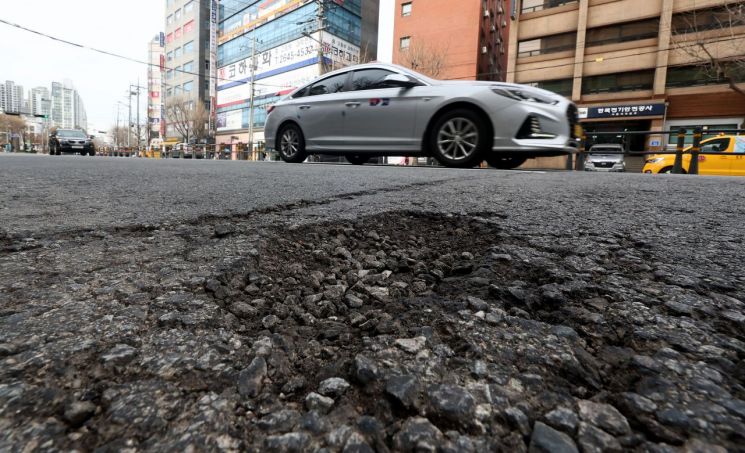
Road infrastructure will also be improved. The automatic pothole detection system, which uses AI analysis, will be expanded to enable quicker repairs of damaged roads. A system that uses an Internet of Things (IoT)-based weather observation network to analyze real-time weather data and provide information on icy road risks via navigation systems or road electronic displays will be expanded to all 31 expressways nationwide by next year. This is intended to prevent accidents caused by so-called black ice.
An AI-based accident prevention system that links driver characteristics, traffic accident data, and vehicle operation information to provide management solutions for high-risk areas will first be installed on a 100-kilometer section of National Road No. 21. Rest areas and drowsy driving shelters will also be increased to prevent accidents caused by driver fatigue. Safety facilities will be installed at 50 accident-prone national roads, and 124 national roads with sharp curves or narrow sections will be improved sequentially.
Campaigns to raise safety awareness will also be strengthened. While establishing systems and facilities is important, the government believes that improving public awareness is fundamental. Enforcement and promotion of seat belt use will be intensified, and on expressways, a system that uses infrared cameras and AI deep learning analysis technology to detect seat belt use by front and rear seat passengers will be piloted. Related campaigns and customized safety education will also be enhanced.
Previously, the government announced the 9th National Traffic Safety Basic Plan in 2021, setting a goal to reduce the number of traffic fatalities to around 1,980 this year. The target for next year is set at 1,800. Vice Minister of Land, Infrastructure and Transport Baek Wonkook stated, "This year's measures focus on strengthening pedestrian safety and improving the safety management of high-risk driving and commercial vehicles," adding, "We will concentrate our efforts on creating a safer traffic environment by strengthening cooperation among relevant ministries."
© The Asia Business Daily(www.asiae.co.kr). All rights reserved.



















