Descendant of Unit 1644 Member Reports to Professor Nishiyama
"High Possibility That Part of Japanese Army's Bacteriological Warfare Will Be Revealed"
The list of members of the Japanese Army's biochemical units 1644 and 8604, which were stationed in Nanjing and Guangzhou during World War II and conducted biological experiments, has been discovered.
According to the Asahi Shimbun on May 15, the list, which was transferred from the Ministry of Health, Labour and Welfare and is now kept by Japan's National Archives, contains the names and addresses of the unit members.
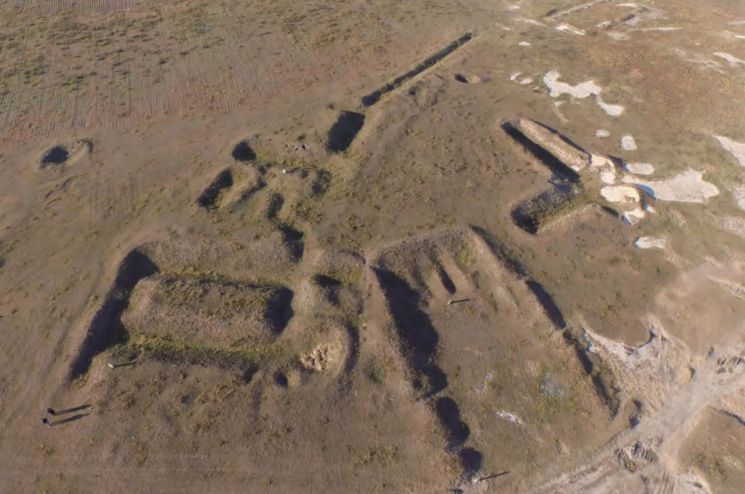 An underground research facility of the Japanese Army's Unit 731, notorious for its biological experiments during World War II, has been discovered in northeastern China. SCMP
Nishiyama Katsuo, Professor Emeritus at Saga Medical School, who reviewed the list, stated, "I was able to confirm members who conducted bacteriological warfare research in Unit 731 also appeared on the list of Unit 1644," adding, "This proves the connection between the bacteriological warfare units."
Unit 731 was a biochemical unit of the Japanese Army's Kwantung Army, stationed in the puppet state of Manchukuo. It is most notorious for conducting human experiments for bacteriological warfare. Human subjects used in these experiments were referred to as "Maruta," meaning "logs." In July 2023, the National Archives of Japan also discovered documents containing the list of Unit 731 members and the unit's organizational structure.
The newly confirmed list came to light after a descendant of a Unit 1644 member reported it to Professor Nishiyama. The newspaper noted, "There are few materials available regarding bacteriological warfare units other than Unit 731," and added, "There is a possibility that part of the Japanese Army's bacteriological warfare may be revealed."
© The Asia Business Daily(www.asiae.co.kr). All rights reserved.

















