High-Level Talks Continue in Jeju After Geneva
Follow-Up Discussions After Tariff Agreement
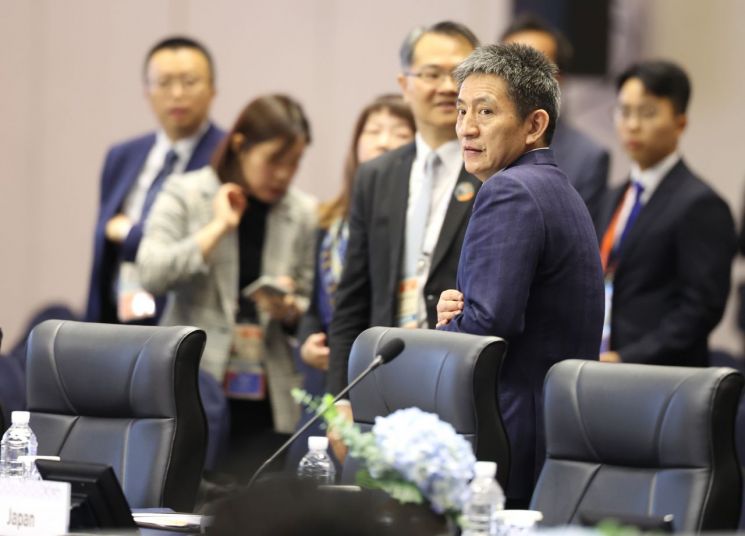
Jamieson Greer, representative of the United States Trade Representative (USTR), and Li Chenggang, Vice Minister of Commerce of China, met again on May 15 at the Jeju International Convention Center (ICC) during the '2025 APEC Ministerial Meeting on Trade.' This was their second face-to-face meeting following a high-level bilateral meeting held three days earlier in Geneva, Switzerland.
A South Korean government official stated on this day, "It has been confirmed that the United States and China held a high-level meeting this afternoon (May 15)," adding, "However, since both sides requested confidentiality, it is difficult to provide specific details."
Previously, during the Geneva meeting, the United States and China agreed to temporarily reduce the high tariffs they had imposed on each other. The United States proposed lowering tariffs on Chinese goods by 115 percentage points to a level of 30%, while China suggested adjusting tariffs on American goods to around 10%. Although these are temporary measures to be applied for 90 days, they have been interpreted in the global trade market as a signal of easing tensions between the United States and China.
Against this backdrop, the renewed meeting between the two sides at the APEC Ministerial Meeting on Trade is seen as an indication of the possibility of further negotiations or follow-up measures. It is expected that the two countries discussed the implementation status of the Geneva agreement and the future direction of their tariff policies.
Around the APEC venue, some analysts described this meeting as a "preparatory phase toward a structural resolution of the U.S.-China trade conflict." An official from South Korea's trade authorities commented, "The Geneva agreement alone is not enough to fundamentally resolve the conflict," but also assessed, "It is significant in that it could lead to subsequent working-level negotiations and a summit meeting."
Although the United States and China have recently increased their dialogue, they have yet to narrow their differences on contentious issues such as core technology regulations, supply chain restructuring, and digital trade norms. Accordingly, there are also predictions that this meeting in Jeju is unlikely to serve as a "decisive turning point" in resolving the conflict.
If negotiations between the United States and China gain momentum in the future, it is expected that the Korea-China FTA negotiations will also gain new impetus. Should the United States and China move beyond tariff reductions to discuss trade rules or the easing of investment regulations, APEC member countries, including South Korea, will inevitably need to formulate responsive strategies.
Meanwhile, discussions on trade cooperation between South Korea and China also took place at this APEC Ministerial Meeting on Trade. Chung Ingyeo, Deputy Minister for Trade Negotiations at the Ministry of Trade, Industry and Energy, held a separate meeting with Vice Minister Li in the morning to review the progress of Korea-China Free Trade Agreement (FTA) negotiations on services and investment. The two sides agreed to jointly seek ways to stabilize supply chains amid increasing global supply chain uncertainties.
© The Asia Business Daily(www.asiae.co.kr). All rights reserved.

















