The Korea Coast Guard will launch nationwide cleanup activities to mark the 30th Sea Day (May 31), aiming to protect "Blue Carbon," an oceanic carbon sink, and to actively address marine debris.
The Coast Guard has designated a focused marine debris collection period until June 20, and will conduct marine debris collection and underwater cleanup activities along coasts and island regions throughout the country.
In addition, to foster blue carbon ecosystems, which are gaining attention as an alternative to the climate crisis, the Coast Guard plans to plant salt-tolerant vegetation in Sorae Wetland in Incheon, Julpo Bay in Buan, and the Seomjin River estuary in Gwangyang. Blue carbon refers to carbon absorbed and stored by marine ecosystems such as salt-tolerant plants, seaweed, tidal flats, and eelgrass. Blue carbon is a key carbon sink for climate crisis response, as it has more than five times the carbon absorption and storage capacity per unit area compared to forests.
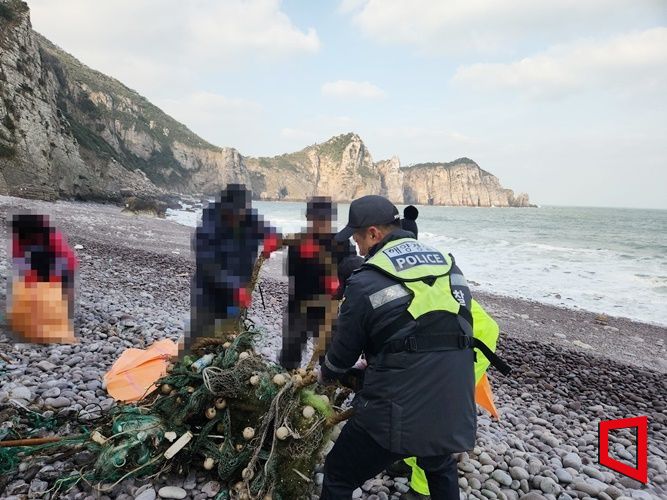
The Coast Guard is also preparing for disaster debris generated after heavy rainfall and typhoons by pre-deploying response vessels (ships operated for the purpose of controlling oil or chemical spills) to ensure vessel safety and reduce environmental damage, while simultaneously conducting emergency collection activities.
Additionally, the Coast Guard is expanding public participation in carbon neutrality campaigns through youth experiential education, plogging (picking up litter while jogging or walking), beachcombing campaigns (collecting driftwood or trash along the beach), underwater cleanup activities, and the "Usaengsun" upcycling project (bringing your own water bottle to recycle as a resource).
Song Younggu, Director General of the Marine Pollution Response Bureau at the Korea Coast Guard, stated, "There is a carbon storage reservoir in the ocean that we have overlooked, and that is 'blue carbon.' The era has come when the ocean is the solution to the climate crisis. We will take the lead in responding to the climate crisis and creating a clean marine environment."
© The Asia Business Daily(www.asiae.co.kr). All rights reserved.

















