Thorough Disaster Prevention Measures
for Vulnerable Facilities such as Underpasses,
Rivers, and Stormwater Inlets
On May 15, Changwon Special City held a heavy rain countermeasure briefing, presided over by Acting Mayor Jang Geumyong, to review the progress of facility damage restoration and disaster prevention projects carried out since last year.
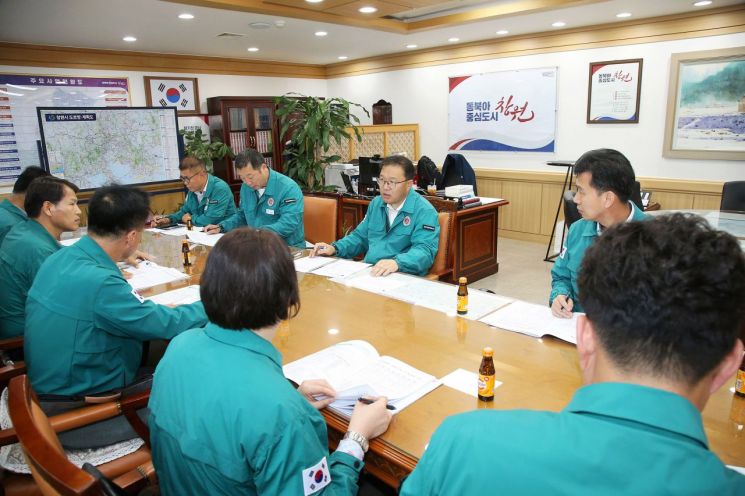
Since the record-breaking heavy rain in September last year, the city has been working on the restoration of 133 sites that require permanent facility repairs.
As of mid-May, restoration has been completed at 106 sites. Of the remaining 27 sites under restoration, 23 are scheduled to be completed quickly before the rainy season in June, raising the restoration rate to 97% (129 sites). The remaining 4 sites, including the large-scale Daejangcheon disaster restoration project, will be completed sequentially after the rainy season due to the implementation of administrative procedures such as various reviews, as the project scale is large.
Alongside the restoration projects, the city is also thoroughly implementing preventive measures for disaster-prone and high-risk facilities in response to increasingly unpredictable weather conditions.
To prevent flooding damage in low-lying areas vulnerable to sudden downpours, three underpasses in the city (Shinsogye, Hapseong, Seokjeon) have been equipped with newly installed automatic entry-blocking systems this year. In addition, the city will support the installation of flood prevention devices (water barriers) at 23 locations, including commercial buildings and semi-basement homes, by June.
For rivers, the city is preventing flooding and erosion damage through riverbed maintenance and reinforcement of embankment facilities to ensure smooth water flow. This includes a total of nine projects for local and small rivers such as Gwangryeocheon and Wolgyeso streams. For Daejangcheon and Sosa streams, a total of 9.8 billion won, including national funding, will be invested for comprehensive function restoration and improvement to fundamentally prevent flood damage.
The city also systematically manages more than 158,000 stormwater inlets, including those along curbs. Focused management zones have been established for areas prone to frequent flooding. In cooperation with local residents, monthly cleaning operations are conducted, and potential drainage issues are continuously monitored. Stickers indicating the locations of stormwater inlets are also being attached to enable rapid maintenance in case of road flooding.
Regarding the retaining wall of the villa in Sanho-dong, where residents were displaced last year, emergency restoration was completed at the end of last year. For residents' safety, fundamental slope reinforcement will be carried out by the end of this year. In addition, based on the results of a detailed inspection of all slopes in Sanho Park, separate short- and long-term management measures will be implemented.
Acting Mayor Jang Geumyong emphasized, "Proactive measures and inspections are most important for disaster prevention," and urged, "Let us complete disaster restoration projects as soon as possible before the rainy season and thoroughly implement preventive measures for vulnerable facilities to protect the safety of our citizens."
© The Asia Business Daily(www.asiae.co.kr). All rights reserved.

















