As remote work becomes entrenched and high interest rates persist, the overseas real estate market is contracting, raising concerns about the deterioration of alternative investment assets held by financial companies. In response to these concerns, financial authorities plan to strengthen monitoring and implement tailored prudential supervision according to the degree of asset deterioration.
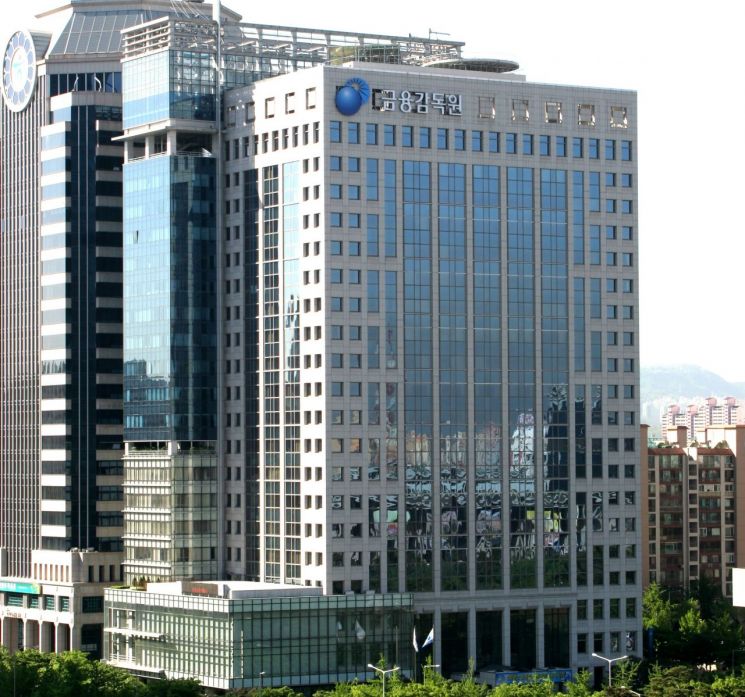
According to the Financial Supervisory Service on May 15, the outstanding balance of overseas real estate alternative investments by financial companies stood at 55.8 trillion won as of September last year. This figure has been on a downward trend, declining from 57.6 trillion won in 2023 to 57 trillion won in March and 56.3 trillion won in June, due to preemptive loss recognition and new investments focusing on high-quality assets.
However, events of default (EOD) have been increasing. The EOD amount, which was 2.41 trillion won in 2023, rose to 2.5 trillion won in March, 2.61 trillion won in June, and 2.64 trillion won in September last year. The increase in EOD is attributed to the maturity of existing investments amid delayed recovery in the overseas real estate market.
As a representative example, Company A made an equity investment in an office building in Pennsylvania, United States, through a fund. However, due to the impact of COVID-19 and the spread of flexible work arrangements, major tenants vacated the premises early, causing the property value to plummet. Ultimately, Company A failed to secure senior refinancing in June 2023, leading to the loan maturity and the occurrence of an EOD. The senior lender attempted to recover the investment through a public auction but was unsuccessful. Currently, domestic companies are transferring the asset title to the senior lender.
Similarly, Company B and eight other companies provided senior loans to an office building in Chicago, United States, through funds. However, they failed to secure senior refinancing in November 2022 and defaulted on the loan, resulting in an EOD. They have now agreed to restructure the loan and are considering partial repayment of the senior loan using early termination penalties.
Additionally, Company C and one other company, which invested in equity in an office building in France, experienced an EOD in April 2023 due to a rise in the loan-to-value (LTV) ratio, which is a loan maintenance requirement. The senior creditor demanded additional capital contributions from Company C and the other company, but they refused. Although a loan restructuring agreement has been reached, dividend payments have been suspended.
However, the pace of EOD increase has somewhat slowed, as the risk absorption effect from loss recognition has started to appear. The Financial Supervisory Service explained, "The recent increase in EOD has somewhat decreased due to appropriate loss recognition on EOD assets," adding, "The situation is being managed at a stable level." The agency also noted, "The scale of overseas real estate investments is not large, accounting for only about 0.8% of total financial sector assets, and capital adequacy ratios remain sound, so the likelihood of systemic risk contagion is low."
Going forward, the Financial Supervisory Service plans to implement tailored prudential supervision for investments such as office properties that have the potential for further losses, according to the degree of asset deterioration. In addition, in line with the amendment to the Enforcement Decree of the Capital Markets Act taking effect in September, the agency will promote appropriate loss recognition through regular evaluations of alternative investment fund assets by external professional institutions. Alongside this, the agency aims to promptly complete revisions to best practice guidelines for risk management of alternative investments by sector, to ensure that overseas alternative investments are made with sufficient investment management capabilities.
© The Asia Business Daily(www.asiae.co.kr). All rights reserved.

















