Large Companies Down 2.9%, Medium-Sized Companies Down 2.6%
Decline Driven by Mineral Products and Durable Consumer Goods Exports
U.S. Exports See Triple Decrease for First Time in Seven Quarters
In the first quarter, exports by large and medium-sized companies declined, causing South Korea's total export value to decrease for the first time in six quarters. Exports of petroleum and chemical industry products fell due to factors such as a drop in international oil prices and reduced production. The decline in electric vehicle (passenger car) purchases under the Donald Trump administration also contributed to the decrease in export value. For the first time since the second quarter of 2023, exports to the United States by large, medium-sized, and small companies all decreased.
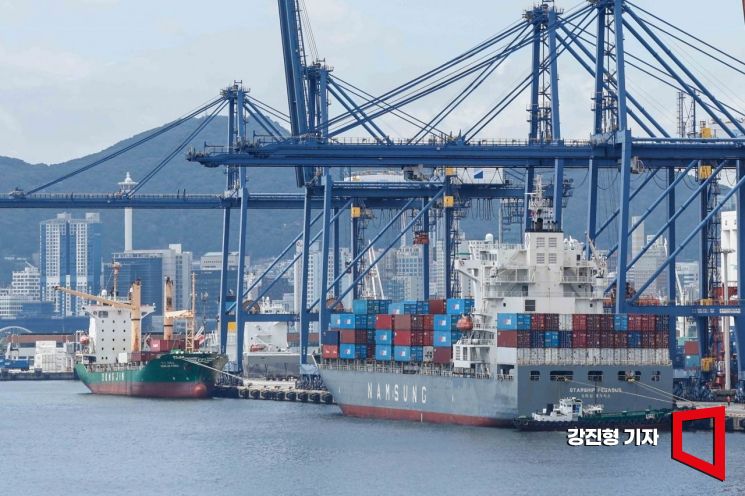
Impact of Raw Materials and Durable Consumer Goods... U.S. Export Value Down 2.1%
According to the "Trade Statistics by Company Characteristics for Q1 2025" released by Statistics Korea on May 15, export value in the first quarter was $159.8 billion, a decrease of 2.1% ($3.5 billion) compared to the same period last year. This marks the first decline in six quarters since the third quarter of 2023, when exports fell by $16.9 billion.
While exports by small businesses increased by 1.3%, exports by large companies fell by 2.9% and by medium-sized companies by 2.6%. In the case of large companies, exports of capital goods increased, but exports of raw materials and consumer goods decreased. Specifically, exports of IT components and transportation equipment rose, but exports of mineral products and durable consumer goods declined. For medium-sized companies, exports of raw materials, capital goods, and consumer goods all decreased, including chemical industry products, machinery, transportation equipment, and durable consumer goods.
An official from Statistics Korea stated, "Exports decreased in the order of mineral products, which are classified as raw materials (-$3.1 billion), durable consumer goods, a subcategory of consumer goods (-$1.7 billion), and chemical industry products, another raw material (-$1.6 billion)." The official added, "Mineral products refer to gasoline and diesel refined from crude oil. The decline in oil prices, as well as reduced production volumes due to refinery fire accidents and maintenance, were contributing factors."
The official also explained, "Durable consumer goods include passenger cars. While exports of passenger cars to the United States performed well until last year, government-mandated purchases of electric vehicles have decreased since President Donald Trump took office this year." Regarding chemical industry products such as polyethylene, the official noted, "In addition to the drop in international oil prices, China has been producing at low cost, resulting in a global oversupply and sluggish exports."
By industry, export value increased in other industries (4.6%), including professional, scientific, and technical sectors. In contrast, mining and manufacturing (-0.5%) and wholesale and retail trade (-15.7%) saw declines. In mining and manufacturing, imports of food and beverage products increased, but exports of petrochemicals and metal products decreased.
Looking at trade volume by major countries and regions, exports declined in all major regions except Southeast Asia and the Middle East. Notably, exports to the United States (-2.0%) decreased across large, medium-sized, and small companies. This is the first time since the second quarter of 2023 that exports to the United States have declined for all company sizes.
The number of exporting companies increased by 1.5% to 65,903. Trade concentration among top exporters intensified. The top 10 companies accounted for 36.0% of total export value in the first quarter, up 0.2 percentage points. The top 100 companies accounted for 66.1%, also up 0.2 percentage points.
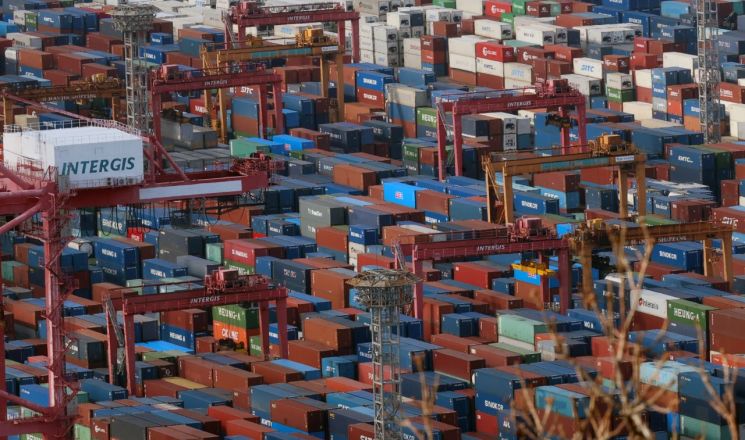
First Quarter Import Value Down... Large Companies Fall by 4.7%
Import value in the first quarter was $152.6 billion, down 1.4%. Imports increased for medium-sized companies (9.7%) and small companies (0.5%), but decreased for large companies (-4.7%). For large companies, imports of capital goods increased, but imports of raw materials and consumer goods declined, particularly in mineral products, chemical industry products, and durable consumer goods.
By industry, wholesale and retail trade increased by 3.1%, while mining and manufacturing (-2.7%) and other industries (-3.9%) declined. In mining and manufacturing, imports of electrical and electronic products increased, but imports of petrochemicals and metal products decreased. In other industries, imports of electricity, gas, and steam showed a downward trend.
The number of importing companies decreased by 0.3% to 145,771. The trade concentration of the top 10 importing companies fell by 0.7 percentage points to 31.5%, and that of the top 100 companies dropped by 0.3 percentage points to 57.1%.
© The Asia Business Daily(www.asiae.co.kr). All rights reserved.


















