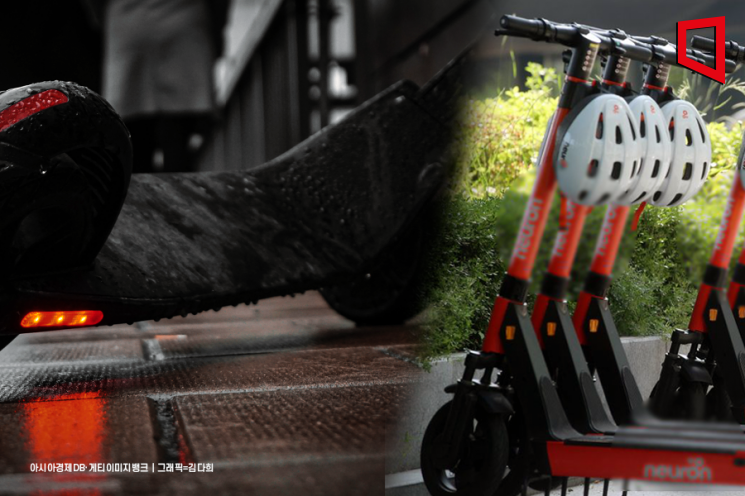
As the use of shared electric scooters has surged, consumer complaints related to safety accidents and unauthorized use by minors are also on the rise. Some point out that the lack of relevant laws and regulations is exacerbating the problem.
According to data submitted by the Korea Consumer Agency to the office of Hwang Unha, a member of the National Assembly's Land, Infrastructure and Transport Committee from the Rebuilding Korea Party, a total of 155 consumer complaints related to shared electric scooters were filed from 2020 to April 2025. By company, Swing had the most complaints at 96, followed by Ssingssing with 21, Beam with 20, Ziku with 16, and Dart with 2.
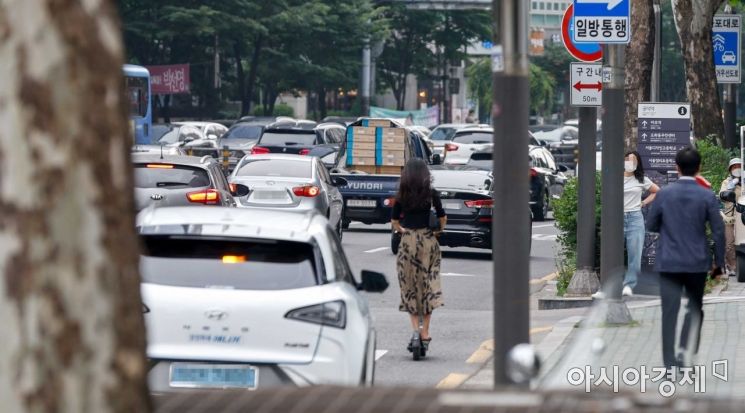
Major complaints included: accidents caused by device malfunctions; unauthorized use by minors; lack of insurance coverage; penalty fees charged despite proper returns; and insufficient notification regarding service-restricted areas.
One user of Swing requested a halt to charges, stating, "My child under the age of 16, who does not have a license, used a shared scooter without permission, yet I was still charged." Another user demanded compensation for medical expenses and lost income, saying, "I was injured after falling when the scooter's brakes failed during operation." There was also a reported case where "an accident occurred because the scooter was operated with no brakes at all."
Similar cases occurred with Ssingssing. One user requested insurance coverage, saying, "I was injured after falling due to a device malfunction."
Ziku also had an accident where a user's glasses were broken due to brake failure, and a complaint was filed requesting cancellation of charges for a scooter used without permission by a minor child.
Beam users raised issues such as accidents caused by brake failure, unauthorized use by minors, and objections to additional towing fees charged after scooters were towed.
Experts point out that although the use of shared electric scooters is rapidly increasing, the industry is considered an emerging sector, so there is a lack of legal foundation for consumer protection and regulation. As a result, local governments are operating and responding in different ways without unified standards. Concerns are growing that, since the industry is quickly expanding through a franchise model, repeated consumer damages are likely if institutional improvements are delayed.
An official from the Ministry of Land, Infrastructure and Transport said, "The personal mobility (PM) industry is still in its early stages, so a comprehensive safety management system has not yet been established." He added, "We are currently working to enact the 'Act on the Management and Promotion of Personal Mobility (tentative name)' as the relevant legislation." He explained, "Since PM rental businesses can currently operate with only a general business registration, local governments lack a legal basis to manage them. Once the PM Act is enacted, rental businesses will be required to register with local governments, and legal requirements such as verifying users' licenses, conducting safety inspections, and obtaining insurance will be established."
Hwang Unha stated, "Since most of the shared scooter industry is operated in a franchise format, the Ministry of Land, Infrastructure and Transport needs to deepen its understanding of this and develop more concrete management measures."
Kim Jihyun, Law Times Reporter
※This article is based on content supplied by Law Times.
© The Asia Business Daily(www.asiae.co.kr). All rights reserved.


















