Development of 'Thiamine Diphosphate' as a Feed Additive
Maintaining Productivity While Expecting Annual Greenhouse Gas Reduction of 858,000 Tons
Commercialization Planned After Demonstration and Safety Verification
A domestic technology has developed a feed ingredient capable of reducing methane emissions generated during the rumen fermentation process in Hanwoo cattle by 18%. Methane is known to have a greenhouse effect dozens of times stronger than carbon dioxide.
On May 14, the Rural Development Administration (RDA) announced that it has developed 'thiamine diphosphate', a feed ingredient that can effectively suppress methane emissions from Hanwoo cattle, as part of its 2025 RDA agricultural research and development (R&D) innovation plan for developing carbon reduction technologies.
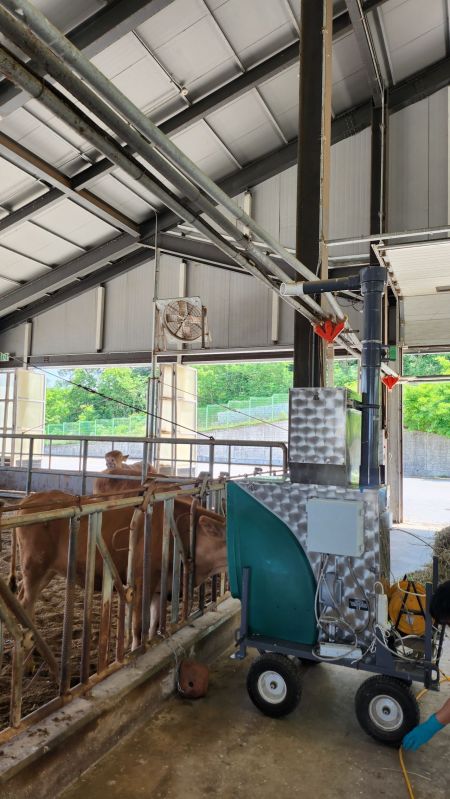
Lim Kisoon, Director of the National Institute of Animal Science at the RDA, stated, "Thiamine diphosphate is the active form of vitamin B1. It binds to coenzymes related to methane production in the stomach of ruminant animals, thereby inhibiting methane generation." Lim added, "While maintaining productivity such as the growth of Hanwoo cattle, it is expected to reduce greenhouse gas emissions by 858,000 tons annually, which will accelerate the realization of carbon neutrality in the livestock sector."
The research team analyzed more than 200 candidate substances, including plant materials, seaweed, and compounds, over the past four years with the goal of reducing methane in the livestock sector. During this process, thiamine diphosphate was selected through computer simulations based on the genetic information of microorganisms in the stomach of ruminant animals.
When thiamine diphosphate was added to cattle feed and administered to Hanwoo, methane emissions decreased by an average of 18.3% compared to cattle fed without the additive. Feed intake and growth rates were maintained, enabling greenhouse gas reduction without compromising productivity.
According to the RDA, as of 2024, if thiamine diphosphate were applied to the 3.41 million Hanwoo cattle raised domestically, it would be possible to reduce greenhouse gas emissions by approximately 858,000 tons per year. This figure accounts for 26% of the government's carbon reduction target of 3.3 million tons in the livestock sector.
The RDA has completed a patent application for this low-methane feed ingredient technology. Going forward, the administration plans to transfer the technology to companies interested in commercialization, register thiamine diphosphate as a methane reducer, and promote its commercialization.
Director Lim stated, "The low-methane feed ingredient technology developed using convergent technology is significant as a practical first step toward achieving carbon neutrality in the livestock sector. We will continue to do our best to develop carbon reduction technologies so that the livestock sector can transition to a sustainable industry."
© The Asia Business Daily(www.asiae.co.kr). All rights reserved.

















