Rumors of Mass Participation in Impeachment Rallies and Election Interference Spread
UN Recommends Practical Measures Such as Legal Revisions and Public Education
The United Nations has released an official report expressing concern that anti-Chinese sentiment in South Korea has reached a worrisome level. This UN warning comes amid a surge in anti-China and anti-Chinese sentiment, particularly among conservatives and some political circles. The spread of fake news, such as claims about mass Chinese participation in impeachment rallies and allegations of interference in fraudulent elections, has rapidly circulated through online communities, pushing anti-China sentiment to a serious level.
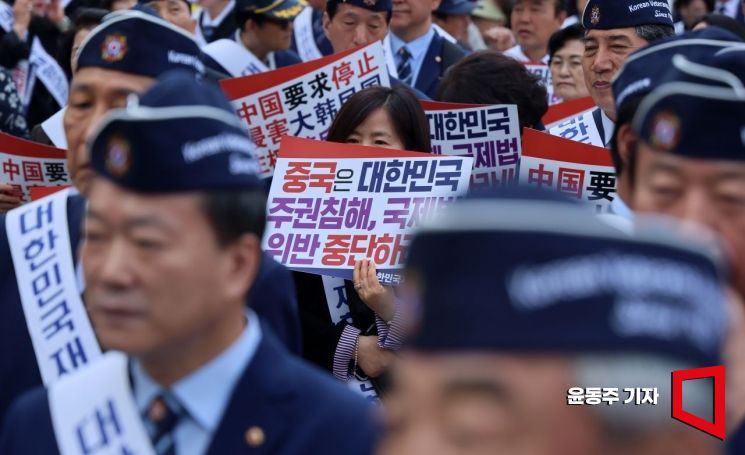 The United Nations has released an official report expressing concern that anti-Chinese sentiment in South Korea has reached a worrisome level. This UN warning comes amid a surge in anti-China and anti-Chinese sentiment, particularly among conservatives and some political circles. Photo by Dongju Yoon
On May 13, the UN Committee on the Elimination of Racial Discrimination officially expressed concern over the recent increase in hate speech against Chinese people in South Korea. South Korea has regularly undergone national report reviews by the Committee on the Elimination of Racial Discrimination. This review was conducted for the first time in seven years since December 2018. The committee stated, "We reiterate our concern over the continued increase in racist hate speech against immigrants, asylum seekers and refugees, and people of Chinese descent, both online and offline."
Discrimination against Muslims, migrant workers, and North Korean defectors also at a concerning level
The committee pointed out the spread of discriminatory and hateful remarks and sentiments toward immigrants, refugees, and Chinese people in Korean society, and recommended practical measures such as revising related laws and conducting public education campaigns. The UN assessed that discrimination against not only Chinese people but also Muslims, migrant workers, and North Korean defectors has reached a concerning level. In particular, anti-Chinese hate has expanded beyond the online sphere to the offline world, reaching a level of serious concern. There have been reports of hate speech, discrimination, and violence targeting Chinese people offline, such as verbal abuse and physical altercations aimed at Chinese individuals in the 'Lamb Skewer Alley' near Konkuk University.
The UN's recommendations are expected to have a significant impact on the next administration's efforts to improve diplomatic relations with China. The Ministry of Foreign Affairs is currently seeking countermeasures in response to the UN's warning. An official from the Ministry of Foreign Affairs stated, "We have provided detailed explanations of the legal and institutional efforts our government has made to eliminate racial discrimination and promote the rights of foreigners, and we have sincerely responded to the committee's related inquiries." The official added, "The Ministry of Foreign Affairs will closely review this matter together with relevant ministries and use it as a reference as the government strengthens its future efforts."
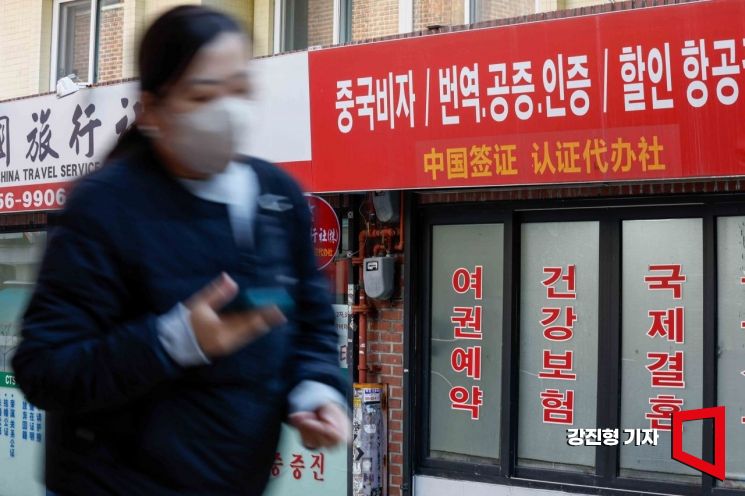 The committee pointed out the spread of discriminatory and hateful remarks and sentiments toward immigrants, refugees, and Chinese people in Korean society and recommended practical measures such as revising related laws and public education campaigns. Photo by Kang Jinhyung
Meanwhile, Lee Jaemyung, the Democratic Party's presidential candidate, strongly objected to the so-called 'pro-China controversy' during a campaign event on Dongseong-ro in Daegu, referencing his past remarks of 'xie xie to China.' He said, "I said 'xie xie' to China and also to Taiwan. Was it wrong to say that?" Lee added, "I was going to say 'xie xie' to the Japanese ambassador as well, but I thought he might not understand, so I said 'gamsahamunida' instead." He emphasized the need for a pragmatic approach to future diplomacy with China. In contrast, Kim Moonsoo, the People Power Party candidate, advocates for diplomacy based on mutual respect and adherence to norms. He maintains that Korea's national interests and sovereignty should take priority in Korea-China relations, and that South Korea should respond firmly to any arrogant or unilateral attitudes from China.
© The Asia Business Daily(www.asiae.co.kr). All rights reserved.


















