For Substitute Drivers and Delivery Workers
Simple Rest Areas Operated at Subway Stations
Charging, Bottled Water, and Hot Packs Provided
Open on Weekdays from 1 p.m. to 10 p.m.
At around 1 p.m. on the 12th, I visited the mobile worker rest area at Sadang Station in Gwanak-gu, Seoul. This is a simple rest area created by the Seoul Metropolitan Government inside the subway station in March to guarantee break rights for mobile workers such as substitute drivers, delivery workers, and insurance planners. The rest area was quiet. By 4 p.m., only two mobile workers had visited the area, and even they stayed for only about five minutes before leaving.
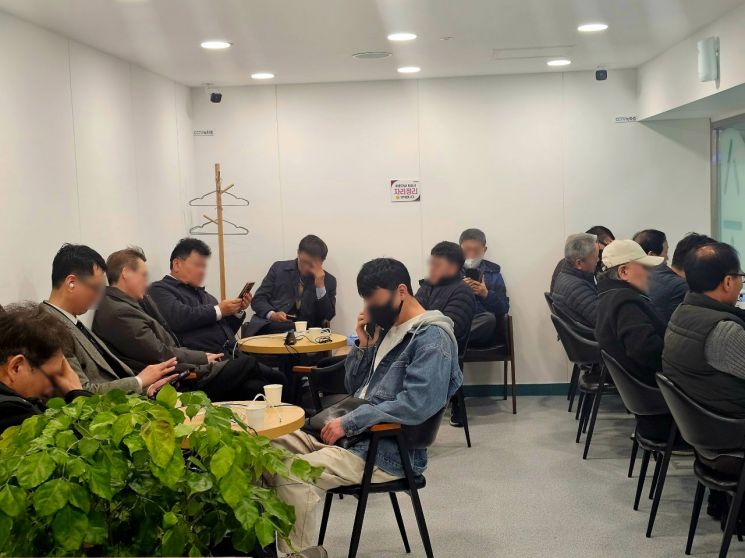
The Bukchang rest area near Jonggak Station in Jongno-gu, Seoul, was similar. From around 2 p.m., there were not many visitors, and elderly people waiting for appointments would sit briefly before leaving, repeating this pattern. The manager of the rest area said, "Since it is neither the peak of winter nor summer, there tend to be fewer users, but even so, there are usually not many people here at this time of day. Mobile workers such as substitute drivers usually come to the rest area only in the evening."
The simple rest areas inside subway stations, established by the Seoul Metropolitan Government to guarantee break rights for mobile workers, have begun full-scale operation. According to the city, the Sadang and Jonggak Station mobile worker rest areas were created in response to requests from mobile workers to provide rest areas in easily accessible locations. Two subway stations frequently used during transit?Sadang and Jonggak?were selected as the initial sites. The Sadang Station rest area is located near exits 5 and 6 of Sadang Station on Line 2 (unit 109), while the Jonggak Station rest area is near exits 5 and 6 of Jonggak Station on Line 1 (unit 101).
The rest areas inside subway stations are open to all types of mobile workers, including courier, delivery, and substitute drivers, as well as housekeepers, visiting meter readers, insurance solicitors, and private tutor instructors. Entry to the rest area is available via a QR code issued to users' mobile phones. Inside, there are chairs and tables for comfortable rest, as well as amenities such as phone chargers, heating and cooling systems, air purifiers, and bottled water. Notably, the Sadang Station rest area has a separate women's only rest space. Seasonal safety items are also provided to visiting mobile workers: bottled water and cooling products during the summer, and hot packs and winter gloves during the winter.
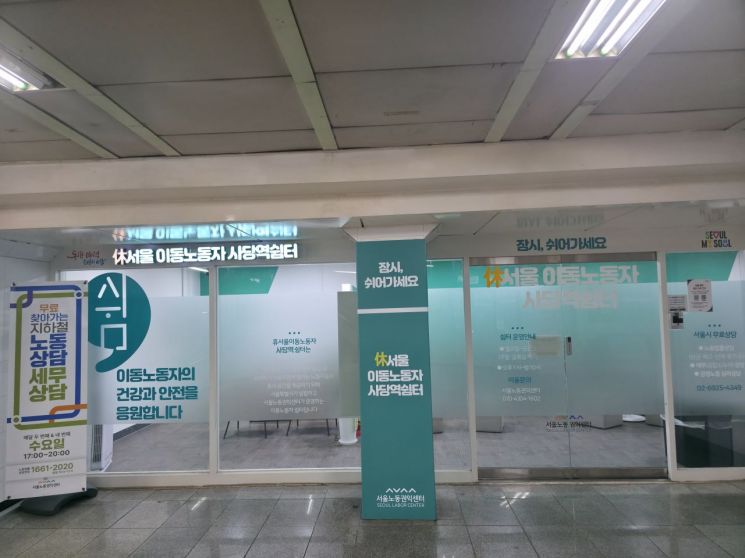
However, some have voiced disappointment regarding the operating hours of the rest areas. Since they are only open from 1 p.m. to 10 p.m. on weekdays, the hours do not fully reflect the actual needs of users. While it is true that the rest areas must close when the subway stops running, other base rest areas in places like Seocho and Hapjeong are already operating at night.
Many of the rest area users are substitute drivers who work at night. While the mobile worker rest areas in Hapjeong and Seocho are open until 6 a.m., the Bukchang rest area near Jonggak Station only operates until 8 p.m., leaving substitute drivers in the area with nowhere to rest at night. Park, a 39-year-old substitute driver, said, "I usually start driving after company dinners end around 9 p.m., but there are very few rest areas open at night, which is disappointing. I hope more rest areas will be open during nighttime hours rather than during the day."
The Seoul Labor Rights Center, which operates the rest areas, explained that the Bukchang rest area was originally intended for quick service workers, which is why it does not operate at night. Additionally, since the building housing the Bukchang rest area must close, it is difficult to extend the operating hours. In response, a Seoul Metropolitan Government official stated, "We plan to conduct a pilot operation, gather feedback from mobile workers, and then adjust the operating hours accordingly."
© The Asia Business Daily(www.asiae.co.kr). All rights reserved.