Ahead of the 45th Anniversary of May 18, Crowds Visit the Democratic Cemetery
Cultural Exchange Leads to Realization of Chun Doo-hwan as a 'Massacre Perpetrator'
Over 20,000 Pay Respects in Ten Days, Heightening Atmosphere of Remembrance
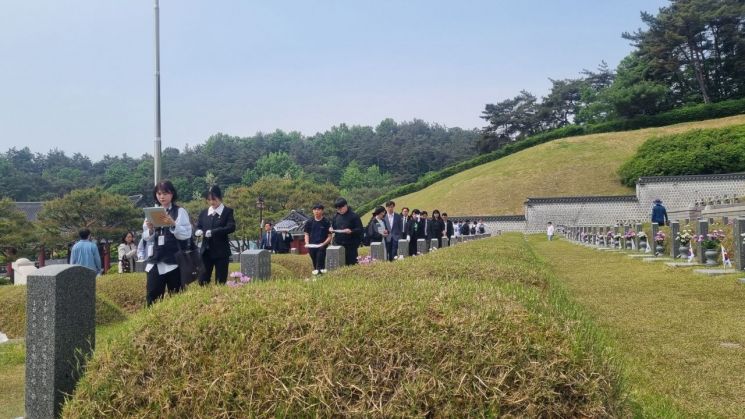 On the morning of the 13th, at the National 5·18 Democratic Cemetery in Unjeong-dong, Buk-gu, Gwangju, five days before the 45th anniversary of the May 18 Democratic Uprising, visitors including families, students, and office workers continued to pay their respects. Photo by Min Chanki
"After reading the novel 'The Boy Is Coming' and watching the film 'A Taxi Driver' in Japan, I wanted to come here in person to empathize with the pain of the May 18 Democratic Uprising."
On the morning of the 13th, at the National 5·18 Democratic Cemetery in Unjeong-dong, Buk-gu, Gwangju.
Five days before the 45th anniversary of the May 18 Democratic Uprising, visitors including families, students, and office workers continued to pay their respects at the Democratic Cemetery.
At each martyr's grave, visitors listened to guides explaining the stories of the martyrs. Standing in front of the gravestones, they observed moments of silence to honor the spirits of the victims.
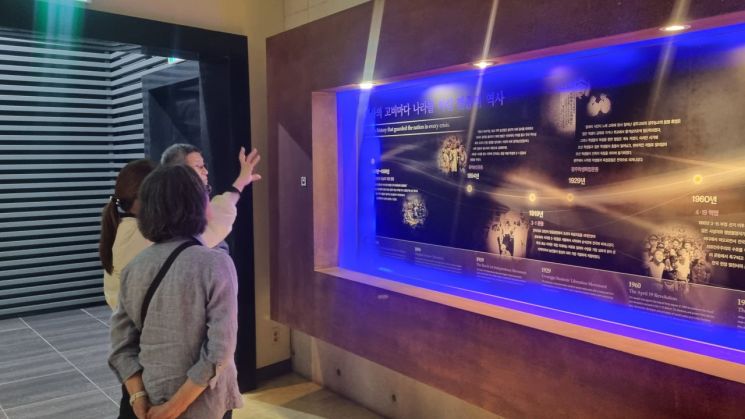 On the morning of the 13th, Susumu Sato (75) and Mayumi Sato (72) are listening to a guide at the Memorial Hall of the National 5·18 Democratic Cemetery in Unjeong-dong, Buk-gu, Gwangju. Photo by Min Chanki
On this day, Susumu Sato (75) and Mayumi Sato (72), who came from Japan to see the historic site of the May 18 Democratic Uprising in person, were touring the Memorial Hall and listening to a guide.
The Sato couple learned about the May 18 Democratic Uprising after coincidentally watching the film 'A Taxi Driver' on TV. After developing an interest in May 18, they also read the Japanese translation of author Han Kang's 'The Boy Is Coming.' Mayumi Sato said, "While reading the novel, I was so overwhelmed by the cruel and heartbreaking reality that it took me two months to finish the book."
They especially emphasized that, through cultural works such as novels and films, they were finally able to properly evaluate the historical legacy of former President Chun Doo-hwan. When former President Chun visited Japan in the 1980s and met the Emperor, the Japanese public welcomed him without knowing he was a perpetrator of massacres. At that time, only a small number of Japanese people were aware of what was happening in Gwangju in May 1980 and organized fundraising efforts.
The Sato couple shed tears as they visited the graves of martyrs such as Moon Jae-hak. Mayumi Sato said, "It was through the film and the novel that I first encountered May 18, and I wanted to empathize with Gwangju's pain and see what the site was like, which is why I visited the cemetery. Japan was peaceful and experiencing economic growth in the 1980s. That contrast made my heart ache even more, and I wanted to share in the sorrow."
Some visitors also took annual leave from work to visit the cemetery.
Park (51), an office worker, said, "I thought it would be crowded with commemorative events on the weekend, so I took annual leave and visited in advance. Having lived in Gwangju all my life, I made a promise to myself to visit the Democratic Cemetery every May."
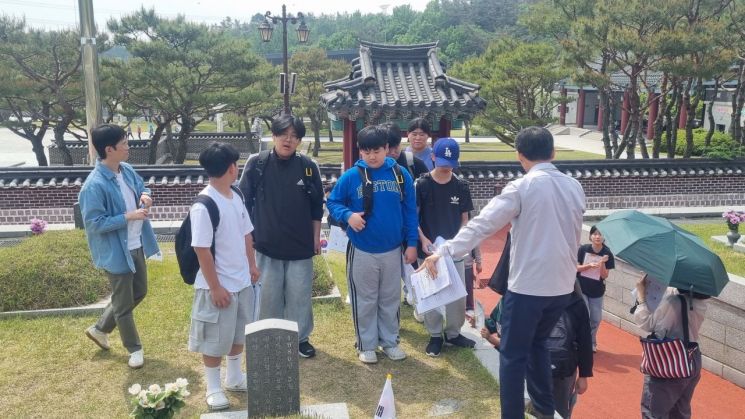 On the morning of the 13th, first-year students from Gwangsan Middle School are listening to explanations while touring the graves of the martyrs at the National 5·18 Democratic Cemetery in Unjeong-dong, Buk-gu, Gwangju. Photo by Min Chanki
There were also students visiting the cemetery as part of school field trips. On this day, about 80 first-year students from Gwangsan Middle School visited the cemetery and reflected on the noble spirit of sacrifice at the graves of martyrs such as Park Geumhee and other spirits of May.
Kim (14), a first-year student at Gwangsan Middle School, said, "Hearing the stories of May 18 and the martyrs in person, which I had only read about in books, made it feel much more real. I was moved to tears when I thought that democracy has finally been achieved thanks to the dedication of those who fought for democratization."
The number of visitors to the National 5·18 Democratic Cemetery has been increasing every month this year: 8,329 in January, 6,405 in February, 8,094 in March, and 12,287 in April. From May 1 to 11, 22,676 people visited the cemetery.
The commemorative ceremony for the May 18 Democratic Uprising is scheduled to be held at 10 a.m. on the 18th at the National 5·18 Democratic Cemetery in Unjeong-dong, Buk-gu, Gwangju, under the supervision of the Ministry of Patriots and Veterans Affairs.
© The Asia Business Daily(www.asiae.co.kr). All rights reserved.

![Clutching a Stolen Dior Bag, Saying "I Hate Being Poor but Real"... The Grotesque Con of a "Human Knockoff" [Slate]](https://cwcontent.asiae.co.kr/asiaresize/183/2026021902243444107_1771435474.jpg)

















