Japanese Beer Enters Its Second Golden Age Beyond 'No Japan'
First Quarter Imports Reach 67.9 Billion Won... Tops the Market for Two Consecutive Years
Japanese beer has reclaimed its former dominance by ranking first in the imported beer market for the second consecutive year in the first quarter of this year. At one point, Japanese beer was hit hard by the 'No Japan' (boycott of Japanese products) movement, but it is now benefiting from a combination of easing consumer sentiment in Korea and the 'Tsingtao incident.'
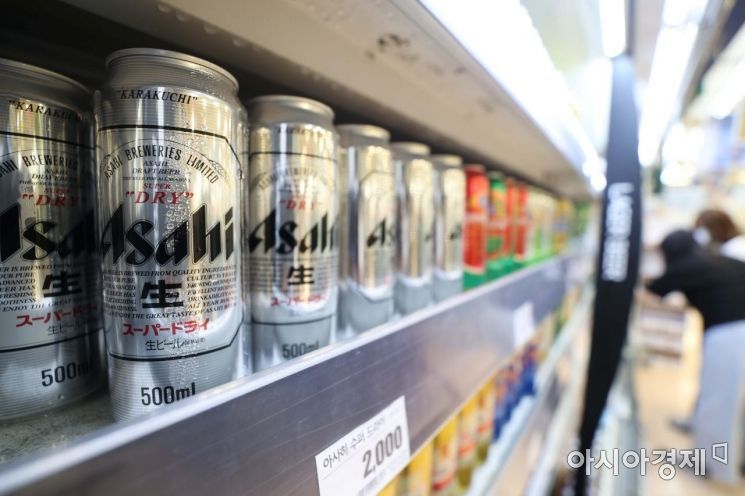 Japanese beer ranked first in the imported beer market in the first quarter of this year. The photo shows Japanese beer displayed at a convenience store in Seoul. Photo by Asia Economy DB
According to import and export trade statistics from the Korea Customs Service on May 13, the value of Japanese beer imports in the first quarter of this year was approximately 67.968 billion won, maintaining its top position in terms of import value for the second year in a row. Previously, Japanese beer peaked at 105 billion won in 2018, but the so-called 'No Japan' boycott by Korean consumers caused the figure to plummet to around 7.7 billion won in 2020. However, imports began to rebound in 2022, and in 2023, annual imports reached about 74.9 billion won, allowing Japanese beer to regain and maintain the top spot.
The leading importer of Japanese beer in Korea is Lotte Asahi Liquor. The 'Asahi Super Dry Draft Beer,' which Lotte Asahi Liquor released after about four years of research starting in 2017, is especially popular. This product, which produces a foamy head when opened to mimic the feel of draft beer, gained popularity through word of mouth, and when it was launched in 2023, some convenience stores and supermarkets experienced shortages due to high demand.
Industry analysts also point to the 'Tsingtao incident' of 2023 as a factor that worked to Japan's advantage. The incident led to increased aversion to Chinese beer, drawing attention to Japanese beer. The Tsingtao incident began when a video showing a man urinating on malt, a raw ingredient for beer, at the Tsingtao Brewery in Pingdu, Shandong Province, China, spread online. Although local authorities arrested the man in the video and the person filming shortly after the video circulated, consumer trust was not restored. As a result, Chinese beer, which ranked first in imported beer with a market size of 17.5 billion won in the first quarter of 2023, fell to fourth place in the first quarter of this year.
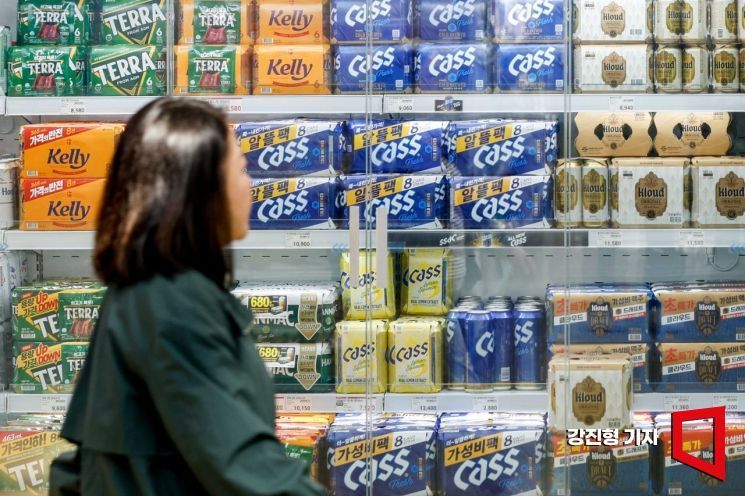
Meanwhile, the domestic alcoholic beverage industry is moving to raise prices. On May 13, Hite Jinro announced that it would increase the factory prices of its beer products by an average of 2.7% starting May 28, citing reasons such as rising prices of key raw materials. This is the first price increase in a year and six months since November 2023.
However, to ease the burden on consumers, the company decided to freeze the prices of certain products, including the 500ml beer can, which is the best-selling item in the home channel, and Filite, a type of happoshu. A company representative explained, "This decision was made in consideration of the economic situation and the burden on the restaurant industry."
Previously, OB Beer, the leading beer company in Korea, raised the factory prices of its major beer products such as Cass and Hanmac by an average of 2.9% starting in April. In 2023, OB Beer also raised beer prices, followed by Hite Jinro increasing the prices of both beer and soju. Lotte Chilsung Beverage stated, "We are not considering raising the prices of alcoholic beverages."
© The Asia Business Daily(www.asiae.co.kr). All rights reserved.