If Eggs Are Laid on a Wound,
Hatched Maggots Burrow Into Flesh and Cause Fatal Harm
The United States and Mexico, which have previously clashed over issues such as tariffs, illegal immigration, arms trafficking by cartels, and broken promises regarding water supply, are now in conflict over "maggots" that can also harm humans.
On May 12 (local time), the Mexican government criticized the U.S. government for its "unfair decision" to temporarily suspend imports of live cattle, bison, and horses from Mexico. The U.S. cited the need to block the larvae of a "parasitic fly" known as the New World Screwworm (NWS) as the reason for the suspension.
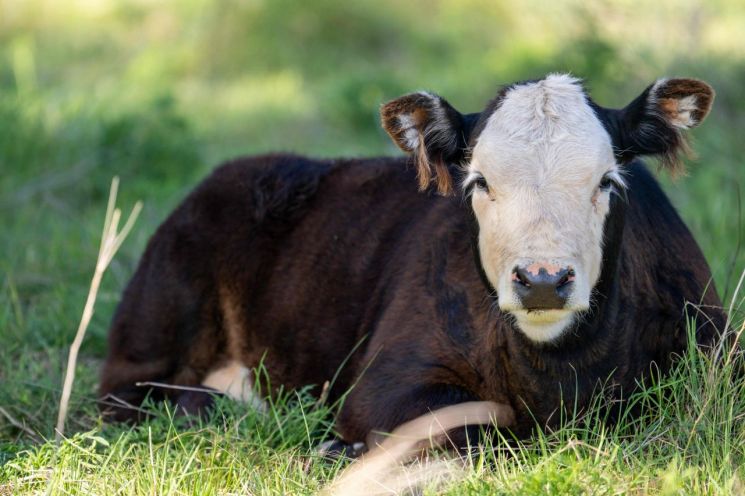 A cow resting in a field in Eden, Texas. This photo is for illustrative purposes and unrelated to the content. Photo by AFP Yonhap News
Mexican President Claudia Sheinbaum stated at a regular press briefing that day that the maggot, also called the "screwworm," had been detected in certain regions. She added, "We are also taking all possible measures to eradicate it," and said, "I believe the U.S. decision is extremely unfair."
Previously, the U.S. Department of Agriculture (USDA) announced in a press release on its website that it would block livestock imports at the southern border to prevent the entry of NWS.
U.S. Secretary of Agriculture Brooke Rollins emphasized, "The northward spread of NWS is unacceptable," and said, "This dangerous pest poses a serious threat to both the food supply and national security." According to explanatory materials from the Animal and Plant Health Inspection Service (APHIS) under the USDA, NWS?also known locally as the "screwworm"?has historically appeared in the southern United States, Mexico, Central America, Caribbean island nations, and Argentina, causing fatal harm to animals.
The parasitic fly lays its eggs on the wounds of livestock, pets, wild animals, birds, or humans. When the eggs hatch, the maggots burrow into the flesh, causing severe and sometimes fatal damage.
In the past, the U.S. government, in cooperation with Mexico and others, officially declared the eradication of this pest in the 1980s by releasing sterilized male parasitic flies?a method known as the Sterile Insect Technique (SIT)?starting in the 1950s and 1960s. However, since 2016, there have been sporadic detections on the U.S. mainland, including in Florida. Recently, there was a confirmed case involving an elderly person in Chiapas, southern Mexico, believed to have been affected by NWS that traveled through Central America via Panama.
This latest dispute has emerged amid heightened trade tensions between neighboring countries during the "tariff war" initiated by President Donald Trump. According to AFP, the U.S. has also expressed frustration that Mexico is imposing import tariffs on American products needed for NWS eradication, making the eradication efforts more difficult.
© The Asia Business Daily(www.asiae.co.kr). All rights reserved.

















