The Most Expensive Gift Ever Received by a U.S. President
Possible Resumption of F-35 Fighter Jet Acquisition
Concerns Over Backlash from Saudi Arabia and Israel
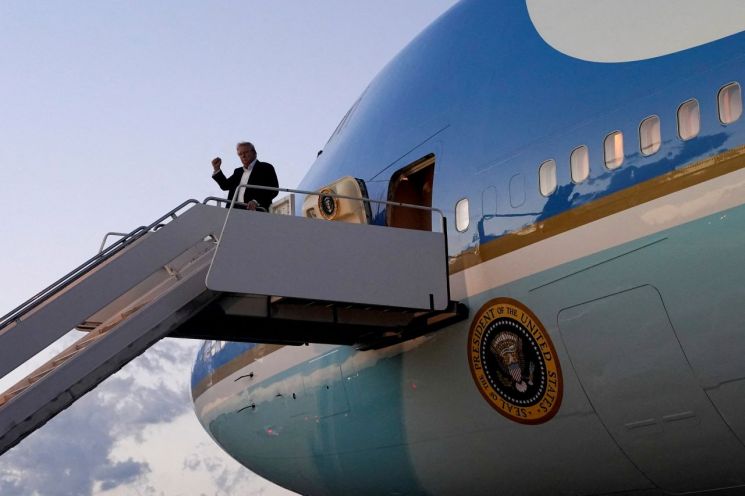 On the 11th of last month (local time), President Donald Trump arrived at West Palm Beach Airport in Florida and was disembarking from his private plane, Air Force One. Photo by Reuters Yonhap News
The Qatari royal family has gifted U.S. President Donald Trump a private jet worth several hundred billion won, sparking growing controversy both within and outside the United States. This is because there is analysis suggesting that Qatar has engaged in overt lobbying in order to acquire advanced U.S. weaponry. In and outside of Qatar, there is growing anticipation that President Trump will soon approve the sale of the F-35 fighter jets, a deal the U.S. government had previously rejected.
Qatar gifts Trump a Boeing 747-8 aircraft: "To be used as a private jet"
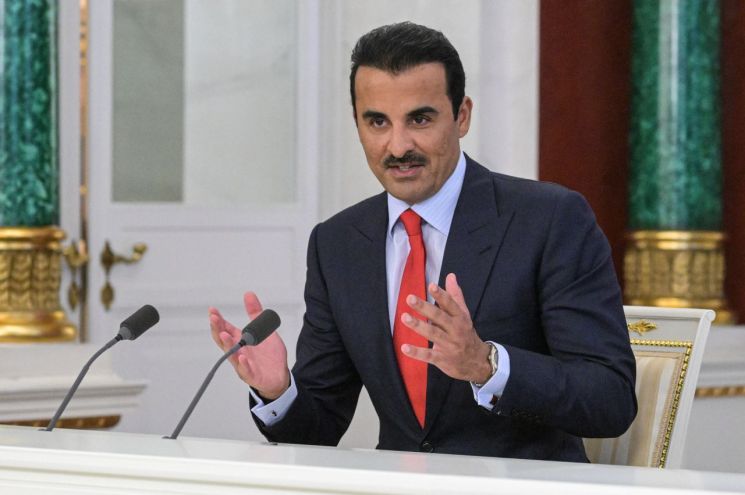
On the 12th (local time), President Trump announced at a White House press conference that he had received a Boeing 747-8 aircraft as a gift from Qatar. President Trump stated, "This is not a gift for me personally, but a gift for the U.S. Department of Defense," adding, "Until Boeing delivers the new presidential aircraft, I will use the donated plane as Air Force One."
The price of a single Boeing 747-8 aircraft reaches $400 million (about 560 billion won). The New York Times explained that this sets a record as the most expensive gift ever received by a U.S. president from a foreign country. President Trump reportedly plans to use the gifted Boeing 747-8 as his official aircraft during his term, and after leaving office, he intends to donate it to the Trump Library rather than use it for personal purposes.
In the United States, there is backlash led by the opposition Democratic Party, claiming that President Trump is gaining excessive personal benefit. Democratic Senator Adam Schiff pointed out on his social media, "This is a clear violation of the Emoluments Clause," and called it "blatant corruption." According to the Emoluments Clause of the U.S. Constitution, federal officials are prohibited from receiving gifts, payments, or positions from foreign governments without the consent of Congress.
The White House insists there are no legal issues regarding this controversy. White House spokesperson Caroline Leavitt explained, "Gifts from foreign countries are accepted in full compliance with relevant laws." The position is that there is no problem since President Trump will use the gifted aircraft as Air Force One during his term and will not use it for personal purposes after leaving office.
Will Qatar acquire the F-35? Approval was denied in 2020
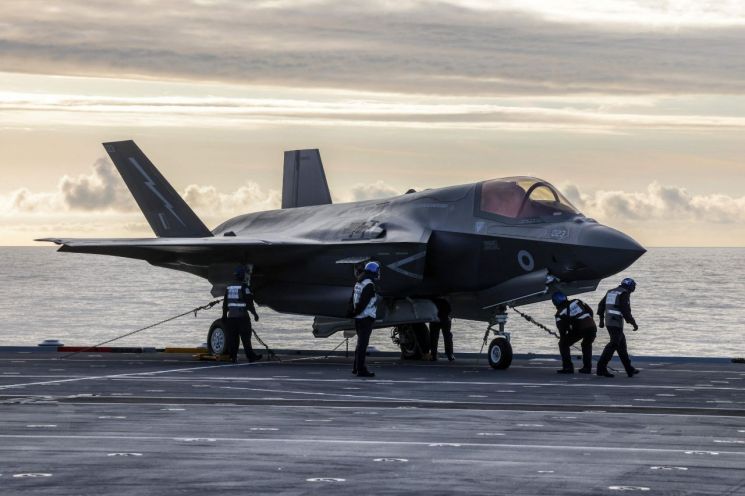
There is growing expectation in and outside of Qatar that the private jet gift for President Trump will pave the way for the acquisition of advanced U.S. weaponry. Qatar failed to acquire various weapons, including the advanced stealth F-35 fighter jets, due to rejection by the U.S. government during the Joe Biden administration.
According to CNN, the Qatari government requested to purchase F-35 fighter jets from the U.S. government in October 2020, but the request was denied after the Biden administration took office. The MQ-9B unmanned aerial vehicle (drone), which Qatar also sought to acquire alongside the F-35, was similarly blocked by the Biden administration. At the time, key U.S. allies in the Middle East, including Saudi Arabia and Israel, opposed the export to Qatar, resulting in the deal falling through.
Qatar is one of the Sunni Muslim countries led by Saudi Arabia, but it maintains close relations with Iran, the leading Shia nation. Qatar has also faced criticism for allegedly supporting pro-Iranian militant groups in the Middle East. The strong pro-Iran image is a key reason why Saudi Arabia and Israel opposed Qatar's acquisition of the F-35 and military buildup. The Biden administration, along with Saudi Arabia and Israel, has continued to restrict the export of advanced weaponry to Qatar out of concern over its military expansion.
However, the situation changed after the start of the Trump administration's second term. In March of this year, the Trump administration approved the export of MQ-9B drones to Qatar. During his first term in 2017, President Trump also approved the export of F-15 fighter jets to Qatar. CNBC reported that the Qatari royal family and government have conducted both direct and indirect lobbying campaigns targeting the Trump administration through various channels.
Trump draws closer to pro-Iran Qatar, raising concerns over backlash from Saudi Arabia and Israel
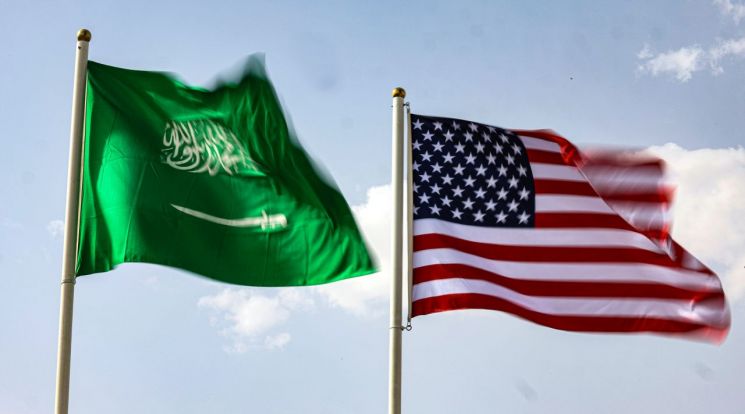
There are concerns that if diplomatic ties between Qatar and the Trump administration deepen, traditional U.S. allies in the Middle East?such as Saudi Arabia and Israel?may push back, potentially disrupting the U.S. strategy in the region.
According to the Associated Press, Saudi Arabia, along with other Middle Eastern alliance countries, severed diplomatic ties and imposed a trade blockade on Qatar from 2017 to 2021. The main reason for the severance was evidence that Qatar opposed Saudi Arabia's anti-Iran policy and supported pro-Iranian militant groups in the region. Israel has also objected to Qatar's support for militant organizations and continues to oppose the sale of U.S. weapons to Qatar.
Since the Trump administration took office, Qatar has been actively engaging in various diplomatic efforts to expand its influence in the Middle East. According to CNN, Qatar is lobbying the Trump administration to lift U.S. sanctions on Syria. After the collapse of the Bashar al-Assad regime in Syria, the U.S. government partially eased existing sanctions against Syria in January of this year, but the sanctions themselves remain in place. Qatar, which supported the establishment of the new Syrian government behind the scenes, is seeking to further expand its influence by swaying U.S. policy.
Hassan Alhasan, Senior Fellow for Middle East Policy at the International Institute for Strategic Studies (IISS), told CNN, "Qatar wants to wield more influence than other allies such as Saudi Arabia by acting as the U.S. mediation partner in various conflicts," adding, "This could put Qatar at odds with the interests of other Middle Eastern countries such as Saudi Arabia, the United Arab Emirates (UAE), and Israel."
© The Asia Business Daily(www.asiae.co.kr). All rights reserved.



















