US and China Cut Tariffs by 115 Percentage Points Each in First Talks
Trump Calls US-China Trade a "Complete Reset"
US Recession Fears and Chinese Countermeasures Lead to "Trump's Retreat"
"US Effective Tariff Rate on China Still at 40%"
Despite Eased Tensions, More Pain Expected Before Final Agreement
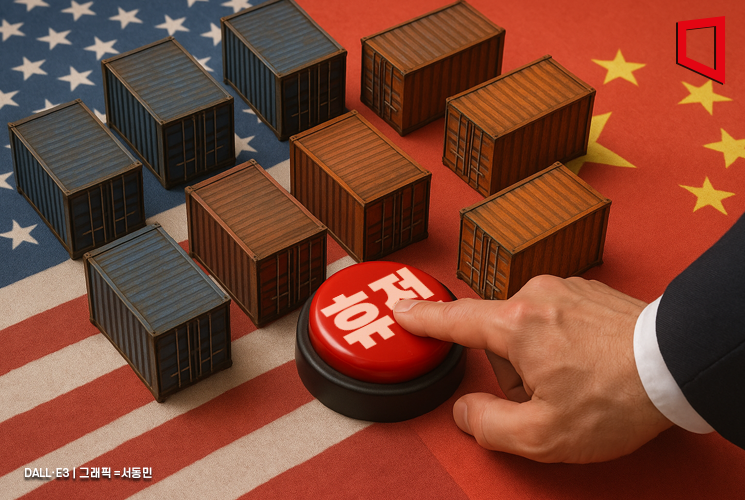
The United States and China, which had been engaged in a brinkmanship-level tariff war, have reached a dramatic agreement in their first official trade negotiations to lower their respective tariff rates by 115 percentage points each. President Donald Trump hailed the move as a "complete reset" of bilateral trade relations, but some observers have described it as a "retreat by Trump" and a "victory for Xi Jinping." With bilateral trade virtually severed, the U.S. economy contracting in the first quarter, and growing concerns over stagflation (rising prices amid economic stagnation) due to supply shocks, President Trump, cornered by these developments, sought an exit strategy by retreating from the tariff war. Analysts note that the U.S. and China produced a swift agreement in their first trade talks as a result.
This negotiation has brought an immediate truce to the extreme trade war between the U.S. and China. However, as U.S. tariffs on Chinese goods remain high, many forecast that the path to normalizing bilateral trade and reaching a final trade agreement at the level the U.S. desires will be a long one.
Trump: US-China Trade "Completely Reset"... Both Sides to Cut Tariffs by 115 Percentage Points
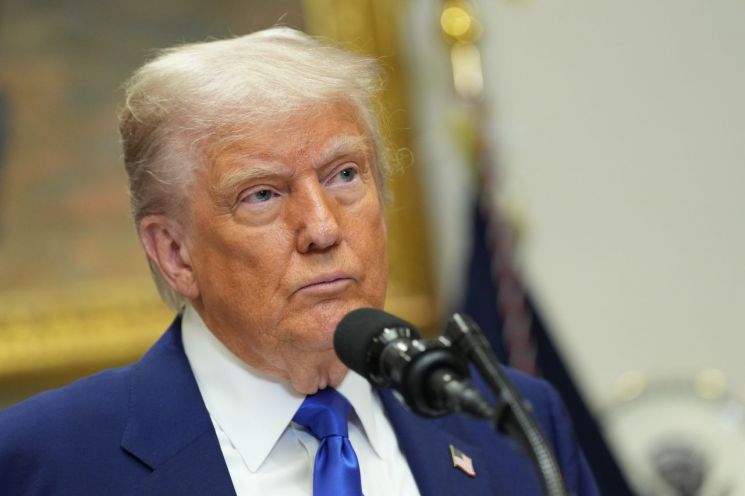
On the 12th (local time), President Trump told reporters at the White House that the new U.S.-China trade deal marks a "complete reset" of the two countries' trade relationship, with China agreeing to open its market. He stated, "The best part of this deal is that China has agreed to open its market to American companies," and added, "China will halt and eliminate non-monetary (non-tariff) trade barriers." It has been reported that the agreement includes China lifting its export controls on rare earths to the U.S.
President Trump also said, "U.S.-China relations are very good, and while China has suffered serious damage, we are not trying to hurt China," adding that he plans to speak with Chinese President Xi Jinping by phone this weekend. He further noted that China has agreed to halt the distribution of fentanyl, and hinted at the possibility of eliminating the current 20% tariff on fentanyl.
The United States and China, following their first high-level trade talks in Geneva, Switzerland, on the 10th and 11th, agreed to lower their mutual tariff rates by 115 percentage points each. As a result, the U.S. tariff rate on Chinese goods will drop from 145% to 30%, and China's tariff rate on U.S. goods will fall from 125% to 10%. This reduction will be in effect for 90 days, during which both sides will continue negotiations. The two countries also plan to establish a new consultation framework for ongoing talks and to pursue more permanent trade agreements.
Scott Besant, U.S. Treasury Secretary and a participant in the talks, stated that the U.S. tariff rate on Chinese goods will be set at 10-34% in the future. He said, "We will meet with China in the coming weeks to reach a broader agreement," and suggested that, similar to the Phase One trade deal signed during Trump's first term, a purchase agreement to balance the trade deficit may be reached. However, tariffs on specific items such as semiconductors, pharmaceuticals, and steel were not included in this agreement, and he noted that "strategic decoupling" will be pursued for these sectors.
US Recession Fears and Chinese Countermeasures... Trump Hits Pause on Tariff War
Analysts attribute the surprise agreement to sharply lower tariffs in the first round of trade talks?contrary to initial expectations that the U.S. and China would only engage in exploratory discussions?to the challenging economic situation in the United States. After President Trump implemented aggressive tariff policies, U.S. stock, dollar, and Treasury bond prices all plummeted, increasing turmoil in financial markets. Concerns over economic aftershocks, including rising prices and slowing growth, also intensified. Notably, U.S. GDP growth in the first quarter was recorded at an annualized rate of -0.3% compared to the previous quarter, marking the first contraction in three years. As companies stockpiled imports in anticipation of higher tariffs, the trade deficit widened and growth declined. In addition, executives from major retailers such as Walmart and Target, which are highly dependent on Chinese supply chains, met with President Trump to warn about the fallout from an extreme tariff war. China’s countermeasures were equally forceful. When President Trump raised tariffs on Chinese goods to 145% after beginning his second term, China retaliated by raising its tariffs to 125% and imposing a ban on rare earth exports, among other tough measures.
The Guardian noted, "Trump has made concessions," adding that "not only market instability, but also warnings from retailers about empty shelves and a sharp drop in shipments from China to U.S. ports, have likely strengthened the position of trade moderates within the Trump administration."
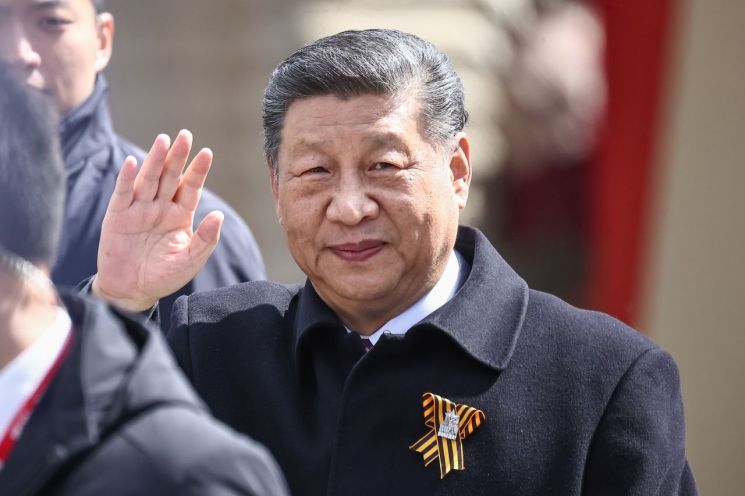
Some observers have characterized the agreement as a victory for China. While the U.S. drastically lowered tariffs on Chinese goods, China did not present substantial concessions to address the trade imbalance. Scott Kennedy, senior adviser at the Center for Strategic and International Studies (CSIS), commented, "The Geneva agreement represents an almost complete retreat by the United States," and "demonstrates the legitimacy of Xi Jinping's strong retaliatory measures."
"US Effective Tariff Rate on China at 40%"... More Pain Expected Before Final Trade Agreement
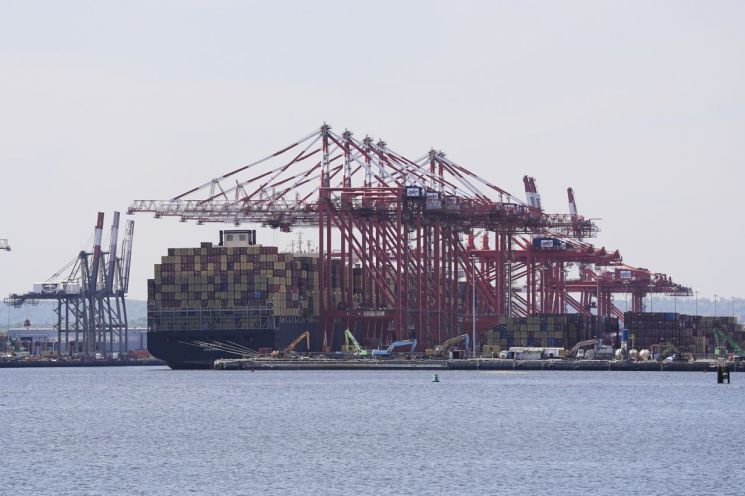
Although the agreement has significantly eased tensions between the United States and China, many believe there is still a long way to go before trade returns to normal. According to Capital Economics, even with the sharp tariff reductions, the effective U.S. tariff rate on Chinese products remains at 40%, which is still higher than before President Trump's second term. Maeva Cousin, an economist at Bloomberg Economics, projected that "U.S. imports from China could fall by as much as 70%," despite the latest measures. Since the tariff cuts are temporary rather than permanent, the rates could rise again depending on the progress of future negotiations.
China is seeking further tariff reductions, while the United States is likely to demand significant concessions from China to reduce the trade deficit. As a result, considerable friction is expected before the two sides can reach a comprehensive trade agreement, including a final consensus on tariff rates. Trade and investment between the two countries are also expected to remain subdued until a final agreement is reached.
© The Asia Business Daily(www.asiae.co.kr). All rights reserved.



















