Choi Younggeun, President of the Korea Fair Trade Mediation Agency, Interview
Early Termination of Restaurant Unmanned Devices
Hundreds of Thousands of Won in Installation Penalties
Court Battles Can Take 5 to 6 Years
Quick Resolution Through Amicable Agreements
Over 4,000 Cases Received Last Year
Mediation Success Rate Raised to 76%
Post-Management and Supervision of Sanctioned Companies
Mr. A, who ran a restaurant in Seoul, decided to close his business after a sharp drop in sales made it difficult to continue operations. To save on labor costs paid to part-time workers, he had introduced a table order (tablet ordering device) system, but now requested early termination of the contract with the service provider. However, he received an unexpected response: he was told he would have to pay a penalty of 3.5 million won for reasons such as reimbursement for supplies provided free of charge. When negotiations with the company did not go smoothly, he filed for dispute mediation with the Korea Fair Trade Mediation Agency. As a result, through mediation, Mr. A was able to terminate the contract early by paying only 1.1 million won, recalculated based on the actual usage period during the entire contract.
As the economic downturn has led to an increase in solo proprietors, reliance on unmanned ordering devices in restaurants?so-called restaurant tech?has grown. However, disputes are also increasing due to excessive penalties and non-transparent fees. Initial installation costs and fees can reach several million won, with additional charges for various supplies, and if the contract period is not fully met, business owners are often forced to shoulder hefty penalties against their will.
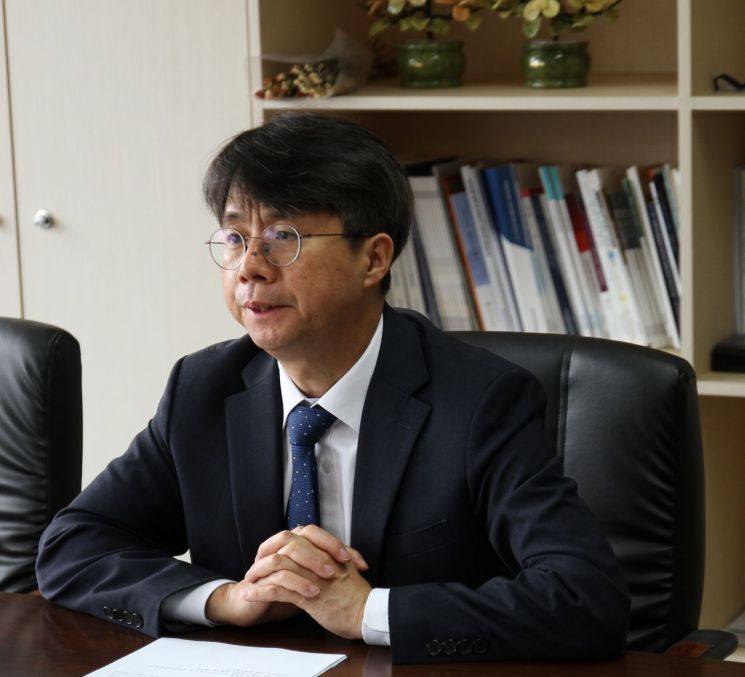 Choi Younggeun, President of the Korea Fair Trade Mediation Agency, stated in an interview with this publication on the 9th at the Fair Trade Mediation Agency in Jung-gu, Seoul, "Dispute mediation is more efficient than administrative sanctions in that small and medium-sized enterprises (small business owners) can receive substantial damage relief."
Choi Younggeun, President of the Korea Fair Trade Mediation Agency under the Fair Trade Commission, said in an interview with this publication on the 9th, "As new industries grow, disputes between companies in unequal relationships are rapidly increasing, and the demand for mediation to resolve these amicably is also rising." He emphasized, "Our role is to provide relief for unfair damages when disputes arise." Most users of the mediation process are small business owners and self-employed individuals. Instead of engaging in court battles that can take five to six years, parties can quickly resolve unfair situations through amicable agreements, thereby reducing administrative costs and social waste. Choi highlighted, "Dispute mediation is more efficient than administrative sanctions by the Fair Trade Commission in that it provides substantial relief for damages."
Online platforms are another area where requests for dispute resolution have recently surged. Choi stated, "In the online platform sector, many disputes are arising over issues such as unilateral transaction suspensions by platform operators and non-transparent fee settlements." For example, when a store on a platform is found to have sold copyright-infringing products?so-called counterfeits?the platform operator often suspends the store, and the store owner appeals for the suspension to be lifted. Choi explained, "We verify the facts, such as whether the goods are indeed counterfeits, and check for violations of rights, obligations, and procedures stipulated in the contract, so that mediation can be achieved between the parties."
Due to the economic downturn, the number of business-to-business dispute mediations last year reached an all-time high. The total number of dispute mediation cases received last year was 4,041, a 16% increase from the previous year. This marks two consecutive years of growth since 2023, when the increase was 23%. As the digital economy rapidly expands, the number of disputes related to online platforms such as open markets and delivery apps has exploded. Choi said, "Although there are limitations because acceptance of the mediation proposal depends on the voluntary decision of the parties, we provide incentives by not taking administrative action if mediation is established and carried out." He added, "Improving the expertise of investigators and offering on-site mediation services also contribute to raising the mediation success rate." As a result, last year the mediation success rate was raised to 76%.
Post-management and supervision of companies sanctioned by the Fair Trade Commission is also a major part of the Mediation Agency's work. The Agency is currently responsible for monitoring compliance with consent decisions for four convenience store chains (GS25, CU, 7-Eleven, Emart24), Hansot, and Eugene General Construction, including the recently concluded Starfield Hanam case. A consent decision is a system in which, for legal violations, a business proposes corrective measures such as restoration or damage relief, and if the Fair Trade Commission deems them appropriate, the case is closed quickly without determining the legality of the violation. The four convenience store chains, which had been investigated by the Fair Trade Commission for supplier abuse, have used this system to reduce unpaid penalties by up to 3.8 billion won annually and, last month, announced a total of 8.3 billion won in win-win measures over three years, which are now under the Agency's supervision for implementation.
The Mediation Agency is also tasked with monitoring the implementation of corrective actions confirmed by the Fair Trade Commission. Choi stated, "We are currently monitoring Kyungbo Pharmaceutical's compliance with educational measures imposed by the Fair Trade Commission for unfair customer solicitation." He added, "Rather than simply teaching legal provisions, we are including analysis of the pharmaceutical industry and reflecting similar case precedents in the training content to link it with business practices, which will help prevent future legal violations by businesses."
© The Asia Business Daily(www.asiae.co.kr). All rights reserved.
![Clutching a Stolen Dior Bag, Saying "I Hate Being Poor but Real"... The Grotesque Con of a "Human Knockoff" [Slate]](https://cwcontent.asiae.co.kr/asiaresize/183/2026021902243444107_1771435474.jpg)
















