As Part of U.S. Domestic Manufacturing Expansion Strategy
"Main Targets Are Global Big Pharma, India, and China"
The United States is intensifying its policies that pressure overseas pharmaceutical and biotech companies to relocate their production facilities. In addition to announcing high tariffs, the U.S. government is introducing a series of measures that place a burden on companies, such as drug price reductions and unannounced inspections of foreign pharmaceutical factories. Experts predict that while the impact on domestic companies will be relatively limited, some degree of burden is inevitable.
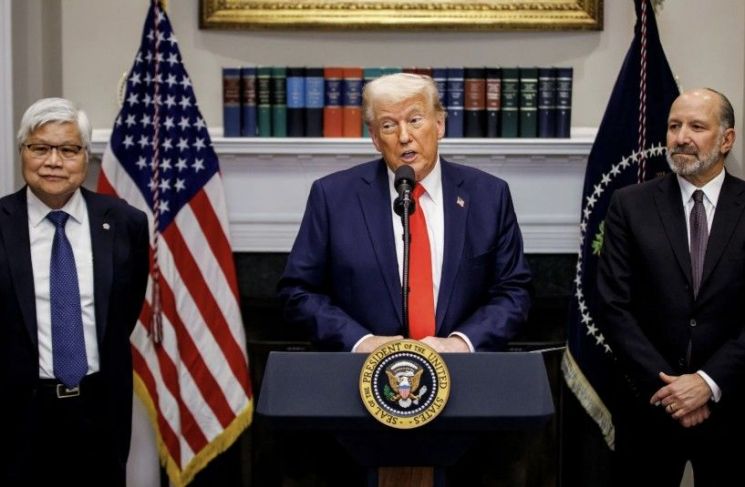
According to U.S. local media and related industries on May 13, the U.S. government has recently announced a series of non-tariff regulations related to pharmaceuticals. On May 12 (local time), President Donald Trump signed an executive order mandating prescription drug price reductions of up to 80 percent. Previously, the U.S. Food and Drug Administration (FDA) also announced plans to expand unannounced inspections of foreign manufacturing facilities that produce medical products and food.
The maximum 80 percent drug price reduction announced by President Trump is a figure that makes it virtually impossible for global big pharma companies to avoid losses. As a result, industry experts generally believe that the government will later propose measures such as reducing the scale of price cuts for drugs produced domestically.
Jung Yuntaek, head of the Pharmaceutical Industry Strategy Research Institute, explained, "The overall direction of pharmaceutical policies under the second Trump administration can be interpreted as an extension of the signal to bring overseas production facilities back to the United States. Most countries offer various incentives for domestic production, so it is likely that the U.S. will also propose complementary alternatives such as adjusting the scale of price reductions."
The expansion of unannounced inspections is seen in the same context. The U.S. is strengthening inspections for pharmaceuticals produced overseas, while easing regulations related to local production. Lee Hyunwoo, head of the Global Division at the Korea Pharmaceutical and Bio-Pharma Manufacturers Association, stated, "As long as companies are well-prepared, there should not be major issues, but the increased burden of knowing that inspections can occur without notice at any time is clear. This appears to align with the U.S. policy of strengthening domestic manufacturing."
There are also predictions that the impact of these U.S. policies on the Korean industry will be relatively minor. Jung Yuntaek explained, "Ultimately, these policies seem to be focused on countries such as the United Kingdom, Ireland, Switzerland, and Belgium, from which the U.S. imports the most and where it runs the largest deficits."
Lee Hyunwoo also commented, "The Korean pharmaceutical industry still accounts for a small share from the U.S. perspective. Countries like Ireland, Belgium, and Germany, which record large trade surpluses with the U.S., appear to be the main targets. It seems that the Korean pharmaceutical industry is not yet within the U.S. government's immediate scope."
However, Jung Yuntaek added, "If unannounced inspections are expanded, domestic companies will face increased costs for on-site audits. Korean companies must cover the expenses incurred by U.S. inspection teams staying in Korea, and the psychological burden of undergoing inspections should not be underestimated."
Some argue that these U.S. policies could actually turn out to be an opportunity in disguise. A Celltrion representative said, "We already have years of experience with price-competitive supply systems in Europe, so we have a competitive edge over other companies when it comes to the lowest-price supply system being implemented in the U.S. We expect this could create a more favorable competitive environment for us."
Another industry official commented, "These successive policies ultimately reflect the U.S. government's intention to lower high drug prices and reduce healthcare spending. As a result, there will be a greater preference for affordable drugs, and the consensus in the industry is that this will be positive for biosimilar pharmaceuticals."
© The Asia Business Daily(www.asiae.co.kr). All rights reserved.

















