Exports Drop to $12.8 Billion, Down 23.8% Year-on-Year
Imports Fall to $14.6 Billion, Decreasing by 15.9%
Trade Balance Records a $1.7 Billion Deficit
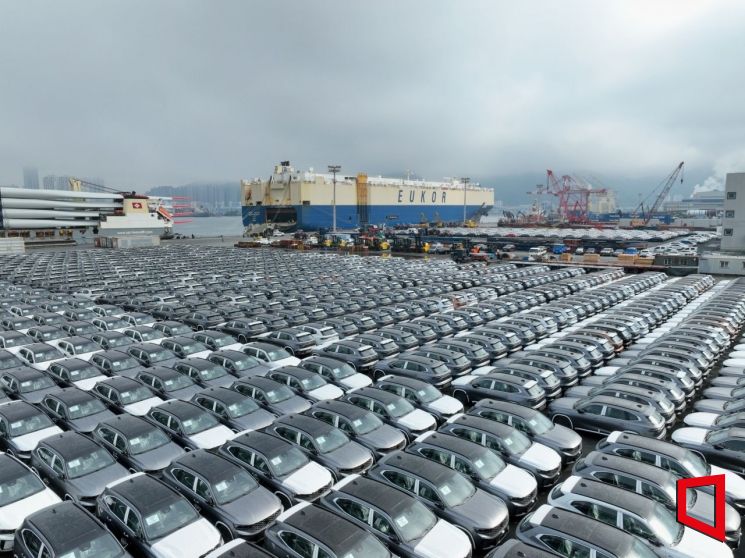
From May 1 to 10, South Korea's exports plunged by more than 23%, causing the trade balance to return to a deficit. This marks the largest drop in 4 years and 7 months, since October 2020 during the COVID-19 pandemic. While semiconductor exports provided some support, a combination of strengthened U.S. tariffs on specific items and weakened demand in major markets led to a sharp decline in exports of passenger cars and petroleum products.
According to the Korea Customs Service on May 12, exports during this period totaled $12.8 billion, down 23.8% compared to the same period last year. Imports also fell by 15.9% to $14.6 billion. The trade balance recorded a deficit of $1.7 billion, more than tripling the deficit from the same period last year ($500 million).
Taking into account the number of working days, the average daily export value was $2.57 billion, a slight decrease of 1.0% from a year earlier. Although the decline in export prices was limited compared to the same period last year, there was a clear reduction in export volume.
By item, semiconductor exports increased by 14.0%, partially offsetting the overall export slump. However, exports of passenger cars (-23.2%), petroleum products (-36.2%), and ships (-8.7%) all declined. Notably, falling international oil prices and a slowdown in the electric vehicle market appear to have contributed to the weak performance in petroleum product and automobile exports. The share of semiconductors in total exports rose by 8.8 percentage points year-on-year to 26.6%.
By country, exports to Taiwan increased by 14.2%. However, all major export markets recorded double-digit declines, including China (-20.1%), the largest market, as well as the United States (-30.4%), Vietnam (-14.5%), and the European Union (EU, -38.1%). In the U.S. market in particular, a combination of declining demand for automobiles and steel products, along with inventory adjustments within the United States, played a role. Exports to China, the United States, and Vietnam accounted for 48.7% of the total.
On the import side, some items such as semiconductor manufacturing equipment (10.6%) and passenger cars (22.1%) saw increases. However, overall imports shrank due to declines in major items such as crude oil (-6.1%) and semiconductors (-8.2%). Energy imports, including crude oil, gas, and coal, fell by 13.7% compared to the same period last year. The continued stability of energy prices is seen as the main reason for the decrease in import value.
This export and import slump was directly caused by the global economic slowdown and weakened demand in major markets. In addition, the item-specific tariff increases implemented by the United States from April acted as an indirect burden. In particular, key export items such as automobiles and steel have faced higher tariffs in the U.S. market, weakening local price competitiveness and leading to export volume adjustments as a result.
While the increase in semiconductor exports is a positive sign, some point out that the sustainability of this growth remains uncertain, as a full recovery in global semiconductor demand has yet to materialize. With the ongoing restructuring of global supply chains and the strengthening of U.S.-led protectionism, most forecasts suggest that a recovery in exports will take considerable time.
The Korea Customs Service stated, "It is necessary to consider the impact of short-term factors such as changes in the number of working days," and added, "It is important to closely monitor future global market trends and changes in major countries' trade policies."
© The Asia Business Daily(www.asiae.co.kr). All rights reserved.

















