April CPI to Be Announced on the 13th:
Expected to Rise 0.3% Month-on-Month
Retail Sales Data on the 15th:
Growth Rate Projected to Slow
This week, Wall Street's attention is focused on the outcome of tariff negotiations between the United States and China, as well as inflation and consumer data. With household and corporate sentiment beginning to weaken due to tariffs, a key point of interest is whether the effects of tariffs have started to be fully reflected in U.S. inflation and retail sales indicators.
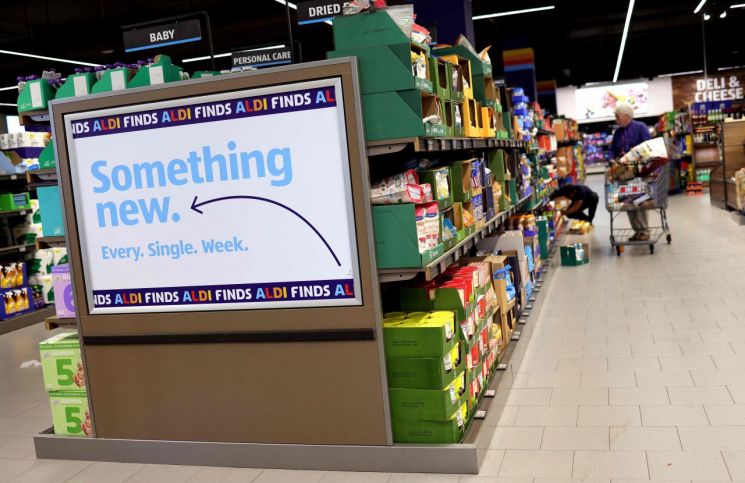
According to the U.S. Department of Labor on the 11th (local time), the Consumer Price Index (CPI) for April will be released on the 13th.
The market expects that the April CPI rose by 0.3% compared to the previous month. In March, it had increased by 0.1%. The year-on-year increase is projected to remain at 2.4%.
This CPI release is the first inflation indicator to be published since the United States announced reciprocal tariffs on the 2nd of last month. Although the U.S. granted a 90-day grace period for country-specific reciprocal tariffs, the basic 10% tariff has remained in effect since it was implemented on the 5th of last month. As a result, it is expected that the impact of tariffs on the CPI indicator may be limited. In particular, after Federal Reserve Chair Jerome Powell kept the benchmark interest rate unchanged for the third consecutive time last month and warned of the risks of inflation and rising unemployment due to tariffs, the market has been paying even closer attention to inflation data.
The Producer Price Index (PPI) for April will be released on the 15th. The PPI, which measures wholesale prices, affects the retail price index, CPI, with a time lag. In a situation where import prices are expected to rise due to tariffs, last month's PPI is projected to have increased by 0.2% from the previous month, reversing from a 0.4% decline in March.
Retail sales data, a key pillar accounting for two-thirds of the U.S. economy, will also be released on the 15th. Retail sales for April are expected to have remained flat compared to the previous month. In March, retail sales increased by 1.4%, but the growth rate is expected to have slowed in April. The preliminary University of Michigan Consumer Sentiment Index, which reflects consumer confidence in the U.S. economy, will be released on the 16th. The final figure for April was 52.2, a 4.8-point drop from the previous month’s 57. The expected inflation rate one year ahead will also be announced; attention is focused on whether the May figure will show a greater or smaller increase compared to April’s 6.5%.
Matthew Miskin, co-chief investment strategist at John Hancock Investment Management, said, "If the CPI comes in higher than expected and retail sales are weaker than anticipated, concerns about stagflation (rising prices amid economic stagnation) could intensify."
There are also projections that if tariffs lead to sluggish consumption and the U.S. economy slows rapidly, the inflation rate may remain limited. Although companies are trying to pass on some of the increased import costs from tariffs to consumer prices, if consumer sentiment deteriorates, overall sales could shrink and corporate earnings could worsen, making price hikes difficult.
Anna Wong, an economist at Bloomberg Economics, analyzed, "Even though most of the tariff costs have been borne in the U.S., if the CPI growth rate remains moderate, it is likely because demand is slowing." She added, "Retailers are having difficulty raising prices without a sharp drop in demand." She went on to say, "If these effects persist, the net impact of tariffs may cause less inflation than is generally assumed."
© The Asia Business Daily(www.asiae.co.kr). All rights reserved.
![Clutching a Stolen Dior Bag, Saying "I Hate Being Poor but Real"... The Grotesque Con of a "Human Knockoff" [Slate]](https://cwcontent.asiae.co.kr/asiaresize/183/2026021902243444107_1771435474.jpg)
















