U.S. Requires Tax Filing for Americans Living Abroad
"Leo XIV's Case Is Unprecedented Compared to His Predecessors"
With the election of Leo XIV as the first American pope in history, the American Catholic community and political circles are welcoming the news. However, separately from this, the pope's tax matters are expected to become somewhat complicated.
The Washington Post (WP) reported on the 10th (local time) that, unless Leo XIV renounces his U.S. citizenship, there are various considerations as to whether he must file tax returns and financial disclosures to the U.S. government as an American citizen residing abroad.
Born in 1955, Leo XIV is an American citizen who was born in Chicago, Illinois under the name Robert Francis Prevost. In 2015, he also became a naturalized citizen of Peru, where he had lived for a long time as a missionary and clergyman.
Although the exact date of acquiring his third citizenship is unknown, he also holds Vatican City citizenship, as he had been residing in either Vatican City or Rome and working as a cardinal and prefect of the Dicastery for Bishops. Thus, at the time of his election as pope on May 8, he held triple citizenship.
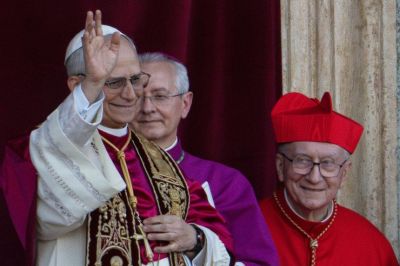
WP noted that Leo XIV's case is unprecedented, differing from his recent predecessors from Poland, Germany, and Argentina. Unlike many other countries that do not tax their citizens living abroad, the United States has a broad scope of tax laws.
The U.S. government generally requires all American citizens, including those residing overseas, to file annual tax returns. According to the Internal Revenue Service, for the 2025 tax year, American citizens living abroad may be eligible for an income exclusion of up to $130,000 (approximately 182 million won) when filing their taxes.
However, income earned while working for a foreign government is an exception. As Leo XIV is both a clergyman and the head of the Vatican City government working for the Holy See, it means that his income must be calculated to determine how much tax, if any, he would owe to the U.S. government.
The pope does not receive a fixed salary; instead, the Holy See provides housing, meals, travel, and medical expenses. In addition, he is given an allowance or expense account each month for personal use. WP explained that, to convert the value of these employment benefits into taxable income according to IRS standards, the assistance of an accountant would likely be required.
In addition, under U.S. tax law, clergy receive special tax exemptions for their residences. Since Leo XIV's Vatican residence is property owned by his employer and he is required to live there for his duties, it is likely to qualify for a tax exemption.
Jared Walczak, vice president of the Washington-based think tank Tax Foundation, told WP, "I don't think Leo XIV will have to pay taxes to the U.S. government," but also added, "The IRS may issue separate documentation regarding the handling of his tax matters."
© The Asia Business Daily(www.asiae.co.kr). All rights reserved.

















