Painting the Red-Light District Yellow... Prostitution Drops by 90%
Japanese Police: "Bright Street Colors Make Sex Workers and Customers More Noticeable"
Critics Argue, "Only a Temporary Fix, Not a Fundamental Solution"
A study has found that painting the notorious red-light district alleyways of Osaka, Japan in yellow led to a dramatic reduction of over 90% in prostitution, drawing widespread attention.
On May 7 (local time), the South China Morning Post (SCMP) reported that Japanese police had succeeded in suppressing prostitution through an innovative method of simply painting the alleyways.
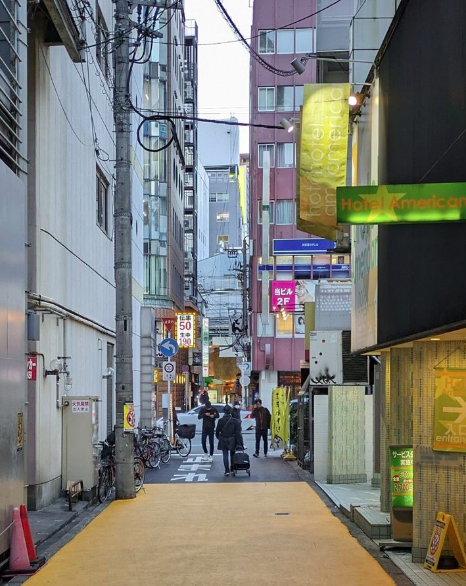
According to the outlet, in December of last year, police painted a roughly 100-meter-long alley in the Doyujicho area near JR Osaka Station in a bright yellow color and decorated the street with art pieces depicting marine life.
Before the project, this area was an infamous prostitution street where an average of 7.43 women solicited customers each day. However, within a week of the street’s transformation, the number dropped noticeably, and two months later, the average had fallen to just 0.86 per day?a decrease of over 90% compared to before the initiative.
Police believe that the bright colors of the street made both sex workers and customers more conspicuous, causing those who wished to avoid attention to leave the alley. It was also reported that the marine life illustrations throughout the street were intended to subconsciously encourage people to "keep moving." Police explained that this strategy was based on "nudge theory," which suggests that subtle changes in the environment can influence human behavior.
However, some point out that this measure is not a fundamental solution to the widespread prostitution problem across Japan. Professor Takeshi Haraguchi of Kobe University emphasized, "A method that focuses solely on driving women out of certain areas is only a temporary fix," adding, "We need to consider why they are standing there in the first place."
Meanwhile, in Japan, it is reported that more young women are turning to prostitution to make a living or to pay off debts incurred at host clubs. In particular, Osaka has seen a surge in the number of sex workers since the COVID-19 pandemic, and some women have returned to soliciting customers even after being arrested.
© The Asia Business Daily(www.asiae.co.kr). All rights reserved.

![User Who Sold Erroneously Deposited Bitcoins to Repay Debt and Fund Entertainment... What Did the Supreme Court Decide in 2021? [Legal Issue Check]](https://cwcontent.asiae.co.kr/asiaresize/183/2026020910431234020_1770601391.png)