Highest Nationwide Increase for Two Consecutive Weeks as Listings Drop and Non-Resident Purchases Surge
Rise Centered on Areas with Favorable Living Conditions Amid Political Spotlight on "Relocation Theory"
Seoul and the Metropolitan Area Remain Firm, While Most Provincial Regions Continue to Decline
The decline in apartment prices in Sejong City appears to be coming to an end after four years. For the first time this year, the cumulative price increase for apartments in Sejong City has turned positive. Sejong City had experienced annual declines for four consecutive years since 2021. The city is believed to be benefiting significantly from the so-called "relocation theory," as both the proportion of purchases by non-residents has increased and the number of listings has decreased at the same time.
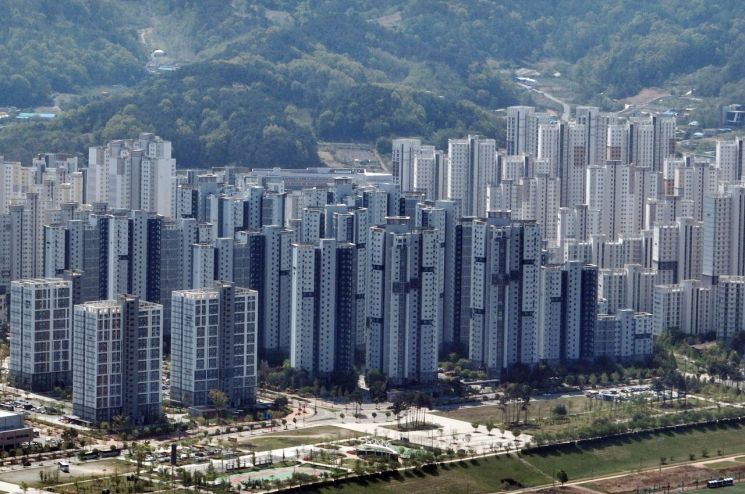
According to the "Weekly Apartment Price Trends for the First Week of May (as of May 5)" released by the Korea Real Estate Board on May 9, apartment sale prices in Sejong City rose by 0.40% compared to the previous week. Although this is a smaller increase than the 0.49% recorded in the last week of April, Sejong City posted the highest weekly increase nationwide for the second consecutive week. The Korea Real Estate Board explained, "The increase was led by popular complexes in Dodam-dong, Saerom-dong, and Jongchon-dong, where residential conditions are favorable." Sejong City also achieved a cumulative increase of 0.04% for the year, marking its first positive turn in 2025.
The last time Sejong City recorded an annual increase was in 2020, when it posted the highest growth in the country at 44.9%. The surge was triggered when the then-ruling Democratic Party of Korea mentioned relocating the National Assembly, the presidential office, and government ministries to Sejong City, raising the issue of moving the administrative capital. However, since the relocation did not materialize, prices fell by 0.8% the following year and continued to decline for four consecutive years: -17.1% in 2022, -4.1% in 2023, and -6.5% in 2024.
At the beginning of this year, apartment prices in Sejong City were also on a downward trend, but started to rise again as the political sphere revived the "relocation theory." The 0.49% increase recorded in the last week of April was the largest weekly gain in four years and eight months since the fifth week of August 2020. The renewed political interest in relocating the National Assembly and the presidential office is believed to have stimulated not only real demand but also investment demand.
According to the Supreme Court's Registration Information Plaza, the proportion of non-resident buyers among those purchasing collective buildings (apartments, officetels, villas, etc.) in Sejong City jumped from 15.9% in January to 40.2% in April. The number of listings is also rapidly decreasing. As of May 9, the real estate platform "Asil" reported that apartment listings in Sejong City fell by 14.4% from 9,991 a month earlier to 8,555. Compared to three months ago (11,194 listings), this is a 23.6% decrease. In some complexes, there are signs that homeowners are withdrawing their properties from the market.
Meanwhile, Seoul continued its robust trend with a 14-week streak of price increases. The weekly increase for the first week of May was 0.09%, slightly higher than the previous week's 0.08%. In Gangnam-gu, prices rose by 0.19%, led by major reconstruction complexes, while Seocho-gu (0.14%) and Songpa-gu (0.12%) also saw increases. In Yongsan-gu, prices in high-end apartments in the Ichon-dong and Hannam-dong areas rose by 0.14%. Outside the southeastern region, Seongdong-gu and Mapo-gu, which are part of the "Hangang Belt," both recorded increases of 0.18%.
Nationwide, apartment sale prices fell by 0.01% compared to the previous week, but the Seoul metropolitan area rose by 0.02%, maintaining a firm trend. In provincial areas, prices declined by 0.03%, with the rate of decline narrowing slightly compared to the previous week's -0.05%. By region, North Chungcheong Province (0.05%) saw an increase, Ulsan (0.00%) remained flat, while Daegu (-0.12%), Daejeon (-0.07%), North Gyeongsang (-0.05%), South Jeolla (-0.05%), Gwangju (-0.05%), Jeju (-0.04%), Busan (-0.04%), and South Gyeongsang (-0.03%) all declined. Daegu, in particular, recorded its 76th consecutive week of declines.
© The Asia Business Daily(www.asiae.co.kr). All rights reserved.

















