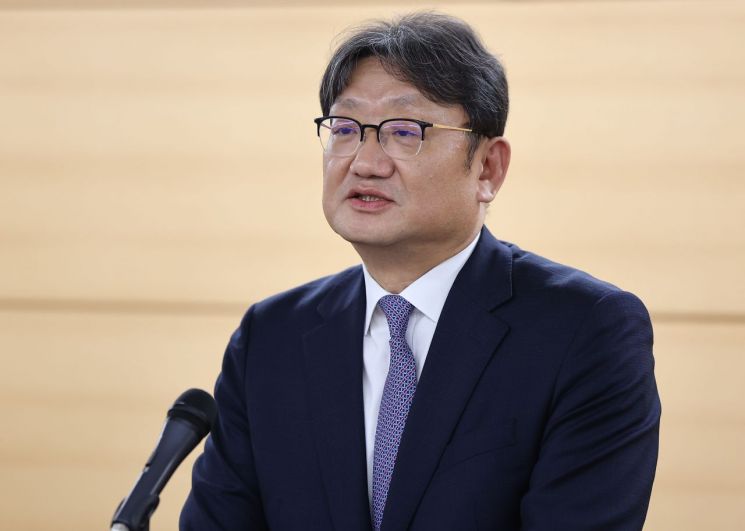
Public members of the Economic, Social and Labor Council have proposed making continued employment for older workers mandatory. The proposal keeps the statutory retirement age at 60, but aims to guarantee that, starting in 2033, employees who wish to continue working can do so until age 65.
On May 8, the Continued Employment Committee under the Economic, Social and Labor Council announced its "Public Members' Proposal on Institutionalizing the Obligation of Continued Employment for Older Workers." The public members suggested that the obligation be implemented in phases. Continued employment would be possible for older workers who reach the retirement age of 60, provided they wish to keep working. In principle, if an older worker wants to continue, their existing job duties and working hours would be maintained.
The proposal envisions a phased implementation schedule, taking into account the age of eligibility for the national pension and the time needed for preparation. Assuming the legislation passes this year, there would be a two-year grace period until 2027. After that, from 2028 to 2031, the mandatory employment period would be extended by one year every two years, and from 2032 onward, it would be extended by one year annually. Starting in 2033, workers would have the right to work up to age 65 even after reaching the retirement age of 60.
However, exceptions to continued employment are included. These apply if the older worker requests changes to their job duties or working hours for health reasons; if the employer faces management difficulties that make continued employment impossible; if there is clear evidence that continued employment would negatively affect new hiring, such as for young people; or if, from an industrial safety perspective, changes to working hours or job duties are necessary based on the nature of the existing work. In such cases, even if continued employment is granted, working hours may be reduced or job duties may be changed.
The committee recommended that wages be guaranteed at a level commensurate with productivity. It was emphasized that setting wages for older workers excessively below their productivity is a discriminatory practice. At the same time, setting wages excessively high based on age or seniority increases the burden on companies and creates a sense of relative deprivation among younger workers. Therefore, the committee suggested that wages should be determined through consensus between labor and management at each individual workplace.
The committee stated that extending the retirement age would be difficult to implement immediately in Korea, where a seniority-based wage system is deeply rooted, as it could cause a major shock to the labor market. In Korea, the wage gap between workers with less than one year of service and those with more than 30 years of service is 3.23 times. This is higher than in major countries such as Japan (2.13 times), Germany (1.91 times), Italy (1.74 times), Sweden (1.25 times), and the European Union (1.82 times). Legally extending the retirement age for highly paid older workers would increase labor costs for companies and inevitably reduce youth employment.
The public members stated, "Extending the retirement age would sharply increase the burden on companies and could affect youth employment," and emphasized, "We must not repeat the confusion and legal disputes that occurred when the statutory retirement age of 60 was introduced in 2016." They added, "Before extending the retirement age, both the government and companies need to have a preparation period to make use of older workers."
The proposal also addresses concerns about a potential decrease in youth job opportunities due to the mandatory continued employment system. The public members noted that young people are only just entering the job market and have not yet had sufficient opportunities to work, so reducing job opportunities for job-seeking youth must be avoided. Therefore, they argued that large companies and public institutions, which are particularly favored by young people, should be granted additional exceptions. If continued employment severely affects the scale of new hiring for both young and middle-aged workers, the obligation could be considered fulfilled if continued employment is provided at an affiliated company rather than the original company.
Meanwhile, the Continued Employment Committee under the Economic, Social and Labor Council had been unable to reach a clear conclusion amid disagreements between labor and management and political turmoil. It appears that the public members took the initiative to coordinate the differing opinions and present their own proposal. The public members stated, "We are well aware that neither labor nor management may be fully satisfied," but added, "There was also a sense of urgency that the right time for institutional reform must not be missed."
© The Asia Business Daily(www.asiae.co.kr). All rights reserved.

















