Six of the World's Top Ten Pharmaceutical Companies
Invest $166 Billion in New U.S. Projects
High Tariffs Could Undermine Competitiveness
Global Firms Accelerate U.S. Local Production Investments
Since the inauguration of President Donald Trump, global pharmaceutical giants have invested a total of $166 billion (approximately 240 trillion won) in new projects in the United States. With the Trump administration recently signaling the introduction of tariffs on pharmaceuticals, the trend of investment capital flowing into the U.S. is expected to continue.
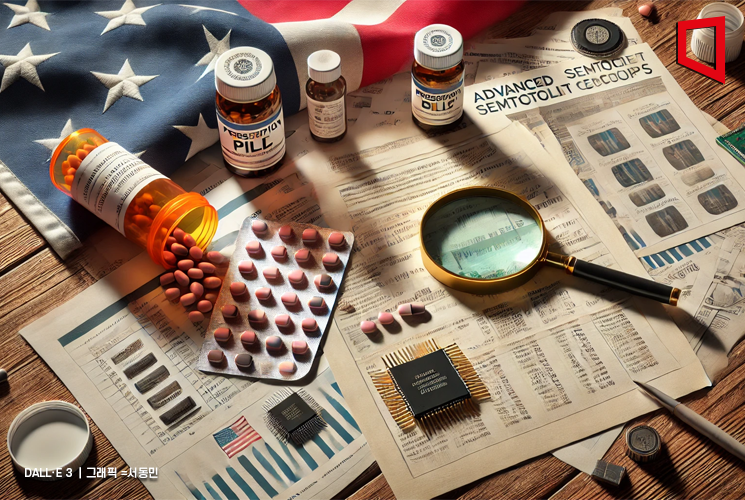
According to the Nikkei newspaper on May 8, since President Trump took office on January 20, six out of the world's top ten pharmaceutical companies by sales have announced investment plans in the U.S., with their total investment amounting to about $166 billion. This figure is equivalent to nine years' worth of average annual capital expenditure over the past decade and is nearly half the total annual sales of the world's top five pharmaceutical companies. The global pharmaceutical firms that have made significant investments in the U.S. include Merck (U.S.), AbbVie (U.S.), Roche (Switzerland), Novartis (Switzerland), Johnson & Johnson (U.S.), and Eli Lilly (U.S.).
The United States is the world's largest pharmaceutical market, with the highest per capita healthcare spending. Healthcare expenditure as a percentage of GDP is also high, at about 18% as of 2023. As a result, Europe, which is home to many leading pharmaceutical companies, is highly dependent on the U.S. market. According to Dutch financial group ING, three of the top five countries exporting pharmaceuticals to the U.S. are European Union (EU) members: Ireland, Germany, and the Netherlands. Last year, pharmaceutical exports from the EU to the U.S. reached 119.8 billion euros (about 200 trillion won), an increase of about 1.8 times over the past five years. For pharmaceutical companies around the world, including those in Europe, the U.S. is a market they simply cannot afford to ignore.
However, if high tariffs are imposed on pharmaceuticals as President Trump has indicated, there are concerns that the competitiveness of global pharmaceutical companies based in Europe and Asia could be weakened. This is because disruptions in the supply of pharmaceutical ingredients or increased procurement costs may occur. According to the United States Pharmacopeia (USP), only 15% of the active ingredients in branded drugs (excluding intravenous solutions) prescribed in the U.S. are sourced domestically. For generic drugs, the figure is even lower at 12%, with heavy reliance on imports from Europe, India, and other countries. This explains why companies are strengthening their investments in expanding local production in the U.S.
The Nikkei newspaper reported, "In this situation, major pharmaceutical companies are reinforcing their research and production systems in the U.S., anticipating that the introduction of tariffs would result in enormous costs," adding, "The U.S. government also welcomes these investments." President Trump recently signed an executive order to shorten the approval process for domestic pharmaceutical plants.
Some observers predict that if the U.S. continues to pressure for pharmaceutical tariffs and eases regulations such as shortening approval procedures, the shift of investment from Europe to the U.S. could accelerate. Europe already faces a relatively rigid business environment compared to the U.S. due to drug price controls, tighter regulations, and approval delays, while the U.S. offers faster clinical approvals and a more favorable investment environment than Europe.
The Nikkei newspaper warned, "If U.S.-centered investment continues, there is a high possibility that Europe's industrial base will be further weakened," and added, "If the EU does not introduce support measures, investments by each company are likely to move even further outside Europe."
© The Asia Business Daily(www.asiae.co.kr). All rights reserved.

![Clutching a Stolen Dior Bag, Saying "I Hate Being Poor but Real"... The Grotesque Con of a "Human Knockoff" [Slate]](https://cwcontent.asiae.co.kr/asiaresize/183/2026021902243444107_1771435474.jpg)















