Reflecting on Nature, Science, and Humanity Through Fish
A Special Exhibition Featuring Freshwater Fish, Fossils, and Cutting-Edge Technology
'Eomeong: Among fishes' Offers Moments of Healing and Contemplation
An exhibition offering a meaningful opportunity to reflect on the relationship between nature, science, and humanity through the biological characteristics of fish and the achievements of scientific and technological research will be held.
The National Science Museum announced on May 8 that it will host a special exhibition titled 'Eomeong: Among fishes' at the Biodiversity Exploration Hall from May 13 to June 22.
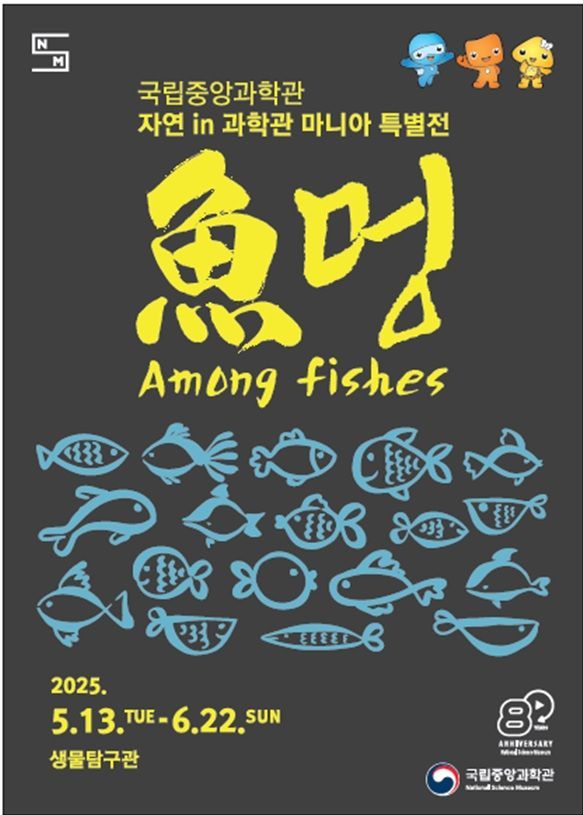
The exhibition title 'Eomeong' combines 'Eomeong,' which means 'mother' in the Jeju dialect, with the Chinese character for 'fish' (魚). It also reflects the recent '~meong' (meaning to gaze blankly) trend, expressing the intention to provide visitors with moments of healing and contemplation through fish and the sea.
The exhibition will feature 20 detailed illustrations of freshwater fish provided by the National Institute of Fisheries Science (Central Inland Fisheries Research Institute), fossils and fish specimens from the Paleozoic era to the present, and scientific interpretations of otoliths (ear stones) to help visitors better understand fish ecology.
Also on display will be a nationwide freshwater fish survey map based on 'Naturing' by Sung Moosung, head of the Muldeuri Research Institute and a fish enthusiast, as well as his own ecological photographs and videos. In addition, 12 species of live freshwater fish from the Gyeonggi-do Marine and Fisheries Resources Research Institute will be exhibited, offering visitors a unique 'Eomeong' experience.
Cutting-edge scientific and technological research achievements will also be introduced. Three projects will be featured: Seoul National University's sensory sensor inspired by the ampullae of Lorenzini in rays; PharmaResearch Co., Ltd.'s eye drops containing salmon germ cell-derived tissue regeneration material (PDRN) for the repair of micro-damage to the cornea and conjunctiva; and the Korea Railroad Research Institute's technology for reducing tunnel sonic booms in high-speed trains by applying the respiratory structure of sharks.
Kwon Seokmin, Director of the National Science Museum, stated, "We hope that through this exhibition, visitors will experience new inspiration and healing as they explore the stories of fish, science, and nature."
For more information about the exhibition, please visit the National Science Museum website.
© The Asia Business Daily(www.asiae.co.kr). All rights reserved.

















