Trump Administration to Repeal Biden's AI Semiconductor Export Controls
New Regulations to Simplify Export Tiers and Block Indirect Exports to China
Bloomberg News reported on May 7 (local time) that the Donald Trump administration in the United States plans to withdraw the artificial intelligence (AI) semiconductor export control measures established by the previous Joe Biden administration. Instead, the administration is expected to introduce new regulations that will simplify the Biden administration's three-tier export controls while blocking indirect exports to China via third countries.
A spokesperson for the U.S. Department of Commerce stated, "The Biden administration’s AI regulations are excessively complex and bureaucratic, and will hinder American innovation," adding, "We will replace them with much simpler regulations that promote American innovation and secure U.S. leadership in AI."
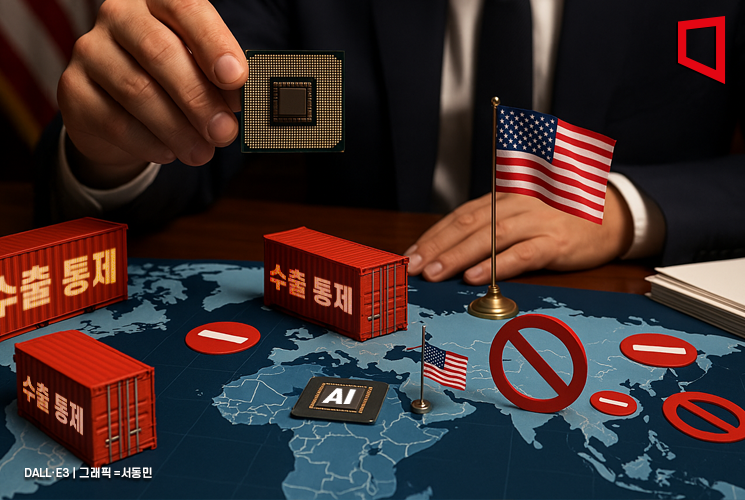
Sources told Bloomberg that "the Trump administration will not implement the so-called AI diffusion regulations set to take effect on the 15th." They also said that new regulations are being prepared to strengthen semiconductor export controls overseas.
At the end of its term, in January, the Biden administration established an AI semiconductor export control system called the 'Framework for Artificial Intelligence Diffusion.' This system classifies all countries into three tiers: 17 allied and partner countries including South Korea, about 120 general countries, and three countries of concern?China, Russia, and North Korea. Export controls on AI semiconductors are applied according to these tiers. There are no export restrictions for allied countries, but general countries are subject to export ceilings. Exports to countries of concern are controlled.
This regulation was designed to prevent China from obtaining AI semiconductors through third countries. However, several countries?including Saudi Arabia and the United Arab Emirates (UAE), which President Trump is scheduled to visit starting May 12?are strongly objecting to the export ceilings on AI semiconductors. U.S. companies such as Nvidia have also criticized the regulation and have called for its complete repeal. The previous day, Nvidia CEO Jensen Huang expressed dissatisfaction, stating that the Chinese AI chip market could grow to $50 billion within the next two years.
On this day, President Trump was asked at a White House event whether he could lift semiconductor export controls for certain Middle Eastern countries. He replied, "That is possible," and added, "An announcement will be made soon."
Last month, major foreign media outlets reported that the Trump administration was considering abolishing the Biden administration’s AI semiconductor export control regulations and replacing them with intergovernmental negotiations. In March, Secretary of Commerce Howard Lutnick also stated that the U.S. intends to include indirect export controls in future trade agreements with other countries to prevent China from obtaining U.S.-made semiconductors. Since the announcement of reciprocal tariffs in early April, the Trump administration has continued trade negotiations with major countries. As a result, there is analysis that AI semiconductor exports could also become a subject of negotiation alongside tariffs.
© The Asia Business Daily(www.asiae.co.kr). All rights reserved.

















