Insect Found in Harim Processed Product, Leading to Administrative Penalty
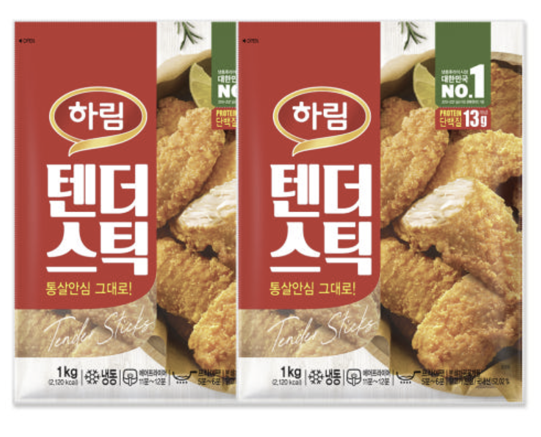
An insect (a type of beetle) was found in the 'Chicken Tender Stick', a processed chicken product manufactured at the Harim factory in Iksan, North Jeolla Province, leading the government to impose an administrative penalty for violating the Livestock Products Sanitary Control Act.
According to North Jeolla Province on May 8, an investigation was conducted in response to a complaint filed with the Food Safety Consumer Reporting Center on February 28. As a result, a foreign insect was confirmed in a Harim product. Based on this finding, the provincial government announced a warning, citing violations of Article 4, Paragraphs 6 and 7 of the Livestock Products Sanitary Control Act.
Harim has previously faced scrutiny multiple times for contamination with foreign substances. In February, a photo of a foreign object resembling body hair in a chicken breast product circulated online, sparking controversy. In October 2023, a larva was found in an animal welfare fresh chicken product sold at Emart, resulting in an administrative penalty. In 2020, a piece of plastic was discovered in 'Yonggari Chicken', and a strand of hair was found in a chicken breast product.
As incidents of foreign substances in food manufacturing processes continue to occur, as seen in the Harim case, the government has decided to significantly revise administrative penalty standards for repeated contamination cases.
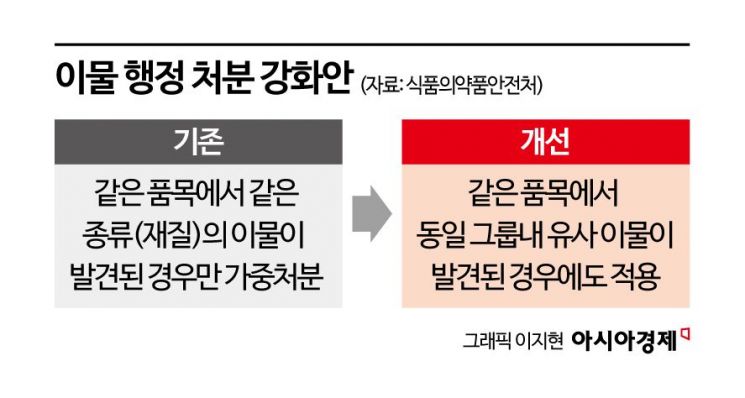
The Ministry of Food and Drug Safety plans to announce a legislative proposal next month to amend the Enforcement Rules of the Food Sanitation Act, strengthening administrative penalty standards for contamination. Currently, aggravated penalties are only possible when the same type of foreign material (e.g., plastic-plastic) is repeatedly detected in the same product category. Under the proposed amendment, similar foreign materials (e.g., glass-plastic) will be classified within the same group, allowing for stricter penalties.
Foreign substances are defined as materials not normally used in the manufacturing, processing, cooking, or distribution of food, which may pose a risk when ingested or are unsuitable for consumption. They are classified as hazardous foreign substances (such as metals, glass, ceramics over 3mm), repulsive foreign substances (such as insects, parasites, excrement), and unsuitable-for-consumption foreign substances (such as stones, rubber, toothpicks). The Ministry has determined penalty levels based on the characteristics and recurrence of the foreign substances according to this classification system.
Under current standards, if a foreign substance such as metal is found in a product, the first violation results in a 7-day suspension of the product, the second in a 15-day suspension, and the third in a 1-month suspension. The amendment focuses on expanding the scope of aggravated penalties. The Ministry explains that this measure is a preventive, regulation-strengthening step intended to stop repeated contamination incidents in advance.
Consumer distrust regarding contamination incidents remains significant. According to the 'Study on Improving the Foreign Substance Management System' published by the Food Safety Information Center, consumer dissatisfaction with contamination incidents remains high, with more than 7 out of 10 consumers responding that they "did not receive sufficient compensation when foreign substances were found." The report especially analyzed that "the post-incident response of companies and the government has a greater impact on trust than the contamination itself."
According to data submitted to the National Assembly's Health and Welfare Committee by Kim Mi-ae, a member of the People Power Party, the number of reports of substandard or defective food submitted to the Integrated Defective Food Reporting Center surged by 49%, from 16,367 cases in 2020 to 24,328 cases last year. Since 2023, the Ministry of Food and Drug Safety has been working on amendments to strengthen the foreign substance management system, forming a consultative body with industry and consumer groups and continuing discussions until March this year. The Ministry stated, "We will strengthen food safety regulations directly related to public health and ensure food safety that the public can trust."
The industry argues that the new standards lack practicality. The Korea Food Industry Association emphasized, "It is unreasonable to classify foreign substances with significantly different risk levels, such as glass and plastic, into the same group and impose the same penalties," and insisted that "differentiated penalties reflecting detailed risk assessments are necessary." They argue that regulations should be strengthened only for foreign substances with high risk, such as glass, by reclassifying the groups. In August last year, the association, together with 27 food-related organizations, submitted a petition to the Ministry of Food and Drug Safety to maintain the current standards. A food company representative said, "It is often difficult to completely control insect contamination at manufacturing sites," and stressed, "Flexible standards that take into account the realities faced by companies are needed."
© The Asia Business Daily(www.asiae.co.kr). All rights reserved.


















