EU Announces Roadmap to Phase Out Russian Fossil Fuels
The European Union (EU) has announced a complete break from Russian energy. Starting at the end of the year, the EU will ban imports of Russian natural gas and force domestic companies to prematurely terminate existing contracts with Russia. These measures are part of a phased plan to halt imports of Russian energy, the EU's largest supplier of natural gas.
On May 6 (local time), the European Commission adopted the 'REPowerEU Roadmap' during a weekly meeting in Strasbourg, France. The roadmap outlines plans to phase out Russian fossil fuels by 2027.
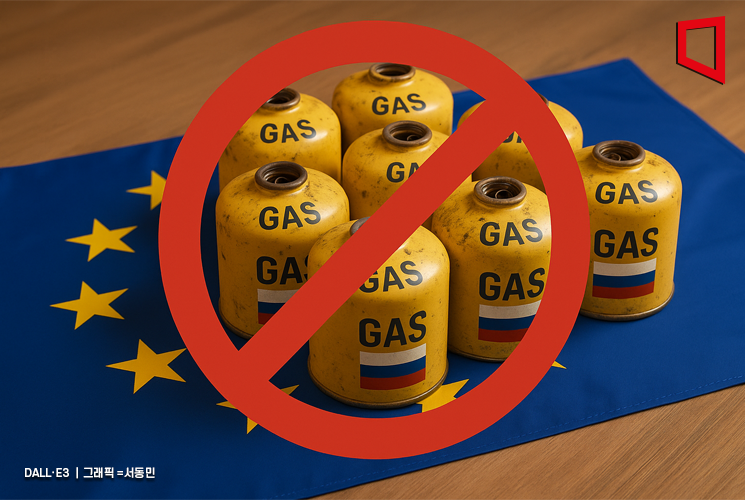
The roadmap presents nine measures to phase out all imports of Russian fossil fuels over two years. The EU plans to introduce legislation next month regarding imports of crude oil, gas, and nuclear fuel. Member states will be required to submit plans to replace Russian energy imports.
In particular, from the end of the year, all new contracts for Russian gas imports?including both pipeline natural gas and liquefied natural gas (LNG) delivered by sea?will be legally prohibited. To this end, the EU will establish a legal basis to terminate short-term spot contracts of less than one year with existing Russian suppliers. Additionally, a 'fast-track' legislative process will be pursued to ensure smooth implementation.
When new and spot contracts are halted, approximately one-third of the Russian gas currently imported will be reduced. The remaining two-thirds are covered by long-term contracts of at least one year, all of which will be forcibly terminated by the end of 2027 at the latest.
The EU will also restrict imports of Russian enriched uranium and introduce legislation to prohibit joint signing of new nuclear fuel supply contracts by the European Atomic Energy Community Supply Agency (ESA). Additional measures will be prepared to target the so-called 'shadow fleet.'
These actions are intended to block energy imports that have been identified as a source of war funding for Russia following the outbreak of the Russia-Ukraine war. However, EU Commissioner for Energy and Housing Kadri Simson stated, "Since February 2022, we have spent more money purchasing Russian fossil fuels than we have provided in aid to Ukraine," adding, "Clearly, this is unacceptable." She continued, "We will no longer indirectly help secure funding for the war."
Nineteen percent of the EU's natural gas is imported from Russia, down from about 45% before 2022. After the outbreak of the war in Ukraine, Russia reduced gas supplies in retaliation for Western sanctions, leading to an energy crisis in the EU. Imports of Russian oil have also fallen from 27% in early 2022 to 3% currently. The EU has previously indicated its intention to increase imports of U.S. LNG as a substitute for Russian gas during tariff negotiations with the United States.
However, the legislation requires the consent of member states. Countries with high dependence on Russian energy, such as Hungary and Slovakia, are expected to oppose the measures. Commissioner Simson explained that, rather than requiring unanimity, the legislation will need support from a qualified majority?meaning at least 15 member states representing 65% or more of the EU population.
Meanwhile, Dmitry Peskov, spokesperson for the Russian Kremlin, criticized the EU's move as self-defeating. He remarked, "Europe is shooting itself in the foot." He further stated, "The EU is undermining the competitive environment and favoring more expensive products produced in the United States and other countries," adding, "We can only hope that the next generation of European politicians will assess the situation more rationally."
© The Asia Business Daily(www.asiae.co.kr). All rights reserved.

















