Iran Faces Severe Land Subsidence Due to Unsustainable Development and Climate Change
President's Proposal to Relocate the Capital Sparks Controversy
The Financial Times (FT) reported on May 5 (local time) that Iran, often called the "powerhouse of the Middle East," is experiencing rapid land subsidence due to unsustainable development, climate change, and prolonged drought.
According to the FT, Iran is one of the countries with the most severe rates of land subsidence in the world. Cases of land subsidence in Iran range widely, from cracked homes in the capital city of Tehran to damage to UNESCO World Heritage sites. The main causes of Iran's land subsidence have been identified as climate change, prolonged drought, and years of poor water resource management.
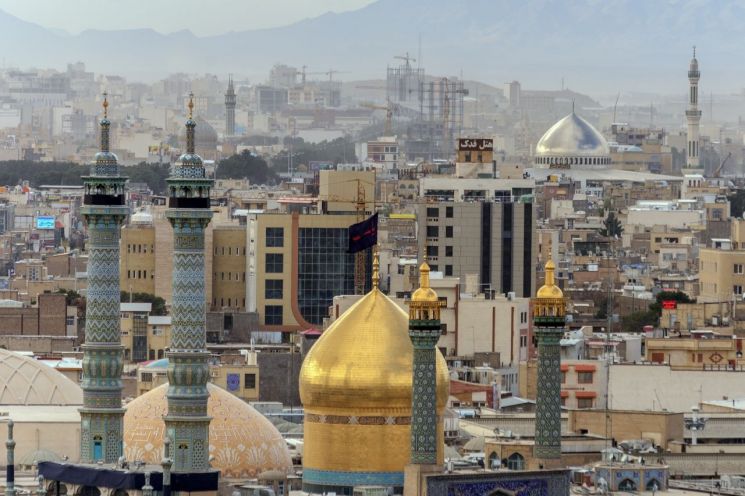
Sina Ansari, Iran's Vice President for Environmental Affairs, told the FT that "11% of the country's land area is under threat of subsidence." This means that nearly half of Iran's total population of 90 million is within the affected area. According to the National Cartographic Center of Iran, in some regions, such as the southwest of Tehran, the ground is sinking by as much as 31 centimeters per year. This is more than 60 times the international standard of 5 millimeters per year.
Iran's largest airport, Imam Khomeini International Airport, located near Tehran, as well as ancient sites such as Persepolis, are all facing risks of cracking and collapse. In some cities, schools have been ordered to evacuate due to the risk of collapse. In response, President Masoud Pezeshkian has proposed the drastic idea of relocating the capital. He described the issues of land subsidence and the worsening water shortage as "threatening," warning that "Tehran is turning into a place where people can no longer live." However, experts argue that relocating the capital is not a realistic solution. The FT explained that "President Pezeshkian's remarks have sparked controversy."
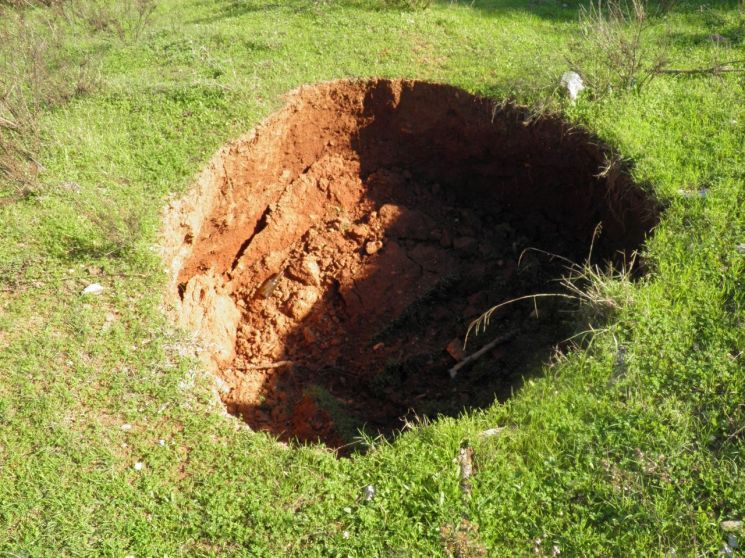
Environmental activists and scientists point out that this problem stems from years of unsustainable development policies. Excessive agriculture, unchecked urban expansion, and industrialization have depleted groundwater and dried up dams, especially in central regions such as Isfahan. As a result, not only is land subsidence occurring, but once-fertile areas are also turning into desert. Mehdi Zare, a professor at the International Institute of Earthquake Engineering and Seismology, warned, "If current agricultural and urban planning policies continue, land subsidence will accelerate across Iran in the future."
The cultural heritage of Iran is also at risk. Deep cracks have been found around Persepolis and Naqsh-e Rostam, ancient palace sites that are 2,500 years old. The Jame Atiq Mosque and the structures of Naqsh-e Jahan Square, both UNESCO World Heritage sites in Isfahan, are showing cracks, and the east and west pillars of the Abbasi Mosque are leaning by 5 centimeters and 8 centimeters, respectively.
UNESCO is also closely monitoring the issue. Hassan Partoosi, Secretary General of the UNESCO National Commission of Iran, stated, "While UNESCO provides support for the preservation of Iran's cultural heritage, if international conservation standards are not met, World Heritage status may be revoked."
© The Asia Business Daily(www.asiae.co.kr). All rights reserved.


















