Verification of Core Technology for Next-Generation Base Station Architecture: "CloudLAN Technology"
Automatic Installation and Deletion of Base Station Software Verified
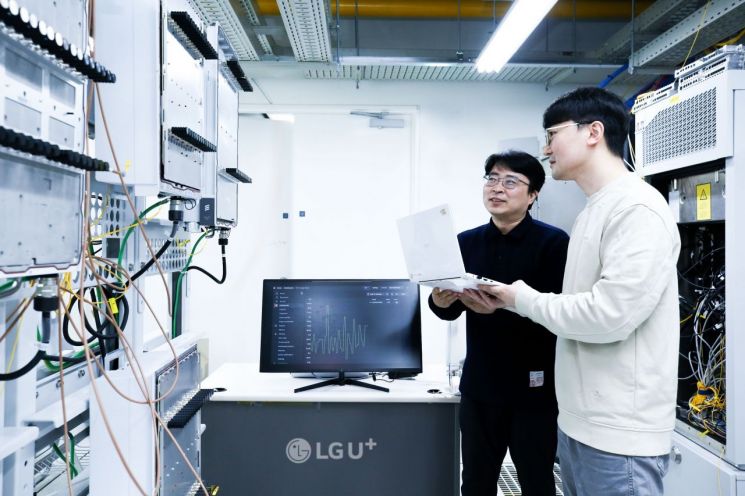
On May 6, LG Uplus announced that it will work with Ericsson, a global telecommunications equipment manufacturer, to verify core technologies for the next-generation network architecture known as CloudLAN and to strengthen related research collaboration. CloudLAN is a technology that enables wireless access networks to be built as centralized cloud networks.
Traditionally, wireless access networks have processed communication signals at each base station using application-specific integrated circuits or system-on-chip designs, limiting their use to base station communications only. In the CloudLAN approach, general-purpose central processing units (CPUs) are used for communication signal processing between base stations, allowing these resources to be flexibly allocated for various purposes beyond just base station communications.
This centralization enables telecommunications operators to establish a foundation for integrated management of network resources. By incorporating artificial intelligence (AI), network optimization and fault detection can be automated, and necessary adjustments can be made quickly and flexibly through software upgrades. As a result, CloudLAN is expected to play a critical role in the 6G era.
The technology verified by the two companies combines an intelligent RAN application (app) with an orchestrator that manages and coordinates the network, enabling automatic installation, upgrade, and deletion of base station software in the CloudLAN architecture.
Once this new platform is commercialized, it is expected that network failures can be automatically recovered and necessary apps can be automatically deployed to maintain network quality. In cases of increased traffic, network equipment capacity and performance can be flexibly expanded by leveraging cloud infrastructure, enabling the delivery of stable services to customers.
© The Asia Business Daily(www.asiae.co.kr). All rights reserved.

















