Expected Profit Increase of About 1.5 to 2 Times Compared to Rice
On-site Consulting for Practical Application of New Paddy Soybean Technologies Also Underway
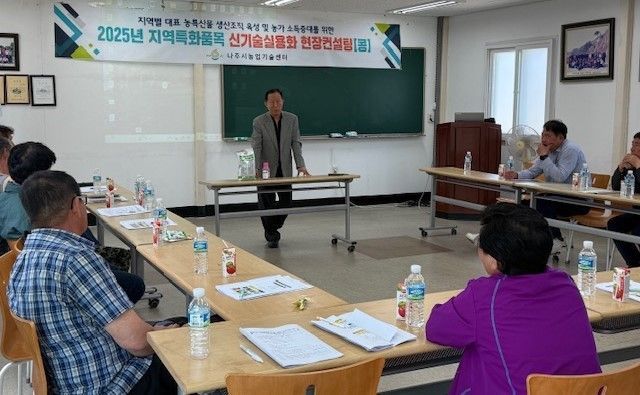 A scene from the on-site consulting for region-specific items conducted by Naju City. Photo by Naju City
Naju City in South Jeolla Province is actively promoting the cultivation of paddy soybeans to address the issue of rice overproduction, stabilize farm income, and enhance agricultural competitiveness through the efficient use of paddy fields.
Paddy soybeans are a representative alternative crop that can be grown in rice paddies. Compared to rice cultivation, they require less labor and fertilizer, and the steady demand for domestically produced soybeans ensures stable market channels.
Based on the same area, paddy soybeans can yield approximately 1.5 to 2 times higher profits than regular rice. This is why they are attracting attention as a key alternative for reducing rice cultivation areas while increasing the utilization of paddy fields.
The Naju Agricultural Technology Center is focusing on providing education on paddy soybean cultivation techniques and operating soybean crop groups. In addition, in connection with the "On-site Consulting for the Practical Application of New Technologies" project, the center is accelerating the spread of practical cultivation technologies, including pest and disease reduction, quality improvement, and the distribution of automatic seeding machine technology.
On April 30, a training session on paddy soybean cultivation techniques and a farmer case presentation were held at the Dasi-myeon Agricultural Counseling Center for about 20 farmers belonging to the Dasimunpyung Soybean Crop Group.
The participating farmers shared successful cultivation cases and exchanged information with each other. Bird repellents for pest prevention were also distributed on site.
An official from Naju City stated, "We will continue to promote on-site consulting for the practical application of new technologies in paddy soybeans, a region-specific crop, to increase farm income and promote sustainable agricultural development."
© The Asia Business Daily(www.asiae.co.kr). All rights reserved.

















