Generating 3D Models in a Virtual Environment Using Building Data
"Many Cases Lack Data Compatibility Standards"
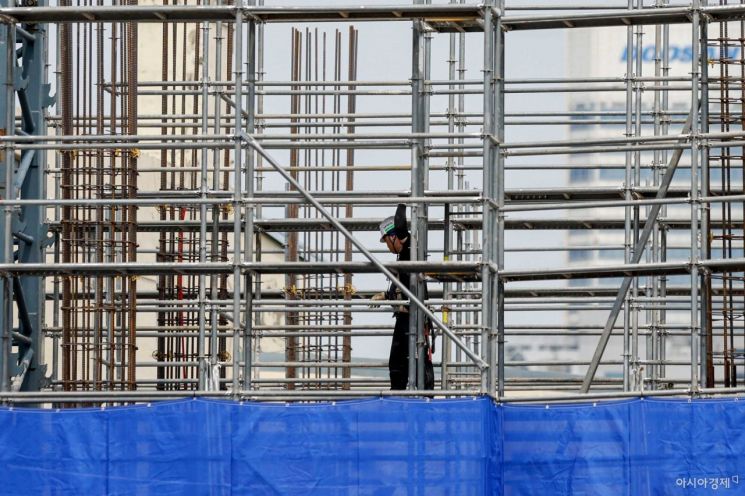
Building Information Modeling (BIM), a technology that creates virtual models of structures, is gaining attention as an emerging technology in the construction sector. BIM is a technology that collects data from buildings to generate virtual models in a three-dimensional environment, providing information necessary for design and other processes. However, there are claims that further improvements are needed for proper implementation.
According to the Korea Research Institute for Construction Policy (KRICP) on May 4, the market for three-dimensional redesign software is expected to grow from $1.47 billion (approximately 2.0617 trillion won) last year to about $5.52 billion (approximately 7.7418 trillion won) by 2034. The average annual growth rate is projected to be 12.7%.
Three-dimensional redesign technology is used in the construction sector for the digitalization of existing structures, construction quality review, and maintenance planning. In particular, the use of BIM is expanding during the construction phase. BIM refers to the creation of accurate virtual models of buildings and other structures using digital methods. It enables the acquisition of information necessary for the design, construction, and operation of buildings in a three-dimensional environment.
Cases of BIM utilization are increasing. In Germany, technologies such as BIM were used in the redevelopment project of Stuttgart Central Station, a new high-speed rail terminal. The existing above-ground station was converted into an underground station to reorganize urban space, and BIM models were used for design analysis that included complex curved structures and geometric elements.
GS Engineering & Construction completed the Singapore Rail Test Centre (SRTC), the world's tenth and Southeast Asia's first comprehensive rail test center, and minimized risk factors by using three-dimensional modeling with BIM to identify potential interferences in advance at the construction site. As a result, the company achieved 14 million accident-free hours and completed the project on schedule with excellent quality.
Korea Land and Housing Corporation (LH) utilized drone-based aerial photography and 3D laser scanning in its modular housing project, comparing and analyzing the data with BIM to quantify construction errors. Modular construction is a building method in which 70-80% of construction processes, such as the basic frame and electrical wiring, are pre-manufactured in a factory and then assembled on-site like Lego blocks.
However, it is explained that technical challenges regarding data reliability still need to be addressed for such technologies to be widely adopted.
The KRICP stated, "Currently, there are many cases where data compatibility standards between equipment and software are insufficient, making field application difficult," and added, "Operational and organizational efforts are required to ensure field applicability and data flow."
The institute continued, "BIM integration across design, construction, and maintenance is only possible if there is an integrated plan from the ordering stage. In public projects, the role of the client must be strengthened to expand the requirements for application plans and maintenance integration," and added, "To improve the system, it is necessary to establish utilization guidelines and build data standards."
© The Asia Business Daily(www.asiae.co.kr). All rights reserved.
![Clutching a Stolen Dior Bag, Saying "I Hate Being Poor but Real"... The Grotesque Con of a "Human Knockoff" [Slate]](https://cwcontent.asiae.co.kr/asiaresize/183/2026021902243444107_1771435474.jpg)











