19 Trillion Won in Auto Parts Exported to the U.S. Last Year
Concerns Over Impact on Electrification and Chassis Sectors
Key Issue: Demand Contraction Due to Price Increases
The 25% high tariff imposed by U.S. President Donald Trump on foreign-made automobile parts officially took effect on May 3 (local time). Despite some tariff relief measures, the Korean export industry?which accounted for 36.5% of U.S. auto parts imports last year?is expected to suffer significant damage.
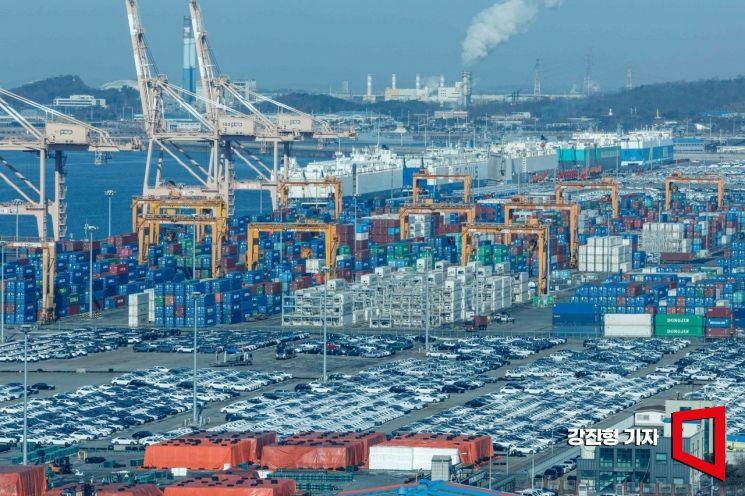 President Donald Trump signed a proclamation imposing a 25% tariff without exceptions on steel and aluminum products imported into the United States, and announced that tariffs on automobiles and semiconductors are also under consideration. On February 13, 2025, export vehicles were waiting to be loaded at Pyeongtaek Port, Gyeonggi Province. Photo by Kang Jinhyung
This measure was implemented starting at 12:01 a.m. Eastern Time on May 3 (1:01 p.m. Korean time), in accordance with the proclamation signed by President Trump on March 26. Previously, a 25% tariff on imported finished vehicles had already been in effect since April 3.
The U.S. government is also implementing some tariff deferral measures to encourage domestic production. According to a revised proclamation announced on April 29, parts equivalent to 15% of the price of vehicles assembled in the United States between April this year and April next year will be exempt from tariffs for one year. From May 2025 to April 2027, this exemption rate will be reduced to 10%.
Additionally, President Trump signed an executive order giving priority to automobile and parts-related tariffs when multiple tariff categories overlap. As a result, the overlapping burden from existing tariffs on steel, aluminum, and North American region-related tariffs has been partially alleviated.
While the industry views the tariff relief as having "avoided the worst," it still expects an inevitable decline in parts demand and exports. The increase in parts prices is likely to lead to higher final consumer prices for finished vehicles, which could ultimately result in a decrease in the adoption of imported parts.
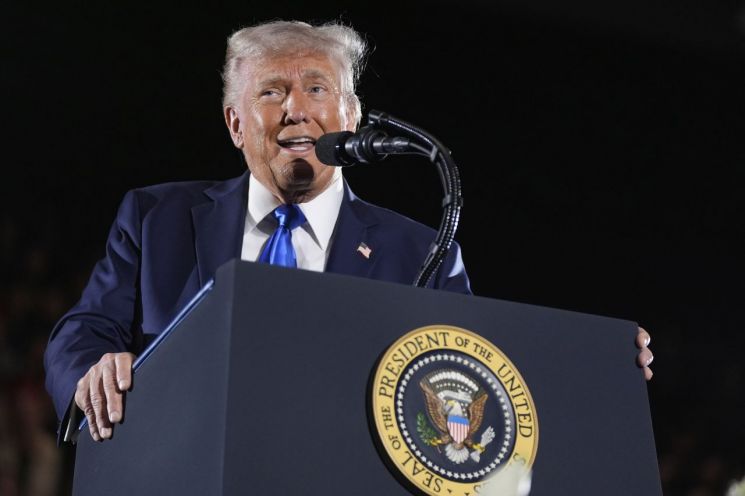
According to the Korea International Trade Association, Korea's auto parts exports to the United States amounted to about $13.5 billion (approximately 19 trillion won) last year, accounting for 6.4% of all U.S. imported auto parts. The share of U.S.-bound exports among Korea's total auto parts exports also rose significantly, from 29.5% in 2020 to 36.5% in 2023.
By item, exports of electrification parts such as batteries and motors, as well as chassis and drivetrain parts, each totaled about $3 billion. Exports of electrical and electronic parts reached $2.5 billion, body parts $2.3 billion, engines $1.3 billion, and tires and tubes $800 million.
This measure is expected to have a direct impact on the global auto parts supply chain, including Korea. In addition, it is anticipated that the need for local assembly strategies by domestic automakers and export diversification by parts suppliers will become even more pressing.
© The Asia Business Daily(www.asiae.co.kr). All rights reserved.
![Clutching a Stolen Dior Bag, Saying "I Hate Being Poor but Real"... The Grotesque Con of a "Human Knockoff" [Slate]](https://cwcontent.asiae.co.kr/asiaresize/183/2026021902243444107_1771435474.jpg)

















