Strengthening National AI Competitiveness with GPU Projects
Supporting Small Businesses with Local Currency and Public Delivery Apps
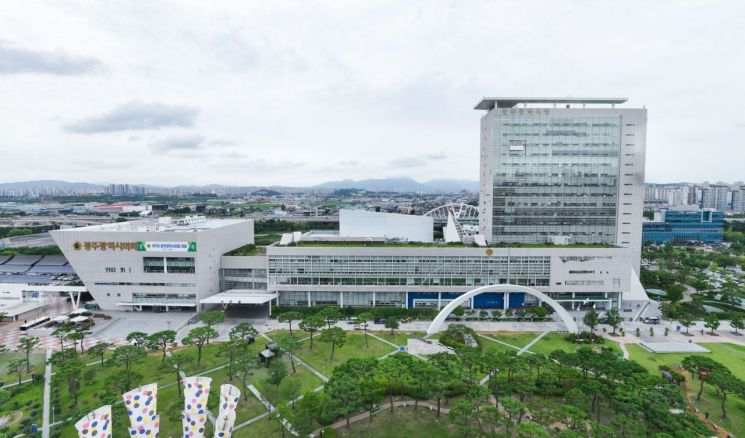
On May 2, the Gwangju City Government announced that the '2025 First Supplementary Government Budget,' which passed the National Assembly plenary session, includes funding for artificial intelligence (AI) projects, local currency, and public delivery app support, among others.
This supplementary government budget was organized around three main objectives: disaster and emergency response (such as wildfires), trade and AI support, and livelihood support. As a result, regional budgets were largely excluded. In particular, the government was reluctant to allocate funds for AI projects centered on the Gwangju National AI Data Center, citing their classification as 'regional projects.'
In response, the Gwangju City Government worked closely with local National Assembly members such as Ahn Dogeol, Cho Incheol, and Yang Bunam. Mayor Kang Gijung took a proactive approach by operating a 'Yeouido office' and overseeing the process personally. From the early stages of the National Assembly's budget review, the Director of the AI Industry Office and the National Funding Strategy Team were stationed in Seoul to persuade the National Assembly and central government ministries.
As a result of these efforts, 15.3 billion KRW was ultimately allocated for Gwangju's AI strategic projects in this supplementary government budget. This will accelerate projects such as high-performance computing resource (GPU) support based on the National AI Data Center established in the first phase.
A city official stated that although the AI budget falls short of the requested amount, it is a meaningful achievement that some funding was included despite the government's general stance of excluding regional projects.
Alongside the AI budget, 17.8 billion KRW was also allocated for the 'Urban Rail Integrated Wireless Network Construction Project' requested by four metropolitan cities, including Gwangju and Daegu, enabling the creation of a safer operating environment for urban railways.
Additionally, funding for local currency and public delivery apps, which Gwangju City has proactively demonstrated the policy effects of and continuously proposed to the government, was included. Despite difficult fiscal conditions, the city has continued to operate the 'Gwangju Sangsaeng Card,' a local currency, using its own budget to help overcome the economic crisis and boost the actual sales of local small businesses. With the inclusion of funding for local gift certificates in this supplementary budget, the city expects to be able to operate the Gwangju Sangsaeng Card more stably.
In response to the dominance of large corporations such as Baedal Minjok, Gwangju City has persistently advocated for support for public delivery apps to help small businesses. As a result, 65 billion KRW in new funding was allocated for public delivery app support. As of March this year, the Gwangju public delivery apps (Wemakeprice O, Ttaenggyeoyo) had recorded 1.85 million cumulative orders and 45.9 billion KRW in sales, making them exemplary models.
This supplementary budget also includes a total of 4.2 trillion KRW in support for small businesses, not only for public delivery apps but also for programs such as 'Burden Relief Credit' (1.6 trillion KRW), which provides up to 500,000 KRW per year to small businesses with annual sales of 300 million KRW or less; 'Sangsaeng Payback' (1.4 trillion KRW), which encourages increased consumption; and 'Small Business Policy Funds' (830 billion KRW).
The Gwangju City Government estimates that local small businesses will benefit by approximately 160 billion KRW. While this amount is not sufficient, it is expected to provide much-needed relief by improving liquidity and easing management burdens for struggling local small businesses.
Mayor Kang Gijung stated, "At the end of last year, the budget increase was canceled due to political uncertainty. Although it is regrettable, I am relieved that some of it has been recovered in this supplementary budget. Gwangju will continue to faithfully fulfill its role as a core platform for national AI competitiveness and as a leading city for stabilizing the local economy."
Mayor Kang further emphasized, "We will continue to strategically secure national funding and pursue citizen-centered policies to deliver tangible results that residents can feel."
© The Asia Business Daily(www.asiae.co.kr). All rights reserved.
![Clutching a Stolen Dior Bag, Saying "I Hate Being Poor but Real"... The Grotesque Con of a "Human Knockoff" [Slate]](https://cwcontent.asiae.co.kr/asiaresize/183/2026021902243444107_1771435474.jpg)
















