Jeju Autonomous Police Inspect Country-of-Origin Labeling
All 62 Restaurants Use Domestic Cutlassfish... Zero Cases of False Labeling
A recent inspection by the Jeju Provincial Autonomous Police Agency found no violations of country-of-origin labeling among 62 medium- and large-sized cutlassfish specialty restaurants on the island.
On May 1, the Jeju Provincial Autonomous Police Agency announced that it had conducted this inspection targeting 62 medium- and large-sized cutlassfish specialty restaurants with more than 1,000 online reviews, as identified through portal searches. By region, 38 restaurants were in Jeju City and 24 were in Seogwipo City. The autonomous police visited these establishments to verify the origin of the cutlassfish by checking purchase ledgers and receipts, packaging containers, and the condition of stored raw fish within the restaurants. As a result, all of the inspected restaurants were found to be using domestically sourced cutlassfish.
Lee Chulwoo, head of the Tourism Police Division at the Jeju Provincial Autonomous Police Agency, stated, "The origin of food ingredients is directly linked not only to dining costs but also to food safety," adding, "We will further strengthen our monitoring so that consumers can have confidence in the authenticity of Jeju-origin products."
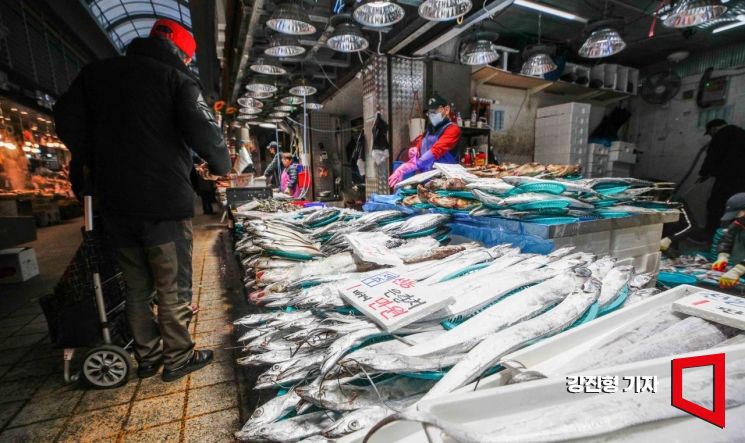
According to data from the Fisheries Industry Observation Center of the Korea Maritime Institute, as of 2024, the total domestic cutlassfish production was 43,773 tons, with 19,237 tons produced in Jeju, accounting for about 35% of the total. Jeju cutlassfish has established itself not merely as a seafood product but as a regional 'brand food.' Last year, an analysis of credit card spending by industry category by the Jeju Tourism Organization showed that restaurant spending accounted for 32%, the highest proportion. The high share of spending on local foods, including cutlassfish, confirms that tourists have a strong preference for local ingredients.
Meanwhile, the Gyeonggi Provincial Special Judicial Police recently uncovered a large number of delivery-focused restaurants that violated the Food Sanitation Act by storing expired ingredients or failing to comply with preservation standards.
On April 15, the Gyeonggi Provincial Special Judicial Police announced that, following a two-week intensive investigation from March 10 to March 21, it had uncovered 37 cases of illegal activity among 360 delivery-focused restaurants in the province. In notable cases, establishment A in Guri City was found to have stored three types of products, including imitation crab meat and taro stems, that were two weeks past their expiration date, together with normal ingredients, without any 'for disposal' or 'for training' labels. Establishment B in Guri City was caught falsely labeling imported pork as domestic. Establishment C in Pyeongtaek City kept sauce, which requires refrigeration, at room temperature in the kitchen, while establishment D in Hwaseong City was found storing ingredients in a refrigerated warehouse located outside the area registered for business operations.
Under the current Food Sanitation Act, those who manufacture, process, cook, sell, subdivide, transport, display, or store products, foods, or raw materials past their expiration date for business purposes, or otherwise violate business compliance requirements, or fail to report significant changes such as business area modifications, are subject to imprisonment for up to three years or a fine of up to 30 million won. In addition, violations of standards for the manufacture, processing, use, cooking, or preservation of food can result in up to five years' imprisonment or a fine of up to 50 million won, while false or misleading country-of-origin labeling under the Country of Origin Labeling Act can result in up to seven years' imprisonment or a fine of up to 100 million won.
© The Asia Business Daily(www.asiae.co.kr). All rights reserved.

















