Temporary Two-Year Suspension of U.S. Auto Parts Tariffs Starting on the 29th
Further Easing Expected Through South Korea-U.S. Government Negotiations
The domestic automobile and parts industries are expressing relief, saying they have avoided the worst-case scenario thanks to the United States' decision to ease auto tariffs. However, concerns remain, as high tariffs are still in place and the easing measures are only temporary, lasting for two years. Although President Donald Trump has chosen to implement relief measures this time, there is lingering uncertainty that he may introduce other policies to strengthen the U.S. supply chain.
According to the proclamation signed by President Trump on the 29th (local time), companies that manufacture automobiles in the United States using imported parts will see their parts tariff burden temporarily reduced for two years. This measure is available not only to American companies but also to foreign companies, meaning that Hyundai Motor and Kia, which operate manufacturing plants in the U.S., are also expected to benefit.
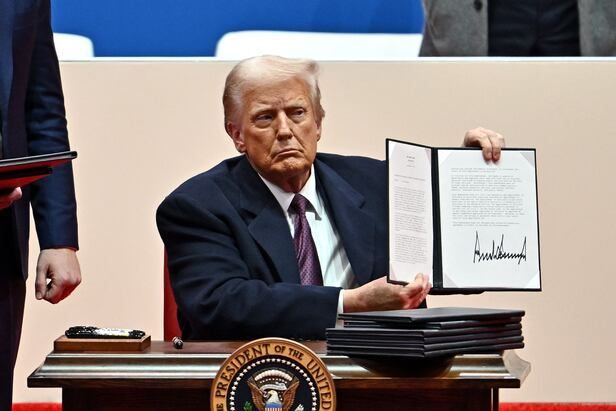
Since April 3, the United States has imposed a 25% tariff on automobiles, and starting May 3, this will be expanded to include auto parts. Under the new relief measures, automakers will see tariffs reduced for one year on parts accounting for 15% of the value of vehicles assembled in the U.S., and in the following year, tariffs will be reduced on parts accounting for 10% of the vehicle's value. The key point is that a type of "credit" will be provided to help reduce the tariff burden on parts, which is interpreted to mean that up to 15% of auto parts can be imported without tariffs and used in vehicles assembled in the U.S.
The automobile industry has welcomed the new measures. On this day, Ford stated in a press release, "This will help mitigate the impact of tariffs on automakers, (parts) suppliers, and consumers." The domestic automaker and parts industries have also responded positively. The industry had been concerned that the imposition of tariffs would have an immediate impact on parts suppliers rather than automakers. According to the Korea International Trade Association, Korea's auto parts exports to the U.S. reached a record high of $8.222 billion last year.
In particular, there are expectations that tariff issues can be more clearly resolved through negotiations between the South Korean and U.S. governments, known as the "July Package." A representative from a major automaker said, "With this tariff relief measure, we have avoided the worst-case scenario," but added, "We are closely monitoring the ongoing government-to-government negotiations, hoping that an agreement on tariffs will resolve tariff-related risks."
© The Asia Business Daily(www.asiae.co.kr). All rights reserved.

















