Industrial Activity Trends Announced by Statistics Korea
Semiconductor and Pharmaceutical Production Drive Growth for Second Month
Consumption and Facility Investment Decline Amid Cautious Economic Sentiment
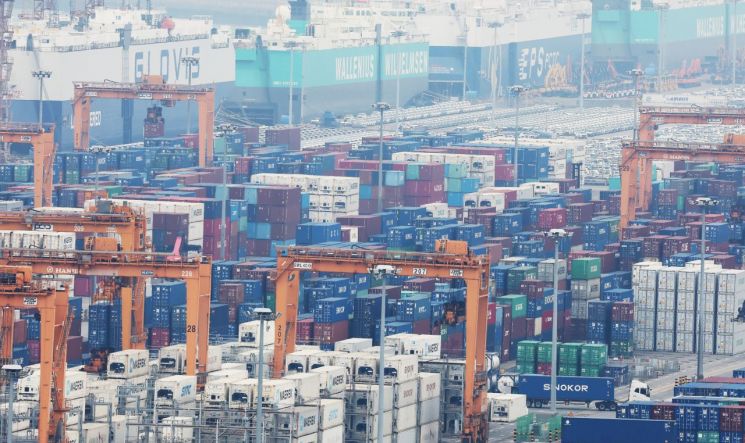
Last month, industrial production continued its positive trend for the second consecutive month, driven by increased production of semiconductors and pharmaceuticals, which are subject to newly announced tariffs. However, as economic agents grew more cautious, both consumption and facility investment declined.
According to the "March Industrial Activity Trends" released by Statistics Korea on April 30, total industrial production in March increased by 0.9% compared to the previous month.
Total industrial production had dropped sharply by 1.6% in January, turning negative, but has now recorded positive growth for two consecutive months, with a 1.0% increase in February followed by further growth in March.
Production decreased in the service and construction sectors, but increased in mining and manufacturing and public administration. Within mining and manufacturing, production fell for machinery and equipment (-3.1%), but rose for semiconductors (13.3%) and pharmaceuticals (11.8%), resulting in a 2.9% increase from the previous month.
Manufacturing inventories decreased by 2.4% compared to the previous month, and the average operating rate rose by 1.7 percentage points to 74.9%.
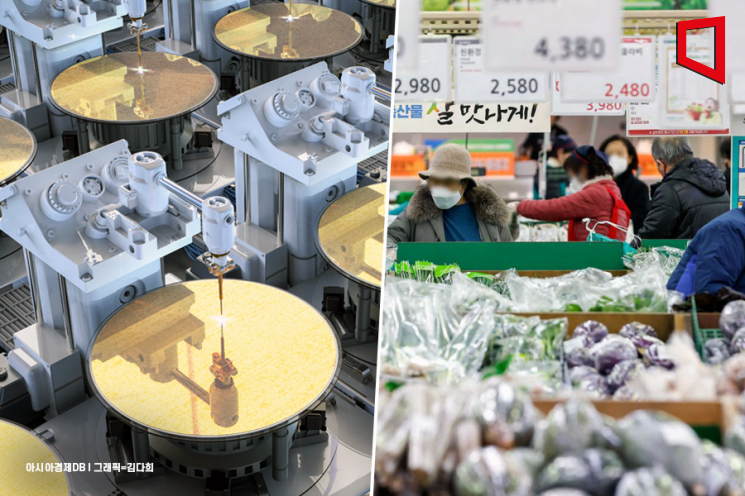
Consumption indicators declined. Retail sales, which reflect consumption trends, fell by 0.3% compared to the previous month. After rebounding by 1.9% in February, retail sales turned negative again within a month.
Sales increased for non-durable goods such as food and beverages (2.8%) and semi-durable goods such as clothing (2.7%), but decreased for durable goods such as communication devices and computers (-8.6%).
By retail type, sales decreased year-on-year at department stores (-4.2%) and duty-free shops (-10.3%), but increased at specialty stores (3.9%) and at passenger car and fuel retailers (4.2%).
Facility investment increased for transportation equipment such as automobiles (3.4%), but decreased for machinery including agricultural, construction, and metal machinery (-2.6%), resulting in a 0.9% decline compared to the previous month.
Domestic machinery orders decreased in the public sector (-3.9%) but increased in the private sector (20.9%), resulting in a 19.6% year-on-year increase.
Construction orders (in current terms) increased for buildings such as housing (33.8%) but decreased for civil engineering projects such as machinery installation (-70.5%), resulting in an 8.7% year-on-year decrease.
The coincident index of cyclical indicators, which reflects the current state of the economy, rose by 0.3 points from the previous month to 98.8. After declining for three consecutive months, the coincident index rebounded by 0.1 points last month. The leading index of cyclical indicators, which forecasts future economic trends, rose by 0.2 points from the previous month to 100.6.
© The Asia Business Daily(www.asiae.co.kr). All rights reserved.


















