Aiming to Reduce Greenhouse Gas Emissions by 50% Compared to 2018 Levels by 2034
On April 29, Gangseo District in Seoul (Mayor Jin Kyohun) announced that it is accelerating efforts to achieve carbon neutrality in order to effectively respond to the climate crisis.
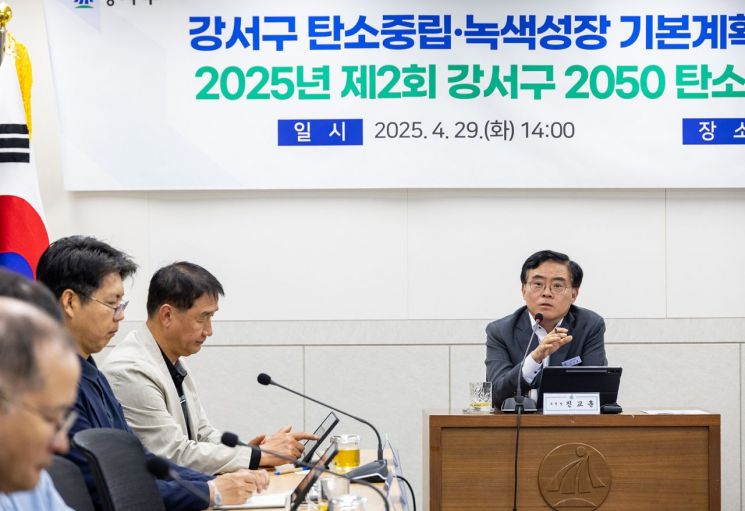 Jin Kyohun, Mayor of Gangseo District, Seoul (right), is speaking at the 'Final Report Meeting on the Establishment of the Basic Plan for Carbon Neutral Green Growth' held in the district office's main conference room on the 29th. Provided by Gangseo District Office.
On the same day, the district held the 'Final Report Meeting on the Supplementation of the Basic Plan for Carbon Neutral Green Growth' in the main conference room of the district office. The meeting was presided over by Mayor Jin Kyohun and attended by members of the 2050 Carbon Neutral Green Growth Committee.
The district is implementing the '10-Year Basic Plan for Carbon Neutral Green Growth,' aiming to reduce greenhouse gas emissions by 40% compared to 2018 levels by 2030 and by 50% by 2034. This basic plan is a revision of the '2050 Gangseo District Carbon Neutral Basic Plan' established in 2022, incorporating the carbon neutrality policy directions of both the central government and the Seoul Metropolitan Government.
Since January of this year, the district has conducted a supplementary research project on the basic plan, resetting feasible targets for greenhouse gas reduction and strengthening specific implementation strategies. The basic plan includes 37 detailed initiatives across four sectors: zero-energy city, eco-friendly transportation, resource circulation, and expansion of carbon sinks.
For the zero-energy city sector, the plan includes expanding the supply of Zero Energy Buildings (ZEB), as well as promoting green remodeling of outdated senior centers and daycare facilities. In the eco-friendly transportation sector, the focus is on expanding the supply of eco-friendly vehicles such as electric and hydrogen cars, and implementing a carbon-neutral points system for automobiles.
Resource circulation policies include expanding food waste RFID collection bins and unmanned PET bottle collection machines, as well as supplying district heating using sewage heat from the Seonam Water Reclamation Center. The district will also expand carbon sinks by creating more green spaces and managing urban forests. In particular, the district plans to quantitatively evaluate the achievement of annual targets each year to enhance the effectiveness of the 10-year basic plan for carbon neutrality.
Mayor Jin Kyohun stated, "As we have newly established a basic plan for carbon neutral green growth, I ask everyone to contribute their wisdom so that our carbon neutrality policies can be realized," adding, "We will carefully review and implement each initiative without delay."
© The Asia Business Daily(www.asiae.co.kr). All rights reserved.

















