Interpretation Suggests Tariffs May Be Suspended
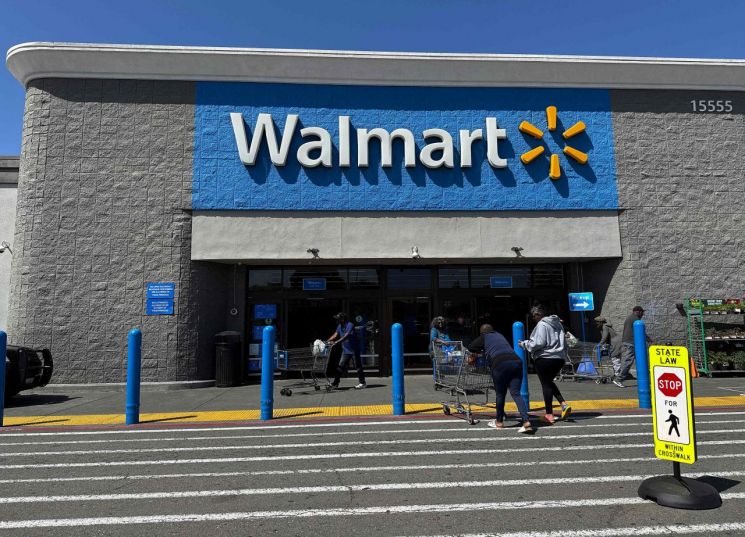
Walmart, the largest retailer in the United States, has requested its Chinese suppliers?whose orders had been canceled or put on hold due to the U.S.-imposed "tariff bomb policy"?to resume shipments.
According to the South China Morning Post (SCMP) on April 29, some Chinese export companies in Jiangsu and Zhejiang provinces have recently received instructions from Walmart to resume shipments.
Amid recent indications from U.S. President Donald Trump about a possible reduction in tariffs against China, there is speculation that this could be a signal of imminent U.S.-China trade negotiations.
An official from a stationery and office supplies export company in Ningbo, Zhejiang Province, explained that the company was notified by Walmart to resume shipments to the United States just a few weeks after retaliatory tariffs were imposed by both the U.S. and China. The official added, "We were also told that the newly imposed tariffs would be borne by the American client."
Another exporter in Jiangsu Province was also reportedly asked to prepare for a recovery in demand. Paul Tai, branch manager of Mainetti, a company exporting garment hangers and shopping bags, said, "Starting around April 23, major U.S. retailers began notifying Chinese suppliers to resume orders." He noted that after President Trump announced the imposition of retaliatory tariffs, many U.S. importers had canceled or suspended orders from China. He emphasized that this reversal is "very good news," especially since April orders had dropped by more than 40% compared to the same period last year.
It has also been reported that many Chinese companies have switched their delivery terms from DDP (Delivered Duty Paid) to FOB (Free On Board) to cope with tariff volatility.
Unlike DDP, FOB means that once the goods are loaded onto the vessel, the importer assumes full responsibility for transportation costs, customs clearance fees, and all related management.
An international studies professor at a university in Shanghai, who requested anonymity, told SCMP, "China and the U.S. are likely maintaining communication channels," adding, "The fact that Walmart did not ask Chinese suppliers to cover the additional tariff costs suggests that negotiations between the two countries may be concluded soon or that the tariffs may be suspended in the near future."
Xu Weijin, a public policy researcher at Southern University of Science and Technology in Guangzhou, said, "Walmart’s guidance reflects the pressure from U.S. businesses on the Trump administration to end the trade war." However, he also pointed out, "It is necessary to prepare contingency plans in case President Trump reverses his policy again."
SCMP noted that earlier this month, President Trump imposed an additional 145% reciprocal tariff on Chinese goods, raising the total tariff rate to about 156%. For some imported products, tariffs were analyzed to be as high as 245%.
In retaliation, China has imposed at least a 125% tariff on U.S. imports. However, with President Trump recently mentioning the possibility of lowering tariffs and claiming to have spoken with Chinese President Xi Jinping, there is growing speculation that a U.S.-China agreement could be reached. Nevertheless, Chinese authorities continue to deny that the two leaders have had any official phone conversations.
© The Asia Business Daily(www.asiae.co.kr). All rights reserved.

















