"Various Issues Such as Cyberbullying Have Emerged... Ten Years Have Passed"
The National Human Rights Commission of Korea (NHRCK) has determined that the policy of collecting students' mobile phones upon arrival at high school does not constitute a violation of human rights. Previously, in 2014, the NHRCK had ruled that the collection of mobile phones was an 'excessive restriction.'
On April 28, the NHRCK released a decision stating that the collection and restriction of mobile phone use does not infringe upon students' freedoms. This decision was made by the full committee in October of last year, and the NHRCK has spent the past six months drafting the official statement.
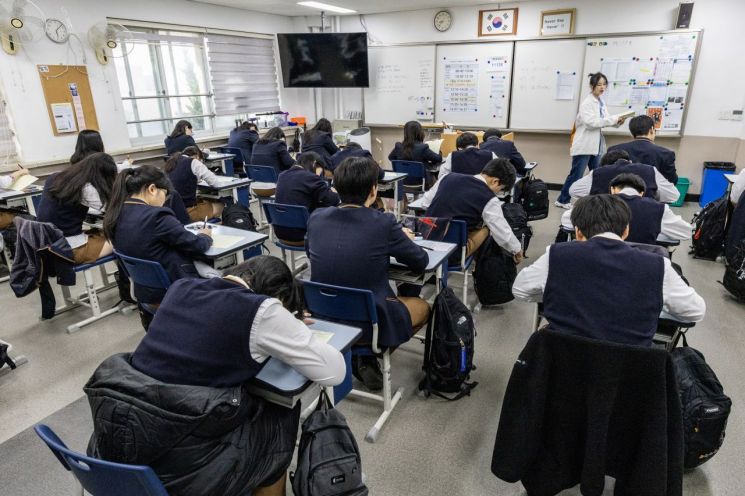
In its decision, the NHRCK stated, "It has been a significant ten years since the 2014 ruling that school mobile phone collection constituted a human rights violation, and since then, various issues such as cyberbullying and exposure to sexual exploitation materials related to student mobile phone use have emerged. Therefore, it can no longer be definitively said that the collection of mobile phones by schools infringes upon students' human rights."
The NHRCK determined that the school in question had revised its student conduct regulations after gathering opinions from students, parents, and teachers through a survey, and had minimized restrictions on basic rights by allowing students to use their phones as much as possible during breaks and lunchtime outside of class hours.
This decision originated from a complaint filed in March 2023 by a high school student in South Jeolla Province, who argued that the blanket collection of mobile phones, preventing their use even during breaks and lunchtime, constituted a human rights violation. Out of the ten full committee members, eight voted to dismiss the complaint, while two supported it.
The minority members who supported the complaint argued that if a school collects mobile phones against students' wishes or imposes excessive restrictions on their use during school hours beyond what is stipulated in the regulations, it could infringe upon students' general freedom of action and freedom of communication. They opposed changing the previous precedent.
© The Asia Business Daily(www.asiae.co.kr). All rights reserved.
![Clutching a Stolen Dior Bag, Saying "I Hate Being Poor but Real"... The Grotesque Con of a "Human Knockoff" [Slate]](https://cwcontent.asiae.co.kr/asiaresize/183/2026021902243444107_1771435474.jpg)
















