Hosting National Sports Competitions Every Year
28 Events and 1.2 Billion Won Budget Allocated This Year
Fostering Both Community and Elite Sports
Naju Recognized as a Premier Training Destination for Athletics and More
Over 10,000 Visitors Came to Naju Last Year
Expansion of Infrastructure with Naju Comprehensive Sports Park
Additional Facilities Added, Including Bandabi Sports Center
Plans Underway for the Tentatively Named An Seyoung Gymnasium
Remodeling Multipurpose Gymnasium as a Construction Alternative
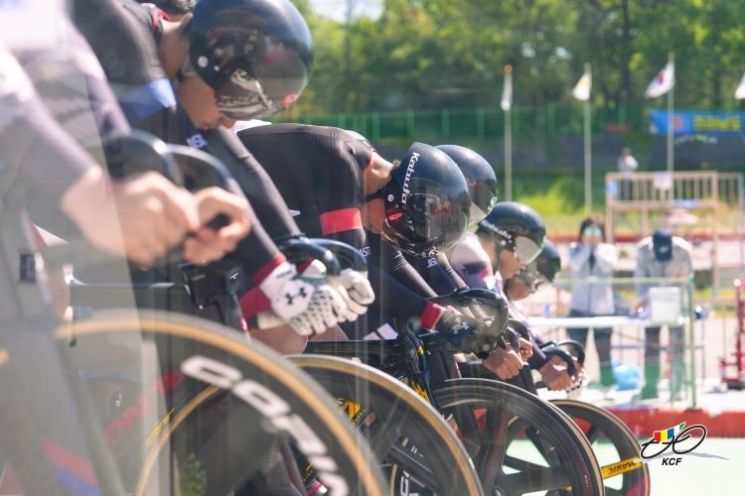 Athletes participating in the Presidential Cup National Cycling Competition held recently in Naju are waiting at the starting line. Photo by Naju City
Naju, the central city of South Jeolla Province, is making rapid strides toward becoming a sports city.
The city is aiming to transform itself into a "sports hub city" that encompasses all areas of sports, from nurturing student athletes aspiring to become elite competitors, to promoting community sports for the general public and people with disabilities.
The region boasts a wealth of sports facilities that are competitive on a national level, and its mild climate year-round makes Naju an ideal location for athletes.
Furthermore, the recent emergence of world-class badminton star An Seyoung, a native of the region, has provided Naju with a valuable human resource for marketing. Naju City is laying the groundwork for urban development through the integration of sports and the local community.
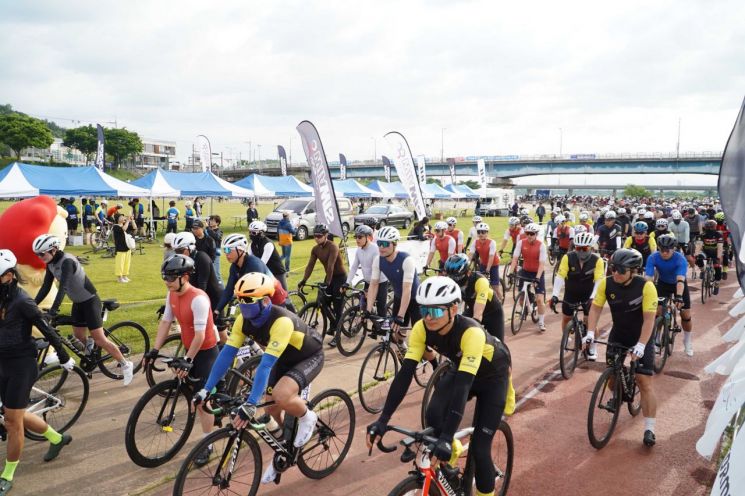 Cycling enthusiasts enjoying a ride against the backdrop of Yeongsangang River in Naju City at the Granfondo event. Provided by Naju City
◇ Naju United Through Sports
On April 26, the 2025 Yeongsangang Granfondo in Naju, a festival for cycling enthusiasts, was held. The event, which featured two courses of 125 km and 104.1 km, attracted as many as 1,700 participants, reflecting high interest.
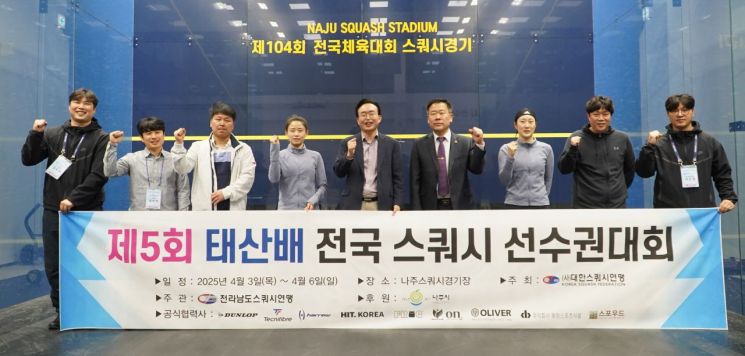
In addition, during the 2025 National Sports Festival for All, held from April 24 to 27, three events?squash, roller sports, and shooting?were hosted in Naju, drawing many visitors to the city.
Previously, the 42nd Presidential Cup National Cycling Competition, held from April 12 to 17, saw fierce competition among 445 athletes from 91 teams. This event, the largest after the National Sports Festival, became a major celebration for cyclists from across the country.
The core framework of Naju's "sports city" initiative is to expand the base of sports through the promotion of community sports, and to use this as a foundation to connect youth, amateur, and professional sports in the elite sector. The city is also exploring ways to extend the impact of sports into the local economy.
One of the city's strategies is to attract major sporting events. By hosting numerous competitions, Naju aims to strengthen its competitiveness as a sports city through accumulated experience.
By the end of this year, the city has planned to host as many as 28 national and provincial sports competitions. In addition, Naju City will host and organize 11 more events. The budget for these events alone amounts to approximately 1.2 billion won. The range of sports includes soccer, taekwondo, gateball, cycling, marathon, athletics, billiards, and jokgu, reflecting great diversity.
The city is expanding the scale of event hosting and building robust human networks, thereby establishing Naju as a premier training destination and laying the foundation for sustainable growth. This structure allows athletes and officials from across the country to contribute to the local economy through their use of accommodations, restaurants, and transportation during their stay in Naju.
In fact, as of last year, a total of 10,263 athletes and officials from sports such as athletics visited Naju for training. The cumulative number of training days reached 974, with 928 days of accommodation. Already this year (from January to March), 4,743 athletes and officials have trained in Naju.
Major and minor events centered around the Yeongsangang River serve as opportunities to showcase the region's beautiful natural environment and act as catalysts for revitalizing tourism.
To accelerate these plans, the city has established a solid strategy. Various benefits are provided, such as Naju Love Gift Certificates and local specialty products for visiting training teams, as well as transportation subsidies for team buses. The city is focusing its administrative efforts on the strategic development of diverse content in culture, tourism, and the economy through the synergy of sports and local businesses.
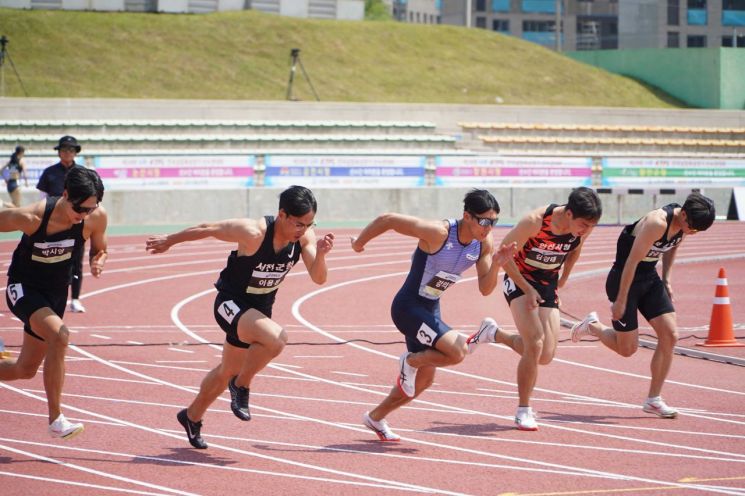 Athletes are passionately running toward the finish line on the athletics track within Naju Sports Park. Photo by Naju City
◇ The Starting Point of the Sports City
The turning point in Naju's development as a "sports city" dates back to the completion of Naju Comprehensive Sports Park in 2011. Prior to that, Naju essentially lacked any notable sports infrastructure. Before the construction of the Sports Park, only outdated facilities such as the Naju Indoor Gymnasium, built in 1990, were available.
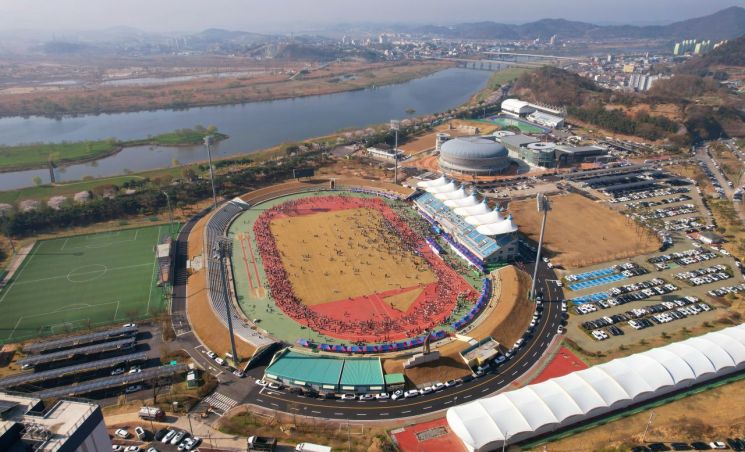
Covering approximately 179,000 square meters, Naju Comprehensive Sports Park instantly satisfied the long-standing demand of local residents for a large-scale sports facility equipped with advanced systems.
The park features a natural grass soccer field and a certified eight-lane, 400-meter urethane athletics track, as well as two indoor gymnasiums and an athletes' dormitory. Additional facilities include an auxiliary soccer field, a multipurpose gymnasium, a national sports center, a Ssireum arena, a roller skating rink, a jokgu court, an archery range, and a squash court. The complex is systematized to accommodate a variety of sports. Every year, national team athletes and elite student athletes use the park for training in athletics and other disciplines.
Accessibility is also excellent. Located directly behind Naju Station, the gateway to the Honam region, the park is easily accessible by bus and train. If the planned metropolitan railway between Gwangju and Naju is completed, efficiency and travel time will be further maximized.
Additional facilities such as a community sports stadium, indoor swimming pool, and fitness center are also available for citizens to use as spaces for community sports. The park hosts various local events each year, and it is constantly bustling with promising athletes from across the country.
Moreover, Naju is home to other sports facilities such as Yeongsangang Riverside Sports Park, a detention basin baseball field, and Naju City Tennis Courts. These facilities expand opportunities for not only athletes but also the general public to participate in sports.
The city plans to accelerate the expansion of sports facilities. In order to gain an edge over other regions, investment is considered the key. The city recently renovated an aging gymnasium built in 1991 and completed the Bandabi Sports Center in February. This facility is designed to allow both the general public and people with disabilities to enjoy community sports without inconvenience, reflecting the city's commitment to inclusivity in sports.
In particular, Naju City is currently planning the construction of a "Second Sports Park (tentatively named An Seyoung Gymnasium)" inspired by world-class sports star and local treasure An Seyoung, a national badminton player.
Initially, the plan was to build a new gymnasium in a new building. However, considering that the cost of constructing a new gymnasium would exceed 50 billion won and require considerable time, the city is now considering remodeling the multipurpose gymnasium within the Comprehensive Sports Park into the An Seyoung Gymnasium. To further develop this plan, Naju City is currently conducting a separate feasibility study for the project.
Although the project is still in its early stages, the hope is to expand sports facilities, diversify community sports participation, attract national-level sports competitions, and foster talent, much like the example set by the Hwasun Lee Yongdae Gymnasium.
A Naju City official stated, "Naju is implementing a project that integrates tourism, culture, and sports, leveraging the natural environment of the Yeongsangang River. The city is already well equipped, and we are working on further specialization. Given the limitless potential for sports development, we are putting in great effort and energy."
© The Asia Business Daily(www.asiae.co.kr). All rights reserved.

![Clutching a Stolen Dior Bag, Saying "I Hate Being Poor but Real"... The Grotesque Con of a "Human Knockoff" [Slate]](https://cwcontent.asiae.co.kr/asiaresize/183/2026021902243444107_1771435474.jpg)

















