One Hanok Building and 51 Signboards Designated as Cultural Heritage
Suncheon City in South Jeolla Province (Mayor Noh Gwan-gyu) announced on April 28 that it has designated 'Suncheon Damnakjae and its signboard,' which played a central role in education, culture, and honoring virtuous figures in the local community during the Joseon Dynasty, as a Tangible Cultural Heritage of South Jeolla Province.
Suncheon Damnakjae is a jaesa (ancestral memorial house) of the Okcheon Jo clan's Damheon branch, built in 1841 by two brothers, Jo Jin-ik (1788-1858) and Jo Jin-ryong (1803-1860), in Gusan Village, Juam-myeon, Suncheon.
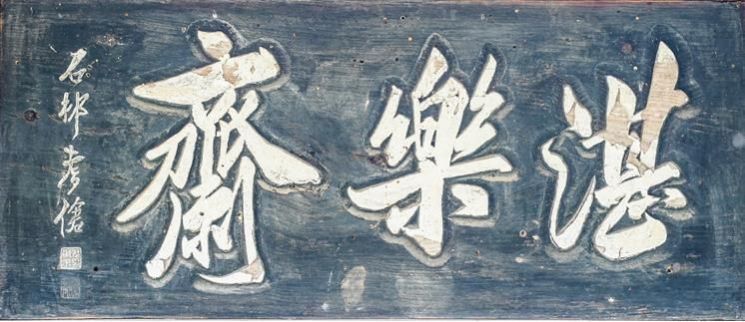
The brothers Jo Jin-ik and Jo Jin-ryong were renowned in their community for their brotherly affection. It is said that, wishing to pass down this brotherly bond as a family principle to their descendants, they specially constructed a study and hung a signboard inscribed with 'Damnak.'
'Damnak' originates from the 'Book of Songs' section of the Classic of Documents, which states in Shangti's poem that 'even if a husband and wife are harmonious, the family can only be truly happy and enjoy lasting joy if the brothers are united.'
The Damnakjae building, now designated as a cultural heritage, consists of four rooms at the front and one on the side, with wooden verandas on all sides. Initially built as a seodang (village school) to educate descendants of the clan and local youth, it was later used by descendants as the ancestral house of the Damheon branch.
Inside the building hang a poetry board by the brothers Jo Jin-ik and Jo Jin-ryong and the renowned late Joseon Neo-Confucian scholar Nosa Gi Jeongjin, as well as signboards by independence activist Dongnong Kim Gajin and the famous late Joseon calligrapher Seokchon Yoon Yonggu. In addition, there are 51 plaques in total, including commemorative writings and pillar couplets.
These plaques are valuable documentary heritage that provide insight into the construction and operation of local jaesa during the late Joseon period. In particular, the 42 types and 45 pieces of poetry boards demonstrate that Damnakjae served as a focal point for education and literary exchange, functioning as a cultural hub in the region during the late Joseon era.
Mayor Noh Gwan-gyu stated, "The newly designated Suncheon Damnakjae and its signboards are invaluable resources that exemplify brotherly affection and serve as a prominent site for cultural exchange in the local community, offering insight into the history and culture of the Suncheon region in the late Joseon period. We will do our utmost to ensure that these heritage assets are well preserved and their value is passed on to future generations."
Meanwhile, a jaesa (ancestral memorial house) refers to a structure built near a gravesite or shrine to honor and perform ancestral rites for individuals distinguished by their scholarship, virtue, loyalty, or filial piety, as well as for the clan's founding ancestors or prominent forebears.
© The Asia Business Daily(www.asiae.co.kr). All rights reserved.

















