CSIS Senior Adviser: "The End Point Is Still Far Off"
Direct Negotiations Between Trump and Xi Jinping Will Take Time
Both Countries Hold Leverage to Inflict Financial Pain
There is an assessment that the US-China dispute could expand from the realms of trade and business into the financial sector.
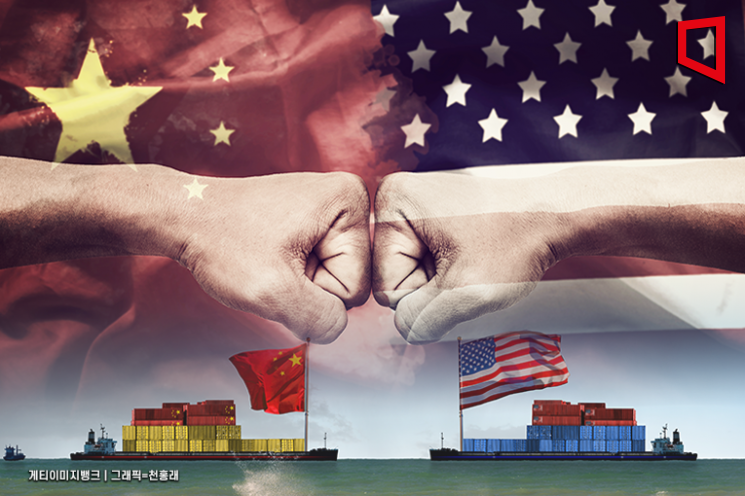
Scott Kennedy, Senior Adviser at the Center for Strategic and International Studies (CSIS), a US think tank, stated, "The end point of the US-China trade dispute is still far off," according to a report by the Hong Kong South China Morning Post (SCMP) on April 28.
Since China's accession to the World Trade Organization (WTO) in 2001, the US and China have continued trade negotiations, but currently, the conflict has intensified as both sides engage in a tariff ping-pong game. There are 286 Chinese companies listed on US stock exchanges, with a combined market capitalization of about $1.1 trillion. The scale of US direct investment and portfolio investment in China is also significant.
Kennedy noted that both countries possess leverage that could inflict financial pain on the other, and therefore, there is a possibility that the tariff war could escalate into the financial sector.
In particular, he pointed out that China could potentially sell off large amounts of US Treasury bonds. However, he warned that such a move should be made cautiously, as China itself could incur losses if this were to happen. Kennedy stated, "Ultimately, both countries will seek political compromise when the economic pain becomes severe," adding, "At present, we have not yet reached that stage."
He also believes that more time will be needed before President Trump and Chinese President Xi Jinping sit down at the negotiating table. He said, "It will take more pain and time to create an atmosphere conducive to negotiations," and added, "Everything is still uncertain, including who will represent each side at the negotiating table and what the schedule will be."
Regarding President Trump's imposition of a 245% tariff barrage on China, Kennedy suggested that China may seek a breakthrough by increasing fiscal spending or strengthening trade agreements with other countries, but he also advised that, in the long term, China needs to restructure its economic model itself. Kennedy pointed out, "Currently, China is manufacturing-centered, but there is growing domestic and international demand for a shift toward a consumption-centered economy," and added, "If China boosts domestic consumption, tensions with the rest of the world could also ease."
He also noted that although the US dollar has recently experienced a sharp decline in value, its global status remains solid. The Dollar Index (DXY), which reflects the value of the dollar against six major currencies including the euro, fell 0.77% from the previous session to 99.38 on April 16 (local time), marking its lowest level since April 2022. Since the beginning of this year, the value of the dollar has plunged by more than 8%. He said, "If the US economy faces ongoing crises, confidence in the dollar could be shaken," but also assessed, "However, it is unlikely that the global currency system will change in the short term."
© The Asia Business Daily(www.asiae.co.kr). All rights reserved.
![Clutching a Stolen Dior Bag, Saying "I Hate Being Poor but Real"... The Grotesque Con of a "Human Knockoff" [Slate]](https://cwcontent.asiae.co.kr/asiaresize/183/2026021902243444107_1771435474.jpg)
















