On April 27 (local time), U.S. Treasury Secretary Scott Besant described President Donald Trump's tariff policy?which involves repeated announcements of reciprocal tariffs followed by partial easing or postponement?as "strategic uncertainty in game theory and a refusal to reveal the ultimate objective to negotiating counterparts."
In an interview with ABC News that day, Secretary Besant added, "President Trump is the most adept at creating this kind of negotiating leverage."
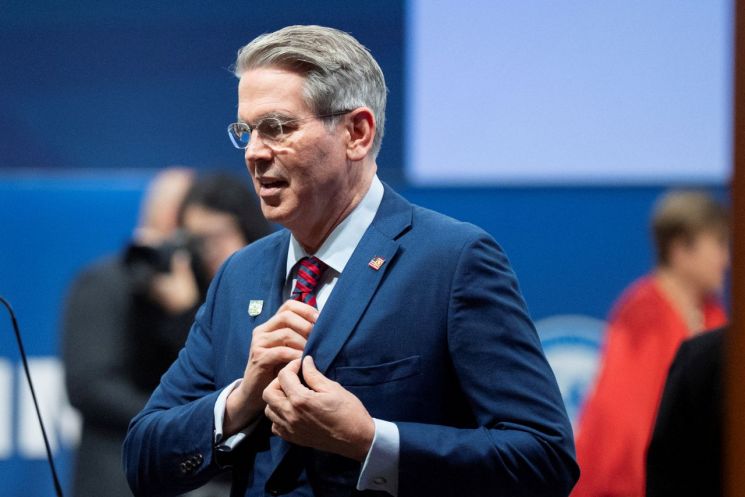
Secretary Besant explained that President Trump's strategy is to present the 'stick' of high tariff rates and then offer the 'carrot' of starting negotiations only if the other party ceases tariffs or non-tariff trade barriers against the U.S., or stops currency manipulation. He emphasized, "Several countries in Asia have come to the U.S. and said, 'We will stop this and that.'"
Regarding the 145% tariff imposed by the U.S. on China, Secretary Besant stated, "China will realize that this high tariff level is unsustainable for their companies." He identified the first principle in negotiations with China as avoiding escalation in the tariff war.
He further added, "China's business model is based on selling low-priced, subsidized goods to the U.S. If this supply is suddenly cut off, the Chinese economy will also come to a sudden halt. Therefore, they will negotiate."
Regarding new trade agreements with individual countries, Secretary Besant said, "Next, we could reach a principled agreement on important trade deals with the 17 to 18 countries we are currently negotiating with." He continued, "While trade agreements can take several months, if we reach a principled agreement and our trading partners act within the scope of the agreement and do not raise tariffs again, then a swift conclusion to negotiations is possible."
During the IMF and World Bank Spring Meetings held last week, Secretary Besant said, "I met with my Chinese counterpart," but clarified that "the discussions were mainly on traditional topics such as financial stability and the global economic early warning system," and that tariffs were not discussed.
When asked whether President Trump and Chinese President Xi Jinping had spoken by phone, he replied, "I do not know." When questioned about the Chinese government's official denial of President Trump's claim that negotiations with China are ongoing, he answered, "I think they are speaking to a different audience?the Chinese public who want to see China stand up to the U.S."
Regarding market volatility caused by President Trump's tariff drive, Secretary Besant said, "I do not consider it a loss of confidence in the government." He explained, "Based on my 35 to 40 years of market experience, fluctuations over two weeks or a month may simply be statistical or market noise, and I view this from a long-term perspective."
© The Asia Business Daily(www.asiae.co.kr). All rights reserved.

















